Your history. Your inbox.
7 uniquely curated newsletters to choose from.


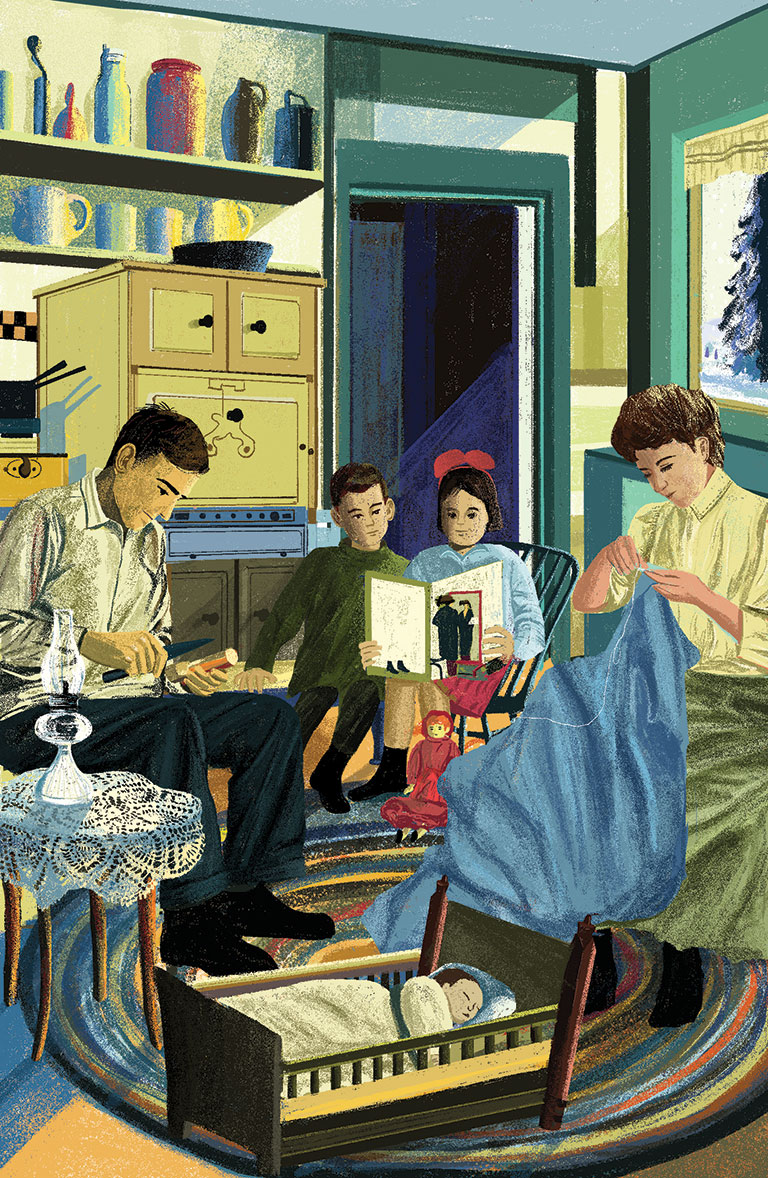
Anna couldn’t decide. “I’d choose . . .” Her finger wavered back and forth on the page of the Eaton’s catalogue. The set of miniature flowered dishes, or “This one! The doll with eyes that close!”
Her brother already had his mind made up. Leo smacked his finger lower down the page. “The toy aeroplane for me!”
Their parents exchanged a look. “Maybe when I get the baby’s bed finished, we can try building our own flying machine,” their dad said.
“And we can use some scraps from these curtains to sew some new clothes for the doll Papa made you,” their mother said to Anna.
“Bundle up now,” she added, “and bring in that wheat straw from the shed. It’s time you learned how to weave your own baskets.”
The children put on their coats and boots and headed out into the weak sunshine of late afternoon.
Leo was careful to keep his voice down. “I wish we could have new things, from the store.”
Anna blinked back tears. “I know there’s not much money for extras, but why do we have to make everything ourselves? The doll in the catalogue is so much prettier. And just imagine having a soft rug from a store instead of a tough one made out of our old shirts.”
“There’s a sled in the catalogue with real metal runners,” Leo said dreamily. “But the toboggan Papa made us is fun, too,” he quickly added.
“Maybe if I learn how to make lace doilies or weave straw hats, I can earn enough money to buy us whatever we want!” Cheered at her idea, Anna grabbed an armload of wheat stalks.
Their father was waiting for them in the house with a big smile and outstretched palms. In each was a tiny cloth bag pulled tight with a drawstring. “Pick a hand!”
The children each chose a bag to open. In Leo’s was a little wooden horse; in Anna’s, a little cow. “I carved them and your mama made the bags. They’re just for you!”
“They’re here!” Leo opened the door to greet his daughter and her three kids, letting in a swirl of snow at the same time.
“Grandpa!” little Lili shouted, grabbing his knees in a hug. Paul and Eddie stood back, a bit more shy, until Anna sneaked up behind to tickle them both.
“Aunt Anna! I didn’t know you were going to be here today!
Anna hugged her niece and nodded toward the living room. “I brought Grandmama out from town for a visit.”
The kids tumbled ahead, each wanting to be the first to show off what they’d brought. “We bought you a puzzle, Grandpa. I picked it out!” Lili exclaimed.
“See how good I am with my yo-yo?” said Eddie.
Leo almost tripped over the little metal cars Paul was already arranging on the floor.
“Where’s the cradle, Grandpa?” Lili asked, cuddling her stuffed rabbit. “Floppy needs a nap.”
Seeing Leo looking a bit worried, Anna jumped in. “I told your grandpa to get rid of that old thing. It’s not safe anymore.”
“But I really liked it!” Lili wailed, about to cry.
Paul looked up from the floor. “What about the straw basket you made when you were little? Can I put my cars in it?”
Leo shrugged. “It was falling apart. I’ll get you a plastic container. And Lili, we have a nice new crib that folds up. Perfect for Floppy.”
“All we wanted when we were their age was something bought instead of homemade,” Anna said to her brother. “Good riddance to all that old stuff!”
From her rocking chair, Anna and Leo’s mother called out, “Come here, little ones. I managed to save a few things when your grandpa and greataunt were clearing out the old things. They’re not fancy, but your Grandpapa and I put a lot of love into them.”
Anna rolled her eyes. “Mama! Is that bag made from a flour sack?”
“Who cares if it is?” her mother replied. She pulled out a carved wooden horse and a carved wooden cow and held them out to the children. “They’re just for you.”
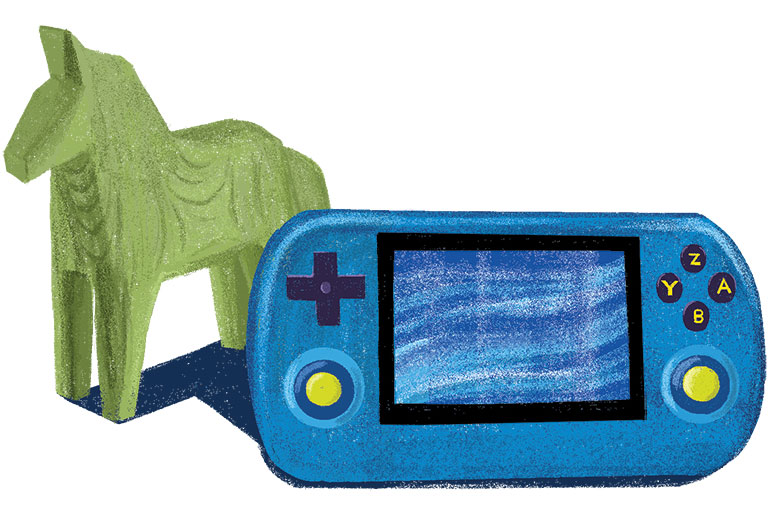
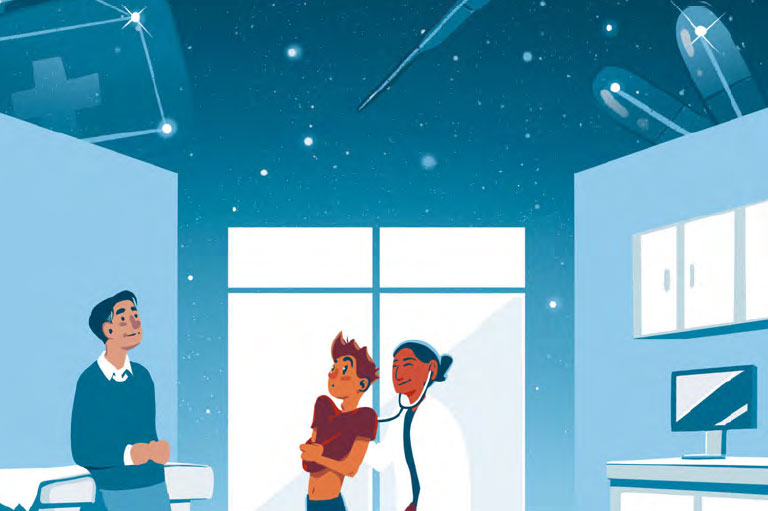
“Screen time is over, kids,” Paul called from the kitchen. “Shut down the computer.”
“But it’s educational!” Sarah said, her eyes still glued to the screen.
Her twin brother Jacob yelped. “No! Hit the up arrow! The up arrow!!” The tiny dinosaur on the screen keeled over.
Sarah quickly turned the computer off, only to hear her dad sigh. “I was going to order a new bookshelf for the living room,” Paul said. “Maybe a new rug, too. The cat’s been pretty hard on the old one.”
“Mrs. Reinhart next door says you can make stuff like that, you know,” Jacob said.
Paul raised his eyebrows. “Maybe she can, but I haven’t got a clue. Unless you two want to try?”
Sarah pulled out a ball of yarn and a stick with a dull hook on the end. “Maybe not a rug, but she’s teaching me how to crochet.”
“I’m going to work on my whittling badge at Cubs,” Jacob said. “Don’t worry — I’ll be careful!”
“Wouldn’t you rather have nice new things?” Paul asked them.
The twins looked at each other. “I kind of like the old stuff,” Sarah said.
“It’s more . . . interesting,” Jacob said.
Paul jumped up from the computer. “Well then, it’s time I gave you something.” He opened the hall closet and rummaged around in a cardboard box.
“I knew they were here somewhere!” he said as the kids gathered around. He held out a dusty bag so Jacob and Sarah could pull out what was inside: a small carved wooden horse and a little carved wooden cow.
“They’re just for you.”
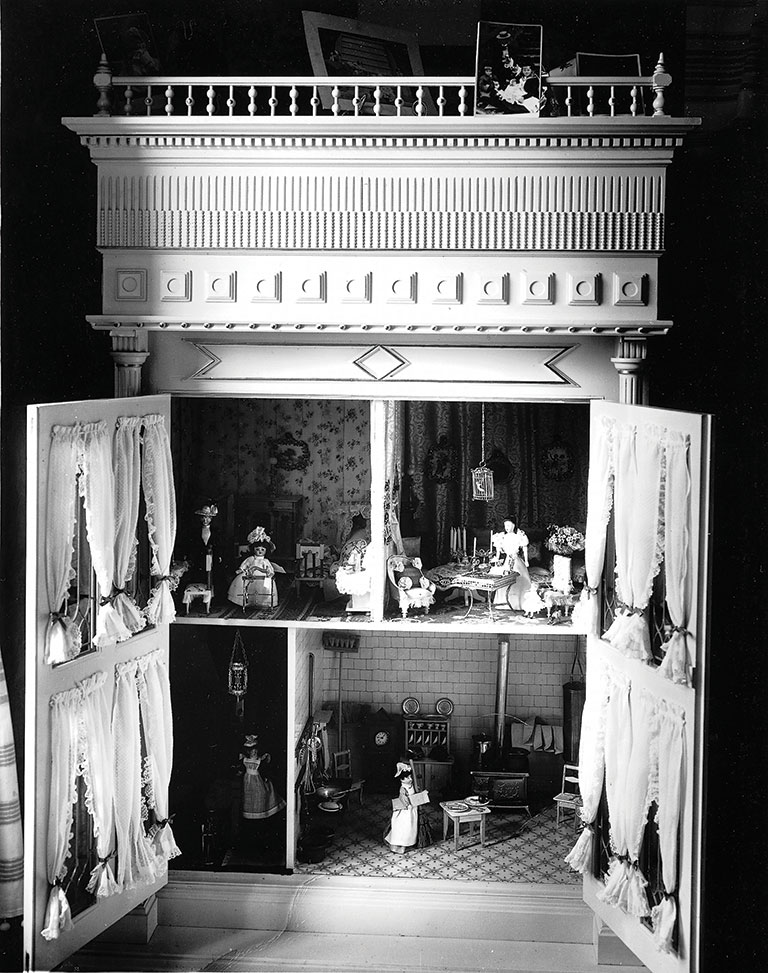
The Toronto-based department store Eaton’s sent out its first catalogue in 1884 and its last in 1976. People all over Canada ordered items from Eaton’s if they couldn’t buy them nearby. Mostly, though, many settler families, especially on farms and in rural areas, made as many things as possible themselves.
The crafts you’ve read about in this issue were very important at a time when it was hard to get to stores and families didn’t have much money for anything other than essentials. Everyone had to be good at doing lots of things, from sewing and knitting to making things with wood and weaving with whatever material was around. Maybe the Lebret family would have traded their crafts for those the Dakota First Nation people of the area had been making for thousands of years.
For everyone, winter, with little farming, hunting and gardening to do, was a good time for crafts. Have any handmade items been passed down in your family?
Advertisement