Your history. Your inbox.
7 uniquely curated newsletters to choose from.


To reflect on the transformative summer of Montreal 1976, Canada’s History recently brought together two Canadians with thoughts to exchange. Heather Hiscox, a 43-year veteran of the broadcasting industry, spent two decades as the face of CBC Morning Live and has covered 10 Olympic Games. Richard “Dick” Pound is the longest-serving member of the International Olympic Committee (IOC). An Olympic swimmer in the 1960 Summer Games in Rome, Pound was a key member of the Canadian Olympic Association (COA) for the 1976 Summer Games and has been a defining force in the Olympic Movement for more than 40 years. What follows is an excerpt of their conversation.
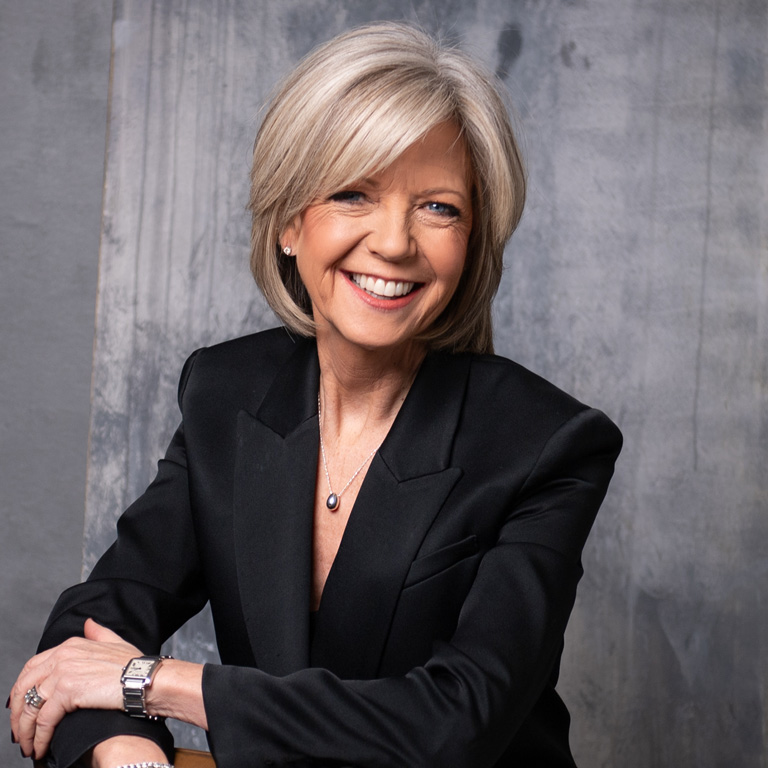
Heather Hiscox: In the fall of 1968, you were the new secretary of the Canadian Olympic Association [COA], which is now the Canadian Olympic Committee. You were involved in the vote that decided which city would be Canada’s candidate to host the Summer Games. It was between Toronto, Hamilton and Montreal. How did that play out?
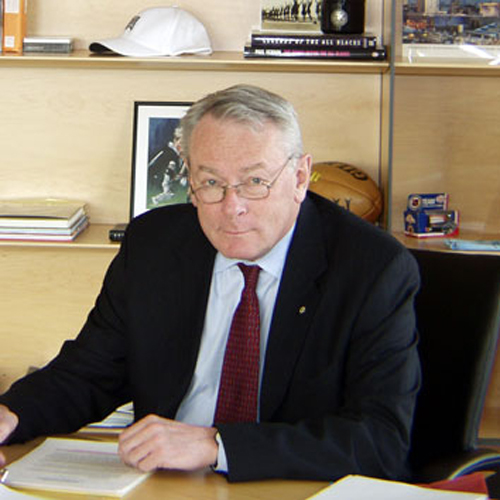
Dick Pound: It was interesting because politically, the federal government was a Quebec-based Liberal minority government. And the rest of Canada sort of said, “Well, all right, Montreal had all its goodies for Expo 67 — now it’s Toronto’s turn.” And [they] put together a very strong lobbying program. Hamilton also wanted to host, but even though Hamilton was the first host of the British Empire Games [now known as the Commonwealth Games], it was just beyond the city’s capacity to put on the Olympics.
Our board was 36 men at the time [women weren’t part of the board until 1981], so a tie vote was possible. It was very tense and the presentations were what you’d expect. Hamilton went first — very heartfelt, but hopeless. Toronto had the leading technical array of the day, which was flip charts and slides and stuff like that. And then there’s [Mayor Jean] Drapeau for Montreal. He said, “Gentlemen, you really have two decisions. One is, do you want the 1976 Olympic Games to come to Canada? If you don’t care, then it doesn’t matter for whom you vote. But if you do want them to come, I can get them.”
During Expo 67, Drapeau had invited the International Olympic Committee to come to Montreal for a week as his guest. He said, “They’ve seen what Montreal can do, and they’ll have confidence in our ability to manage something on a worldwide scale.” Then, we voted. On the first round, there were two votes for Hamilton, 17 for Toronto and 17 for Montreal. I see these results and think Ontario is going to gang up and win in the second round. But the second round was 18 for Montreal and 16 for Toronto. It was one of these things where you say, “Oh, my God, what have we just done?”
Interview continues below...

With 7 uniquely curated newsletters to choose from, we have something for everyone.
HH: On May 12, 1970, the IOC announced it had selected Montreal to host the games. What was your reaction?
DP: Excitement because it was a welcome surprise. And then once again, “What have we just done? Now we’ve got to organize these things.” That’s a challenge because it’s an Olympic organization — everything has to work right the first time. You can’t go up to the winner of the 100-metre race and say, “Sorry, but would you mind doing it again? Because our camera didn’t work.” So, the built-in safeguards required for an Olympic Games are just enormous.
HH: As Olympic preparations began, the work was beset by problems: delays, cost overruns, labour strife, inflation, corruption. As an executive member of the COA, you were obviously watching with interest. When did you first become concerned?
DP: Pretty well all along because the construction was complicated and the circumstances were complicated. We had Drapeau falling in love with [French architect Roger] Taillibert and commissioning him to design this work of art, Olympic Stadium. In reality, it was only good for football or track and field.
The Canadian Olympic Association really had no meaningful role to play in the construction and organization, so we concentrated on trying to raise whatever money we could to inject some additional support for the Canadian team. Because we didn’t want to be what we became: the only Olympic host whose team never won a gold medal. We had some very good swimmers, some very good track-and-field folks and good equestrians, so it was not impossible that we might win a gold medal. We certainly got lots of medals — just the wrong colour.
HH: Volumes have been written on the mistakes that were made. For you now, what were the biggest mistakes?
DP: The one that was the hardest to get around was that you need to have an Olympic budget and you need to have an infrastructure budget. And they’re not the same. Olympic Stadium, for which we paid close to a billion dollars, was all charged against the 1976 Olympic Games. It’s still being used today. The same is true with some of the Metro [subway] extensions. A lot of the infrastructure was charged as an Olympic expense, which gave a very misleading view as to what the marginal cost of having an Olympics in your city would be.
The second was that, while Drapeau was a dynamic and charismatic leader of Montreal, he was no financial genius. And so the budget that he had when he came to the COA to make the pitch I think was written on the back of an envelope. The financial controls were not in place. I mean, he ran a good city, but he was no construction guy.
We certainly got lots of medals — just the wrong colour.
HH: The Malouf Commission, which looked into the cost overruns of the Olympics, said Drapeau bore the greatest share of responsibility for those skyrocketing costs and for the other problems that occurred at the time. How do you view him?
DP: He’s a hero in the sense of being a visionary and creating a real metropolis in Montreal, but he was not equipped to run a multi-phase building process. The Malouf Commission was kind of a gotcha hatchet job. It was designed to assign blame, and some of some of it is certainly merited, but in the bigger picture — the Olympic picture — Drapeau could walk on water.
HH: One of the reasons for those high costs was the money that went for security. Montreal was the first Olympic Games since Munich in 1972, where 11 members of the Israeli Olympic team were kidnapped and killed by the terrorist group Black September. How did Munich change security for Montreal?
DP: Up until Munich, Olympic security was to keep the locals from bothering the athletes and perhaps more viscerally to keep the boys out of the girls’ section of the Olympic Village. It wasn’t muscular security that you needed. All of a sudden, that whole paradigm changed. The security apparatus in Montreal involved all of the Quebec police forces, the Canadian Armed Forces and unusual collaboration with foreign governments to identify threats and bad guys. That was carried off very well. They didn’t interfere with anybody’s enjoyment of the Games.
HH: Jumping to July 17, 1976, Queen Elizabeth is there, Prime Minister Pierre Trudeau is there, 73,000 people are there in a stadium that’s not even finished, and Richard Pound is there. Tell me about walking in.
DP: Oddly enough, it was my first time in the stadium. The Queen was very popular, so there was lots of cheering and applause. The one who won the gold medal at the opening ceremony was Drapeau; he got a standing ovation from the entire crowd. The Olympic Opening Ceremony was very moving. And at the tail end of that — the Closing Ceremony — we had the famous streaker. I remember the Duke of Edinburgh was just howling with laughter [as if to say], “Who is this fellow who tiptoed through the tulips — unadorned?”
Advertisement
HH: The days that followed saw many incredible athletic performances. For most people, though, the highlight came down to one name and one number: Nadia Comaneci and 10. Were you there when she recorded the first-ever perfect score — the 10 — in gymnastics history?
DP: I was there, for sure. There’d been a long harangue between the organizing committee and the International Gymnastics Federation about the score. We said, “Look, it’s easy to add an extra digit on the electronic score.” They said, “No, we never give a 10 in the Olympics because it implies that perfection has been obtained and nothing better will follow,” which is complete nonsense if you know anything about sport. So anyway, the perfect mark comes up as 1.00 and it made the organizing committee look like idiots, but the backstory was it was the gymnastics federation that insisted that they would never give a 10.
It was interesting because she was the second iteration of gymnastics after Olga Korbut, who was the darling in Munich. Nadia, the darling in Montreal, changed women’s gymnastics from a sport for women to a sport for little elfins — you know, under five feet who could do triples and God knows what on the balance beam and uneven bars. She was just magnificent.
HH: The 1976 Summer Olympics were the first Games of which I have a clear memory — I was 11 at the time. The highlight for me, as I recall, wasn’t Nadia; it was Greg Joy and the silver for Canada in the high jump on the final full day of competition. Were you there for that moment?
DP: Oh, yes, we knew he was jumping well in the training and so on, so it would have been surprising if he didn’t get a medal. It was awfully close, but it was a very exciting day for everybody in the stadium. In the high jump, it’s strategic; the order in which you clear heights can have an impact on the scoring, as opposed to the final result alone. But it was very exciting. The Games, in a sense, ended on a high for Canada.
HH: There’s one other sport I’d like to talk to you about for entirely different reasons, and that’s swimming. East Germany didn’t win a single gold medal in swimming in 1972, but in 1976, the East German women won 11 of 13 gold medals. What did you think when you saw them physically and then saw what they were doing in the pool?
DP: Well, physically — and particularly the women — they looked like they’d been carved out of granite. They were just cut, and the performance in the pool certainly lived up to that promise. A lot of Canadians missed out on medals because of that. Anyway, it was clear that there was doping going on, and we all knew. You couldn’t get into East Germany to test, and the Warsaw Pact countries had a ship in the harbour in Montreal with a couple of the laboratories on it. They would take their athletes there the day before the event and see whether they would be testing positive or not. And if they were, they suddenly got sick or there was an injury and they were withdrawn. So, there was never an East German positive test in competition because they simply weren’t allowed to participate and take a chance that they would test positive.
But they weren’t the only ones who were doping, and that’s sometimes sort of overlooked in the headlines — the fact that there was a real doping problem in sport. That eventually led to the creation of the World Anti-Doping Agency [WADA].
Nadia was the darling of the Montreal Olympics
HH: You became the founding president of WADA. How did the Montreal experience frame your outlook and maybe become a catalyst for that fight?
DP: Certainly, the outcomes justified the suspicion. I mean that statistically, that [number of medals for East Germany] wouldn’t have happened had there not been doping. That was unfortunate for a lot of Canadian swimmers. But getting sport to change is a very difficult thing; it’s a change-resistant industry. So, it took a long time to build up enough momentum to call for the creation of an independent agency.
It wasn’t really until the Tour de France in 1998 that the penny finally dropped. We — the IOC executive board — met, saying, “What are we going to do about this?” Because I had a fair amount of legal experience, I said, “Look, we need an independent international agency that can step in and supervise the doping and so forth.” We ran that up the flagpole and it got pretty good reception. We called for a world conference on doping and sport in Lausanne in 1999, and we eventually got a 50-50 agreement between the sport world and the political world to form what we called the World Anti-Doping Agency. Then, gradually, we worked our way into giving it the necessary budget and powers to do what had to be done. We have a very good system in place. The problem in sport, of course, isn’t the system — it’s the people.
HH: In what ways do you think the Montreal Olympics shaped you and your future?
DP: I was probably in the right place at the right time. I was in Montreal, our only Olympic city. I had been secretary of the COA for eight or nine years at that point. I was an athlete who was an Olympian, and I got elected as president [of the COA]. The very next year, I got co-opted as a member of the IOC, and it just went from there.
Save as much as 40% off the cover price! 4 issues per year as low as $29.95. Available in print and digital. Tariff-exempt!
HH: What did Montreal 1976 change for Canada?
DP: For Montreal, it was certainly a game-changer on the sport frontier. We had Place des Arts, we had the Met, we had all sorts of things. It was really a metropolis, and it showed we could play on that world stage, both in terms of organization and on the field of play. I must say, for years after the Montreal Games, other Olympic folks with whom I interacted congratulated us on the quality of the Games, the sports. The finances were a different issue, but in terms of the sports organization, it was spectacular and became sort of the goalpost for everybody else. It gave us a foothold in the summer sports. We were always good in the winter sports, but we never had a chance to really show how good we were becoming in the Summer Games.
HH: In terms of impact on the IOC, on the Olympic Movement, what were the lessons learned for them from Montreal?
DP: I would say two. One, which I said before, is to have an Olympic budget and an infrastructure budget so that the population isn’t deceived as to what the cost is. And the second is, we can actually do these things. We are competitive on a world scale, and we should be prepared to live with that reality. We probably had the best organized Games mission staff on the face of the planet. I mean, we helped the organizing committees make the Olympic Village better because of our experience in organizing a well-supported team.
This interview has been edited for length and clarity
We hope you’ll help us continue to share fascinating stories about Canada’s past by making a donation to Canada’s History Society today.
We highlight our nation’s diverse past by telling stories that illuminate the people, places, and events that unite us as Canadians, and by making those stories accessible to everyone through our free online content.
We are a registered charity that depends on contributions from readers like you to share inspiring and informative stories with students and citizens of all ages — award-winning stories written by Canada’s top historians, authors, journalists, and history enthusiasts.
Any amount helps, or better yet, start a monthly donation today. Your support makes all the difference. Thank you!
Advertisement