What is Canadian human rights history?
It’s a lens we use to study Canada’s past. Instead of focusing on military history and political or labour movements, we focus on issues related to justice, rights and power within Canadian society.
Is there an overarching message in the book?
That Canada’s human rights history is quite complex and has always been deeply contested. It’s far less linear and benevolent than what dominant national narratives might suggest.

Your history. Your inbox.
With 7 uniquely curated newsletters to choose from, we have something for everyone.
How have some human rights efforts been used as a tool to oppress?
Enlightenment-era liberal ideas of rights — particularly those focused on individual rights — have been very influential in Canada and, at times, have conflicted with collective understandings and excluded other ways of comprehending rights. The history of human rights is often that of rights coming into conflict with one another. For example, my current book project examines the development of hate-speech laws; these laws, which are developed to protect groups from violent hatred, are also a limitation of freedom of expression. So how do we draw the line between those two things?
Has support for human rights always been part of the Canadian identity?
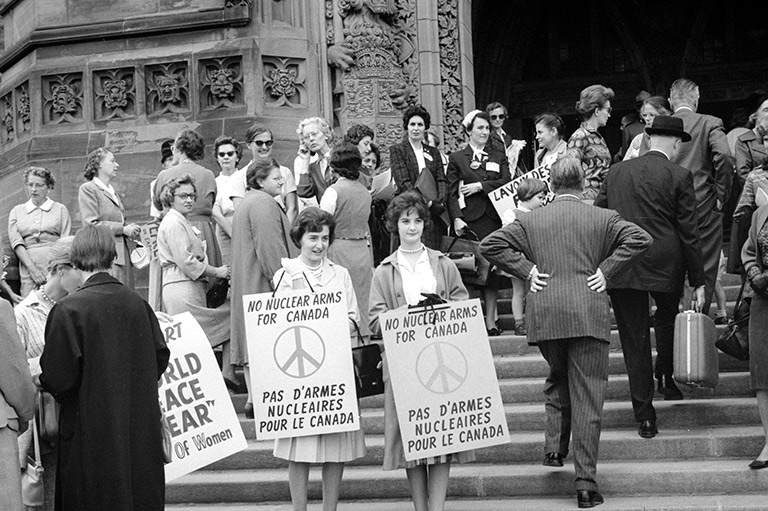
Definitely not. That’s something a lot of Canadians really identify with today, but that’s not what we necessarily identified with in the past. In my first book [Resisting Rights], I look at Canada and international human rights. Up until 1944, we didn’t have any explicit laws in Canada that protected people from discrimination; in fact, it was the norm to accept that discrimination was part of society. What changed for it to become part of that identity? It was human rights movements, it was oppressed groups, marginalized groups pushing back against the forms of discrimination they experienced. It was hard work because there’s this continued narrative that Canada is mostly a welcoming place. But by the 1960s and ’70s, the public demanded more recognition of human rights — making it harder for the government to have openly racist or discriminatory immigration policies or voting laws. Human rights became an important part of our identity, in part because people are taking it up and partly because governments recognized the domestic and international value of Canada being a leader in human rights.
How has the Truth and Reconciliation Commission impacted the history profession?
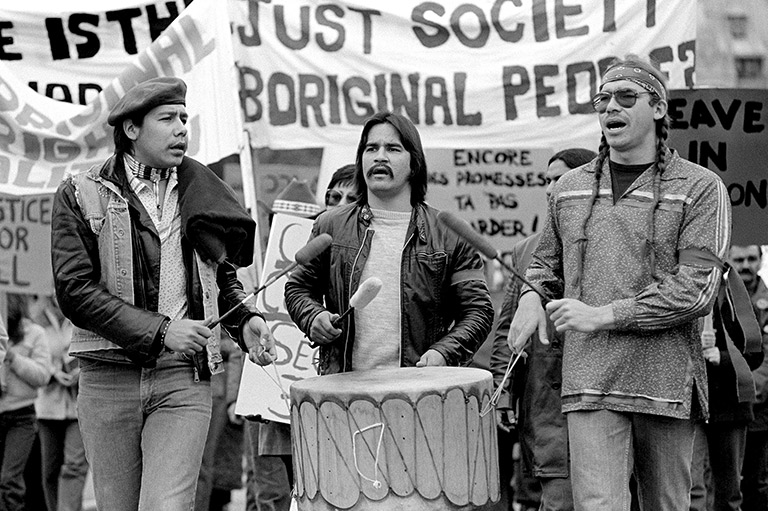
It has changed what historians study, how we conduct our research and whose voices are focused on. One major impact of this has been a shift by some historians to try to think about Indigenous knowledge systems or lived experiences.
What are some common misconceptions about Canada’s role in international human rights?
A common myth is that we’ve always been a leader in international human rights. The reality is we’ve been reluctant at best; the Canadian government was one of the few vocally opposed to the Universal Declaration of Human Rights. We did, eventually, under pressure from our allies, support it in the final vote — but even then, Lester Pearson got up in the UN and talked about Canada’s reservations about this document.
More recently, Canada’s opposition to the UN Declaration on the Rights of Indigenous Peoples under the Harper government was presented as a real break from Canada’s tradition, but it’s more in line with the fact that the Canadian government has always been quite uncomfortable, historically, with international human rights. There definitely has been a change — largely driven by public pressure and activism — but the records show that throughout the ’40s, ’50s and ’60s, the Canadian government was quite hesitant around the International Bill of Rights. Canada only fully embraced it in the 1970s, when the government realized that the public wouldn’t be happy to see Canada not voting for these kinds of laws.
What are the book’s central arguments?
That meaningful human-rights advances in Canada have been driven primarily by grassroots activism rather than by governments or institutions acting on their own. Also, that this history is marked by tension and contradictions. Human-rights protections in Canada have been, and continue to be, highly inconsistent — and efforts to expand rights for some groups result in the exclusion of others or reinforced existing power structures; for instance, Ruth Frager’s chapter on anti-racist activists who often worked to exclude sex from early human-rights laws.
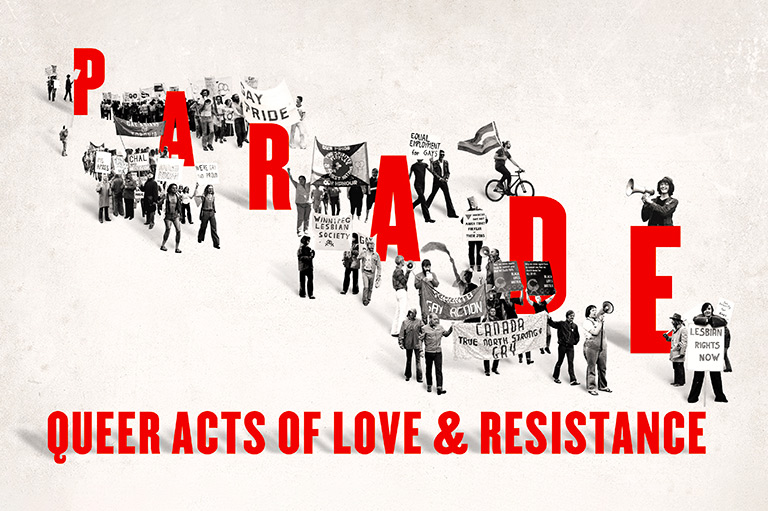
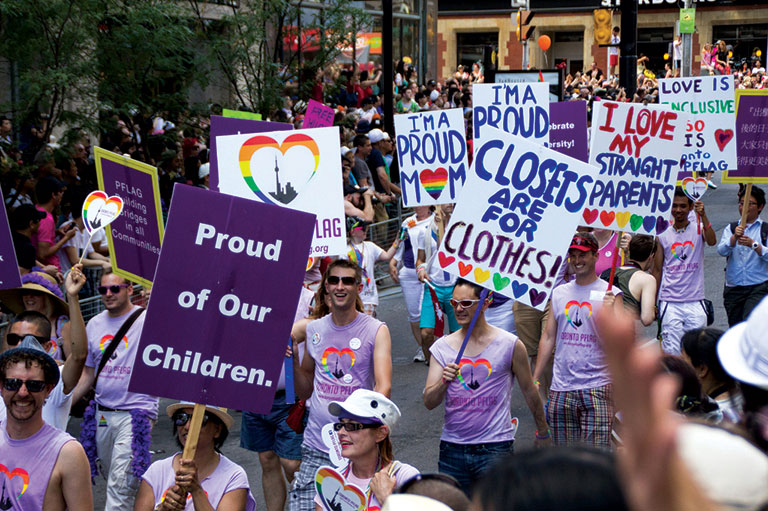
Another key argument is the importance of interconnected struggles. I’m thinking of Tom Hooper’s chapter on the policing of queer protesters during 1981’s Battle of Church Street in Toronto. The idea is that human-rights movements are most effective when different groups recognize shared interests — when they work in coalition.
Subscribe to Canada's History
Save as much as 40% off the cover price! 4 issues per year as low as $29.95. Available in print and digital. Tariff-exempt!
What are Canadian historians writing about these days?
In recent years, many historians have attempted to re-examine Canadian history through lenses like settler colonialism and systemic forms of discrimination, like white supremacy. That’s not what everyone is doing, but there has been a real attempt to try to rethink some traditional Canadian histories through these lenses. There has been more questioning about the legacy of some figures or events in Canada’s past. There has also been an attempt within the field to make histories that haven’t been told yet more visible — particularly groups that have been purposely excluded from Canadian history.
What do you think that says about our time?
It’s a reflection of contemporary social movement activism, as well as decades of hard work that activists and groups within Canada have done to push the history field from outside and inside. Unfortunately, we’re also living in a moment where there’s a real push-back to that. It’s an uncomfortable time period, but that’s good — not in terms of what’s going on in the world, but making Canadian history more uncomfortable is a positive.
Help keep Canada’s stories true, strong, and free
We hope you’ll help us continue to share fascinating stories about Canada’s past by making a donation to Canada’s History Society today.
We highlight our nation’s diverse past by telling stories that illuminate the people, places, and events that unite us as Canadians, and by making those stories accessible to everyone through our free online content.
We are a registered charity that depends on contributions from readers like you to share inspiring and informative stories with students and citizens of all ages — award-winning stories written by Canada’s top historians, authors, journalists, and history enthusiasts.
Any amount helps, or better yet, start a monthly donation today. Your support makes all the difference. Thank you!