Your history. Your inbox.
7 uniquely curated newsletters to choose from.


Have you ever wondered why there was a need to differentiate between Hereditary Chiefs and elected Chiefs during the disagreements surrounding the Coastal GasLink pipeline project? Are you curious why the Cowichan landfill case — where heavy metals from an illegal dumpsite on the Cowichan Tribes reserve in British Columbia may poison the adjacent river — isn’t being dealt with more quickly? The genesis of these issues can be traced back to the Indian Act.
The consolidated Indian Act of 1876 was established with the end goal of assimilation, a policy that, paradoxically, has historically served to maintain a separation between some Status Indians and non-Indigenous Peoples; it also failed.
But what happens if assimilation doesn’t work? The result is conflict, legal challenges and financial burdens. The discord between the Indian Act’s goal (assimilation) and its reality (legal obligations to be interpreted through the courts) has shaped the economy, politics and fabric of modern Canadian society. In this way, the Indian Act affects all Canadians.
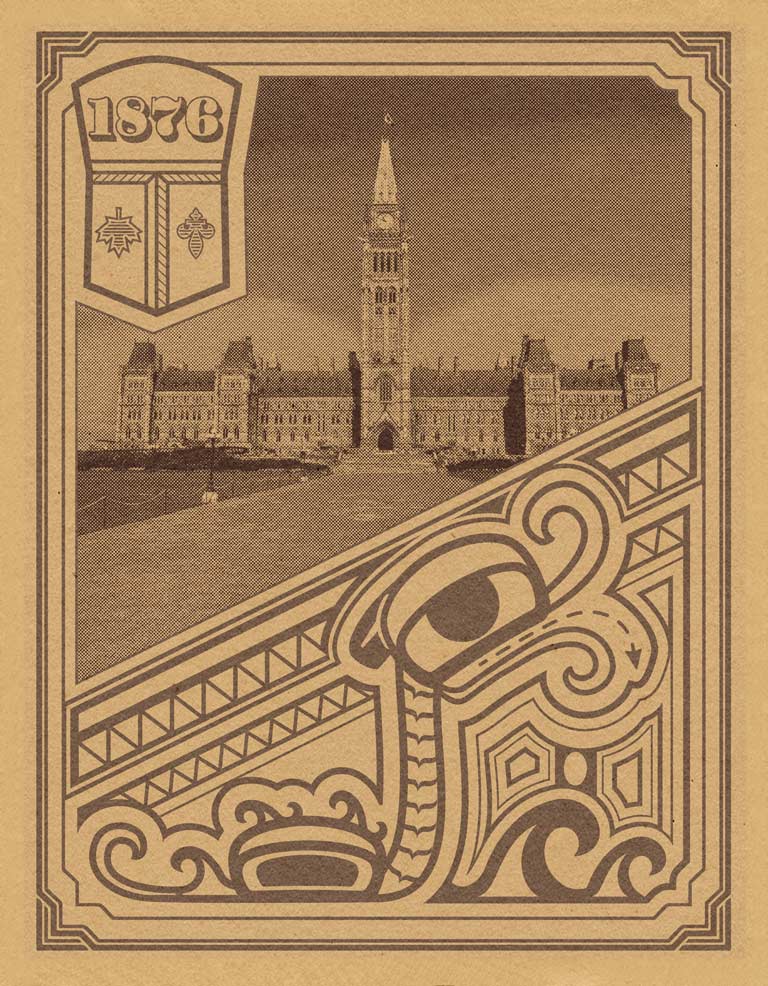
To understand the Indian Act, we need to take a quick look at Canada’s history. Before Confederation, Indian policy was guided by the Royal Proclamation of October 1763.
In the Royal Proclamation, King George III stated: “And whereas it is just and reasonable, and essential to Our Interest and the Security of Our Colonies, that the several Nations or Tribes of Indians, with whom We are connected, and who live under Our Protection, should not be molested or disturbed in the Possession of such Parts of Our Dominions and Territories as, not having been ceded to, or purchased by Us, are reserved to them, or any of them, as their Hunting Grounds.”
This policy grew out of the competition between colonial governments in the Western Hemisphere. At that time, Spanish traders were advancing northward from Mexico, Russian traders were advancing southward from Alaska, and within what would become Canada, there was the Battle of Quebec (also known as the Battle of the Plains of Abraham) between the British and French colonial governments. It was this pivotal battle that helped shape the policy of the British colonial government. Following this, there would also be American expansionist interests to contend with.

With 7 uniquely curated newsletters to choose from, we have something for everyone.
After seeing the impact of First Nations warriors during the Battle of the Plains of Abraham, King George III realized that the First Nations, or “several Nations or Tribes of Indians,” would hold the balance of power in any military campaigns fought between competing colonial governments. The First Nations would also be important in any trade relationships because they could choose to whom they wanted to sell their furs and other commodities. The legal principles, such as “Nations or Tribes” and “purchased by Us,” remain with us today. We still negotiate treaties and have legal interpretations handed down by the courts in accordance with those principles.
So, what does this have to do with the Indian Act? By the time Canada confederated, control over “Indians, and lands reserved for Indians” fell to the federal government under Section 91(24) of the British North America Act. In this relationship, the federal government has a fiduciary duty to look after Indians and lands reserved for Indians until they assimilated. Keep in mind, this was a reversal in Indian policy. Under the King’s Proclamation, Indians were not to be “molested or disturbed.”
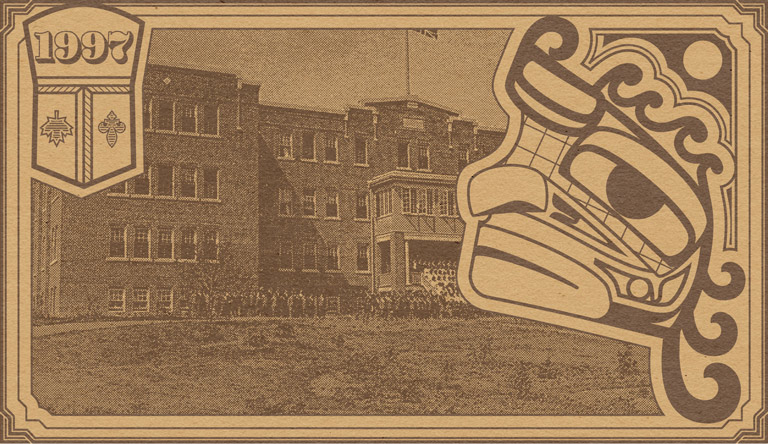
Unfortunately, it was the British North America Act that guided the creation of the Indian Act. And under the Indian Act, Canada justified putting Indigenous Peoples on reserves, taking away their kids to put in residential schools, banning potlatching and other cultural ceremonies, and replacing or overthrowing their inherent right to self-govern. The hope was that if assimilation worked, there would be no need to create new treaties, honour historic treaties or for Indigenous Peoples to have Section 35 constitutionally protected rights. Not only were they wrong about all of these things but the damage created by the Indian Act was extensive and reached beyond Indigenous Peoples, though they would be most harmed.
Since 2004, it appears that a parcel of the Cowichan Tribes’ reserve land in British Columbia has been used as an illegal dumpsite. According to an Environmental Risk and Mitigation Assessment conducted by Sperling Hansen Associates, “the site is producing leachate with the majority migrating via groundwater toward the Cowichan River.” There is enough concern that the British Columbia government ordered a Pollution Prevention Order in October 2025 because of the potential for the river to be contaminated by heavy metals carried by the leachate. (Leachate is a liquid created when water passes through waste and leaches out contaminants.)
The challenge in this conversation is who has jurisdiction? Is it the province? Is it the federal government, who through the Indian Act has jurisdiction over Indians and lands reserved for Indians? It’s a jurisdictional quagmire. Aside from the environmental damage, inaction has also led to community-to-community tension and misinformation about the Tribes’ part in solving the problem.
Approximately 290,000 cubic metres of waste have been dumped on the reserve lands of the Cowichan Tribes, according to provincial documents. And Cowichan Tribes member James Anthony Peter, who claims the land but didn’t go through with the process to be granted a Certificate of Possession, was ordered by the province to shut down the dumpsite and hire professionals for a pollution prevention and remediation plan.
Cowichan Tribes issued a press release in November 2025 to clarify their position. A portion of that release addresses the bind the Indian Act places them in: “For many years, Cowichan Tribes has been deeply concerned regarding illegal dumping of garbage, construction and industrial waste, and potentially contaminated materials on our reserve lands and the environmental impacts of these activities. Since 2010, the Indian Road site in question has been subject to ongoing efforts by Cowichan Tribes to have the unlicensed timber and gravel removal and unauthorized dumping stopped and offenders held responsible. These actions include repeatedly issuing cease and desist letters to both the individual coordinating these activities and companies participating in the dumping, as well as meetings and site visits with federal representatives from Indian and Northern Affairs Canada (INAC), Health Canada, Aboriginal Affairs and Northern Development Canada (AANDC) and the Royal Canadian Mounted Police (RCMP) to request assistance and collaboration.
“However, there have been significant limitations to the actions Cowichan Tribes has been able to take without the support and enforcement of senior levels of government. The authority for enforcement and remediation of these parcels of land where the dumping has occurred has always been under Canada and the Indian Act. The lots are excluded from the Cowichan Tribes Land Code and remain under the jurisdiction of Canada.”
Advertisement
While the involvement of the provincial government has renewed hope that the additional pressure will bring attention and action to the issue, people in the surrounding area who aren’t aware of the political roadblocks are left wondering why no one does anything about the issue.
Another way into understanding the compounding effect of jurisdictional conflict and neglect by the federal government is to look at the creation of reserves under the Indian Act alongside the federal government’s abdication to fulfil its obligations. Both matters impact Indigenous Peoples and other Canadians.
There are now, on average across the country, more people living off-reserve and in urban centres like Toronto or Vancouver than on-reserve. This is a dramatic shift. Indigenous Peoples aren’t leaving reserve communities because they want to; they’re leaving because they’re being forced out by inadequate funding for new or safe housing, an Indian Act issue. They’re also leaving for better access to health care and more job opportunities. Unfortunately, moving off-reserve doesn’t solve housing issues. It transfers the responsibility from the federal government to provincial and local governments, placing pressure on those systems to provide housing to Indigenous Peoples, who are disproportionately at risk of poor housing and being unhoused off-reserve because of the impacts of colonization.
During the Coastal GasLink pipeline project in British Columbia, there was friction with the Wet’suwet’en Hereditary Chiefs in 2019 and 2020. Conflict surfaced during the duty to consult and accommodate, a process that arises when actions the Crown takes may impact Indigenous Peoples and their rights outlined in Canada’s Constitution. In the media, including in articles in the New York Times and the Vancouver Sun and in a widely distributed Canadian Press story, the government repeated that the Crown had fulfilled its duty to consult and accommodate because it had signed agreements with the “elected councils” along the proposed route.
The “elected councils” — recognized under the Indian Act as representatives for the community — were originally instituted as part of the assimilation process outlined in the Indian Act. The elected council was tasked with administering such programs as health care, housing and education. The Indian Act election process presents a complex situation. Although the leaders of these councils are chosen by their community under the act’s regulations, it’s crucial to understand that their ultimate accountability rests with Crown- Indigenous Relations and Northern Affairs Canada and with Indigenous Services Canada.
In addition to the elected councils, the Wet’suwet’en community has an office of Hereditary Chiefs who entered into negotiations with Canada and British Columbia regarding rights and title. Notably, in 2020, the federal government posted a memorandum of understanding on its website highlighting the authority of Hereditary Chiefs in matters of rights and title. Despite that, it was the elected Chiefs and councils, not the Hereditary Chiefs, who signed agreements along the proposed route. The latter remain opposed to the Coastal GasLink pipeline project.
Save as much as 40% off the cover price! 4 issues per year as low as $29.95. Available in print and digital. Tariff-exempt!
The result of the lack of consultation with the Hereditary Chiefs was significant additional project expenses. Along with blockades on the route and work sites by the Wet’suwet’en land defenders, there were supportive protests across the country, including railway and port blockades, which slowed down shipping of goods. Other costs include, but aren’t limited to, legal fees for judicial reviews and project-delay costs due to the slowdown in construction while the legal issues were being sorted out. Not only was this disruptive to the project but it was also disruptive to the work and lives of many people in Canada.
A comparative project was the twinning of the Trans Mountain pipeline, which was originally supposed to need an investment of $5.4 billion but ended up costing approximately $34.2 billion. This is at its core an Indian Act issue, since some of those expenses relate to the act’s failure to assimilate Indigenous Peoples, who now have protections under Section 35 of the Constitution. The recognition of rights has left significant legal land-claims questions to be decided through negotiation or through the courts.
These things take time, and the Supreme Court of Canada understood that there needed to be a way to guard Aboriginal rights while these matters were being sorted through. Its solution was to introduce a duty-to-consult-Indigenous-groups obligation so their legal interests remain protected. With Trans Mountain, Indigenous nations, including the Squamish Nation and the Tsleil-Waututh Nation, went to court and argued the Crown’s consultation was inadequate. Ultimately, they lost, but the costs accrued. There have been more than 100 court cases where the government has had to prove to the court that it discharged its duty to consult in the latter’s view. The fallout of failed Indian policy is economic uncertainty, scared-off investors and time and money spent defending the rights of Indigenous Peoples.
The idea of a cultural melting pot is a historic metaphor for assimilation. The idea was that cultures coming from all over the world to a new place would get into a big pot and melt together into one uniform culture. In recent history, though, Canada has instead seen itself as a cultural mosaic — a place where people would come from all over the world and figure out how to get along without having to fundamentally change their culture.
But the Indian Act is at odds with the mosaic on two fronts. Its goal was to assimilate Indigenous Peoples, but it had the opposite effect. Some Indigenous Peoples are legally defined under the Indian Act, meaning they live under different laws than everybody else and on different lands than everybody else — all of which has served to keep them separate.
While the Indian Act legally others Indigenous Peoples, it has also succeeded in satisfying its design by forcing Indigenous Peoples to leave the reserves, as discussed earlier, and to become more like everybody else.
Part of Canada’s cultural identity is as the home of immigrants. Engrained in that is the idea that when people migrate to Canada from other parts of the world, they do so knowing that when they arrive, they’ll be able to hold onto their cultural identities and access the opportunities the country provides. While Canada’s current views and treatment of Indigenous Peoples are somewhat progressive in comparison to our own history and the modern state of some other countries, the Indian Act challenges our status as a progressive country. It’s a document built on assimilation. It contains laws that govern Indigenous Peoples from birth to death in a way that doesn’t allow them to maintain their culture and their rights or move toward self-government. It causes discord in the economy, within communities and within the fabric of society. And until we’re ready to let go of this piece of history, Canada cannot progress in the right direction.
Canada's History magazine was established in 1920 as The Beaver, a Journal of Progress. In its early years, the magazine focused on Canada's fur trade and life in Northern Canada. While Indigenous people were pictured in the magazine, they were rarely identified, and their stories were told by settlers. Today, Canada's History is raising the voices of First Nations, Métis and Inuit by sharing the stories of their past in their own words.
If you believe that stories of Canada’s Indigenous history should be more widely known, help us do more. Your donation of $10, $25, or whatever amount you like, will allow Canada’s History to share Indigenous stories with readers of all ages, ensuring the widest possible audience can access these stories for free.
Any amount helps, or better yet, start a monthly donation today. Your support makes all the difference. Thank you!