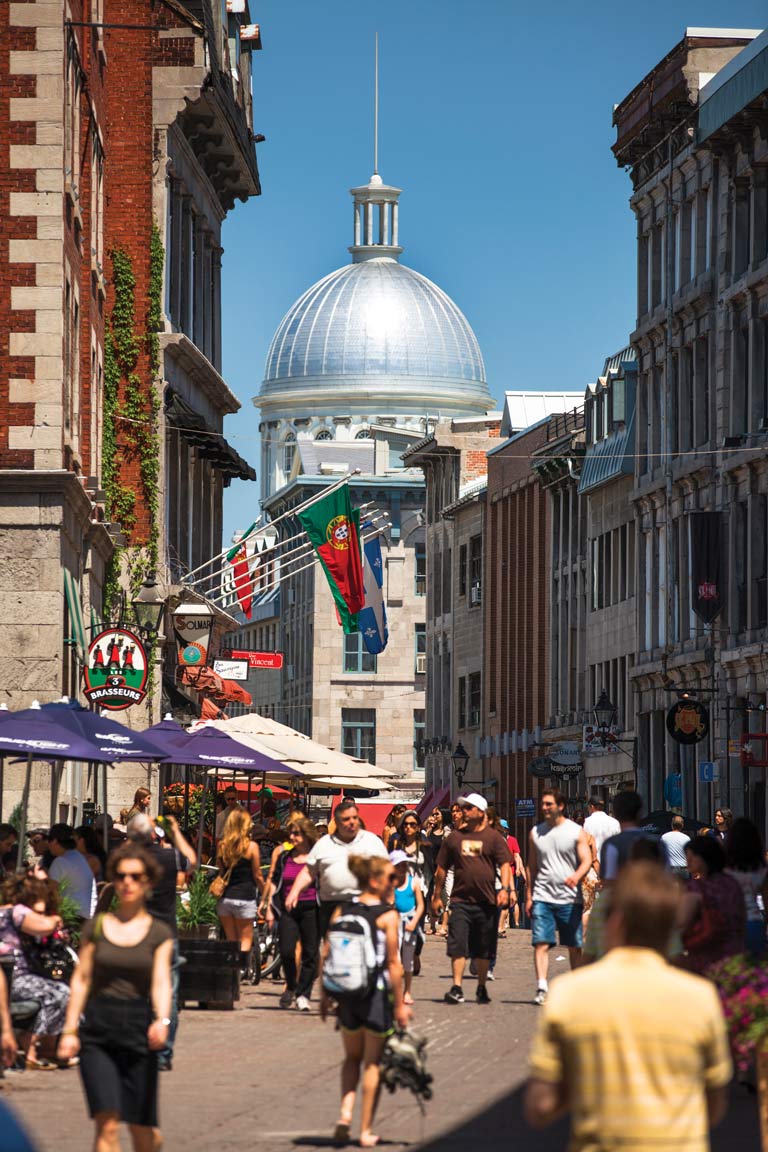
In 2025, as the 50th anniversary of the city’s Olympics approached, Montreal museums, civic authorities and other organizations announced plans for celebrations, exhibitions and academic conferences to commemorate the summer of 1976. Montrealers were invited to relive the excitement of the sporting events and the athletes’ accomplishments and to reflect on the Games as well as their lasting impact on the city. The attention paid to this anniversary has also led many to consider the complex legacy of the 1976 Olympic Games — a legacy with origins in the years leading up to that pivotal summer.
Jean Drapeau and Montreal’s candidacy
Jean Drapeau is almost synonymous with the 1976 Summer Games. Montreal’s mayor from 1960 to 1986, Drapeau was one of the most influential political leaders in the city’s history. As the founder of the Civic Party, which controlled the city’s administration throughout the 1960s and for most of the ensuing decade, Drapeau was the principal architect of a radical transformation. His ambition was twofold: to make Montreal into a modern metropolis, like its North American counterparts, and for it to be recognized as a world-class city. He pursued this latter goal vigorously, and successfully, notably by welcoming the 1967 Universal and International Exposition, better known as Expo 67.
Banking on that success, he set his sights on the 1976 Summer Games. On May 12, 1970, the International Olympic Committee announced that Montreal had been selected, and a jubilant Drapeau turned to the task of preparing to build the Olympic Park and other facilities.

Your history. Your inbox.
With 7 uniquely curated newsletters to choose from, we have something for everyone.
A vision for the Games
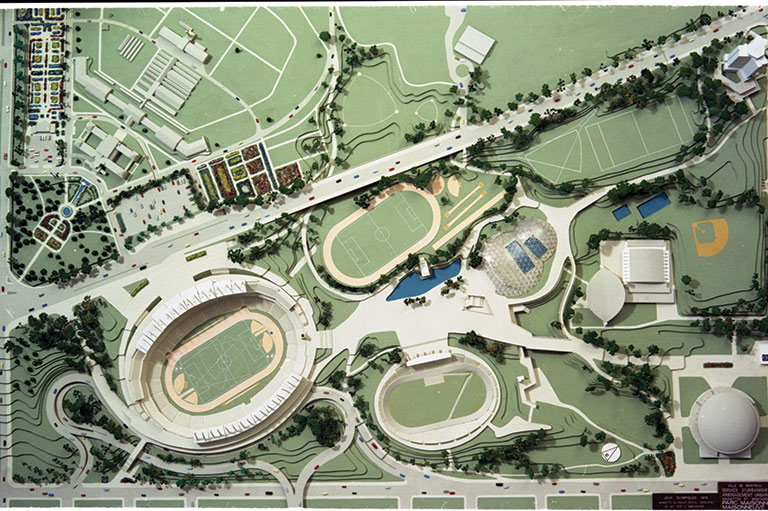
Montreal’s successful bid was based on the city’s proposed vision. The key Olympic facilities were to be located within Maisonneuve Park in the east end, with a model showing an 80,000-seat stadium, an aquatic centre and a velodrome. The city also committed to building an Olympic Basin and an Olympic Village to house the athletes. Finally, an easterly extension of Montreal’s metro system was promised to provide access to the main venues. The city was to pay for and supervise the new facilities as well as renovations to existing municipal infrastructure, except for the metro. The total cost was estimated at $120 million.
Between March 1970 and the spring of 1972, the proposal was substantially revised. Drapeau was impressed by the artistry and technological daring of French architect Roger Taillibert. The men met in the spring of 1971 and Taillibert visited Montreal later that summer. Although the city announced his hiring in March 1972, by then the architect had already been commissioned to design the Olympic Park; a model for his “Cité Olympique” was unveiled on April 6, 1972.
The new design was a significant departure from the original proposal. Taillibert envisioned an integrated complex linking the stadium, velodrome and aquatic centre. Both the velodrome and the stadium were innovative in their use of precast, pre-stressed concrete. He chose an elliptical form for the stadium, with a retractable Kevlar roof whose mechanism was to be housed in a massive tower. The aquatic centre would be situated at the base of this tower. While portions of the structure were to be cast on-site, 12,000 other components were to be precast.
Drapeau’s influence was also manifest in the design selected for the Olympic Village. The initial presentation focused on a modest Games and with accommodations that could subsequently be transformed into low-cost housing; this would have been eligible for financial support from both the federal and provincial governments. However, in keeping with his grand vision for the Olympics, Drapeau became enamoured with a striking apartment complex on the French Riviera, the Baie des Anges Marina, and he enthusiastically supported plans Montreal developers submitted for an Olympic Village composed of twin pyramid-shaped 19-storey towers. Their units would be rented at market rates after the Games.
While Drapeau’s dreams shaped much of the Games’ physical infrastructure, the local Olympic Organizing Committee, or COJO (Comité organisateur des Jeux Olympiques), was intimately involved in all other aspects of planning. It sought to promote the Olympic spirit and to include a significant cultural component in the programming. The goal was to celebrate and promote amateur sports, as well as to bridge the divide between sports and culture. An ambitious arts and culture program was developed, with financial support from the Quebec and federal governments, to highlight achievements in the arts and to showcase Canada’s diversity.
From July 1 to Aug. 1, 1976, concerts, performances, festivals, craft shows and art exhibitions were held in Montreal and four other cities. One of the most ambitious elements of the program was an open-air installation, Corridart, that brought together art and architecture. A second component of the program focused on graphic arts and design; a team of talented young Quebec graphic artists and designers were charged with crafting the Games’ visual identity, from the official logo to the mascot, including promotional materials, uniforms, signage, street furniture and the Olympic torch.
Public works and the governance challenge
The city bore the full weight of financing the infrastructure, in addition to the planning, management and construction of the Olympic Park, Olympic Village and other venues. In theory, this meant that work was to be organized and coordinated by Montreal’s public works department. The real decision-making power, however, was in the hands of Drapeau and the city’s executive committee, which was under the mayor’s total sway.
In embracing Taillibert’s grandiose design, the mayor became determined to defend the artistic vision for the Olympic Park, regardless of the cost and whatever delays might arise.
And delays there certainly were. The design continued to evolve, and preparing more detailed drawings proved quite demanding. In May and June of 1973, the city hired Quebec-based engineering firms to develop technical drawings based upon Taillibert’s plans. Delays ensued due to the design’s complexity and frequent revisions, as well as challenges posed by the materials themselves. In the spring and summer of 1974, the city hired French engineering firms, which had previously worked with Taillibert, to support the local consultants. With so many parties involved, misunderstandings, conflicts and further delays inevitably arose.
As a result, the Olympic Park took shape very slowly. In April 1973, excavation began on the site of the stadium and velodrome, and it wasn’t completed until November 1973. Velodrome construction began in August 1973 and was only completed in June 1976. Construction of the Olympic Stadium, meanwhile, began in the spring of 1974 and was soon beset with major organizational problems — worsened by labour strife, leading to slowdowns and lengthy strikes.
By early 1975, it was clear that it would be difficult to complete the stadium in time for the Games. In November 1975, faced with chaos and a looming disaster, the Quebec government assumed control of the entire Olympic Park and created the Olympic Installations Board (Régie des installations olympiques, or RIO) to ensure that all essential facilities were completed on time. Work on the tower and the retractable roof was halted.
The construction of the Olympic Village was also rife with problems. Fearful that the athletes’ housing might not be ready on time, COJO was forced to agree to the demands of the project’s private-sector promoters and underwrite a substantial portion of the cost of the pyramids. As expenses rose to three times the initial estimate and rumours of malfeasance grew, the Quebec government intervened: in April 1976, the Olympic Village was expropriated and transferred to RIO.
As Olympic Village expenses tripled the initial estimate, the Quebec government intervened
Voices of discord
During the early 1970s, there was little public criticism of the Games. Instead, opposition crystallized around Drapeau’s broader goal of remaking Montreal as a modern metropolis, at the expense of its historic buildings and neighbourhoods. A cohesive heritage movement gradually took shape, as local groups fighting to preserve iconic buildings and green spaces coalesced. In 1973, Save Montreal/Sauvons Montréal was founded; two years later, Heritage Montreal was established by Phyllis Lambert.
Heritage activists did, however, play a key role in the creation of the Montreal Citizens Movement (MCM), a coalition of several groups determined to contest the 1974 municipal elections. The MCM’s program emphasized the democratization of urban government and giving greater attention to housing and neighbourhood life. In November 1974, 18 MCM councillors were elected, so questions about the Olympics could now be raised within the council chamber. One of the newly elected councillors was Nick Auf der Maur, a journalist for the Gazette, who embarked on a quest to investigate Drapeau’s management of the Olympic Games. He shared his findings in his columns, in media interviews and, eventually, in his book The Billion-Dollar Game: Jean Drapeau and the 1976 Olympics.
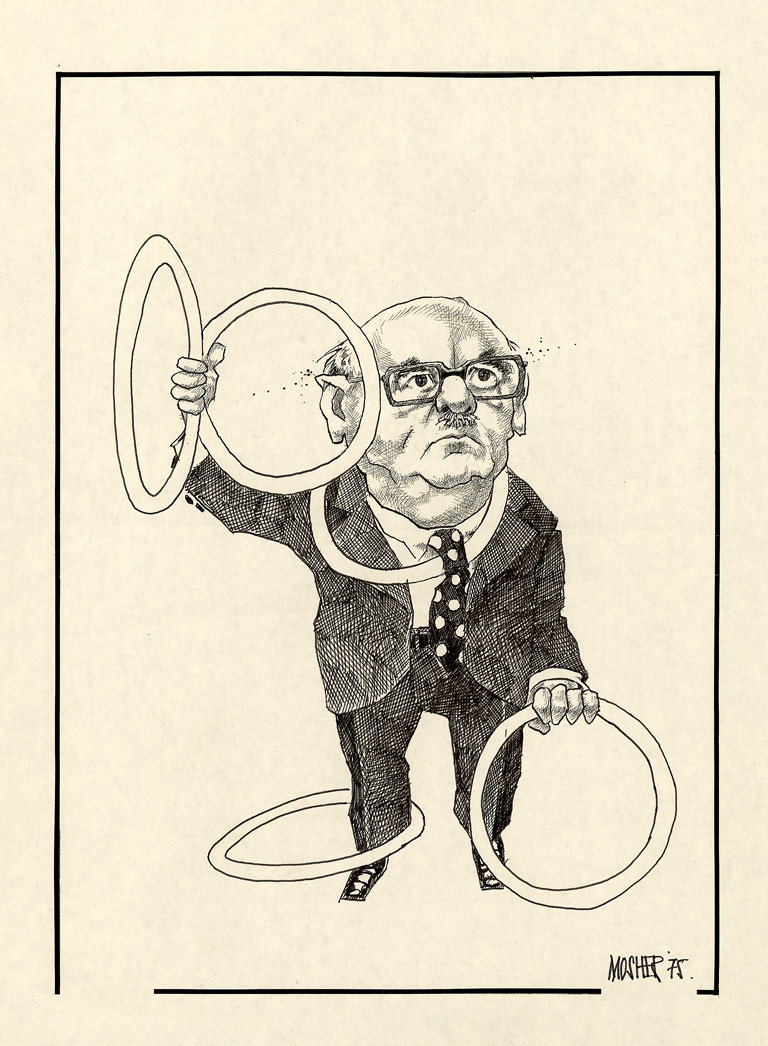
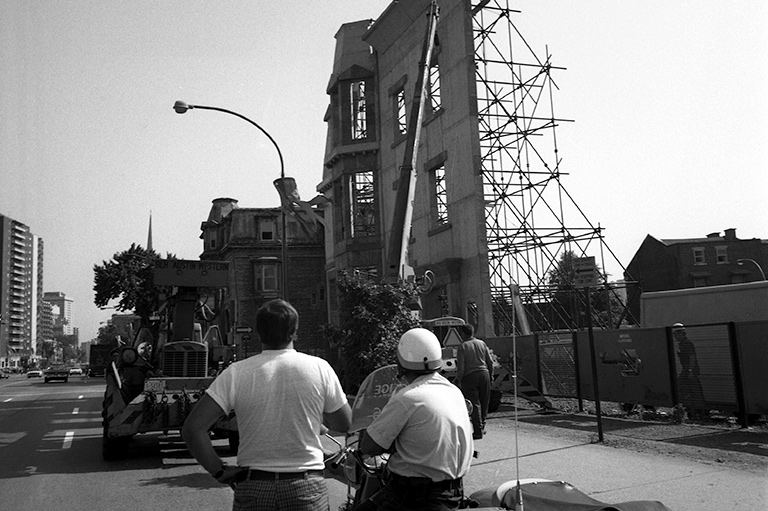
Beginning in late 1974, political cartoonists at the major Montreal daily newspapers produced a host of images critical of Drapeau. The most famous was undoubtedly the cartoon by Aislin (a.k.a. Christopher Terry Mosher) on Dec. 21, 1974, mocking the mayor’s claim that “the Olympics can no more have a deficit than a man can have a baby.” The most direct confrontation between Drapeau and his critics occurred on the eve of the Games. As part of the cultural program celebrating the Olympics, artists and heritage activists conceived of Corridart, a subversive outdoor installation on Sherbrooke Street, along the urban corridor leading from downtown Montreal to the Olympic site. Drapeau had the installation dismantled in the dead of night (see “Canada's biggest case of art censorship”).
Subscribe to Canada's History
Save as much as 40% off the cover price! 4 issues per year as low as $29.95. Available in print and digital. Tariff-exempt!
A triumph and a reckoning
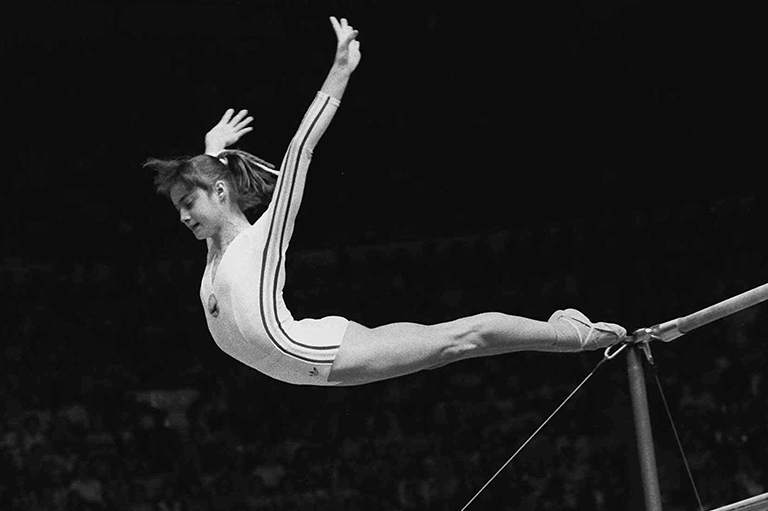
Despite the delays and anxiety of the preceding months, the Games of the XXI Olympiad were a tremendous success. As the first Olympic Games ever held in Canada, they were a source of joy and national pride. The opening and closing ceremonies as well as the competitions in venues throughout the city were universally acknowledged to have exceeded expectations. More than three-million spectators attended the various events, and a further 1.5-billion television viewers around the world shared in the drama and excitement.
Once the crowds had dispersed, though, the Quebec government, now the owner of Olympic Park and Olympic Village, focused on determining the cause and the extent of the cost overruns, and how to cover the massive debts incurred. The province appointed a commission of inquiry, chaired by Judge Albert Malouf, to conduct a thorough review of the costs of the Games and the Olympic installations. The inquiry called witnesses, held public and in-camera hearings and consulted experts in engineering, project management and accounting. It submitted its final report in April 1980.
The Malouf inquiry concluded that the cost of the Games, as of Aug. 1, 1976, was $1.33 billion. The final tally — once the subsequent completion of the stadium and other expenses were included — was closer to $1.6 billion. Compared with the initial estimate of $120 million, this represented the largest cost overrun in the history of the Summer Olympics — a record that stood until the 2016 Games in Rio de Janeiro.
The commission’s report contained a detailed reconstruction of the logistical and financial mismanagement that plagued the Montreal Olympics. While recognizing that inflation and toxic labour relations had contributed to the spiralling costs, the commission laid the blame squarely on the incompetent management of Drapeau, and both the mayor and the architect’s total disregard for the bottom line. The Malouf inquiry also emphasized the burden that the deficit of more than $1 billion, plus interest, represented for Montreal taxpayers and the province, as well as its opportunity cost. Faced with a deficit of close to $1 billion, the Quebec government compelled the City of Montreal to institute a special Olympic property tax, to be paid by Montrealers every year to defray its portion, while the province imposed a special tax on tobacco products. The federal government agreed to extend the special Olympic lottery until 1979 as its contribution. The deficit was finally paid off in 2006.
Fifty years later
While reconstructing the history of the Montreal Summer Olympics is straightforward, assessing its long-term impact is more complicated.
The pride and excitement generated by the Games, in addition to the extensive coverage provided by CBC, certainly contributed to a greater public interest in Olympic sports. Government support for Canadian athletes increased in preparation for the Games and was further strengthened in the ensuing years. The initiatives of COJO and the Games themselves exposed Montrealers and a broader national audience to a range of sports that had previously attracted few participants. Academics such as Bruce Kidd and Florent Lefèvre — plus, organizations like Sports Quebec, representing the province’s sporting federations, and other groups — have argued that the Games were a catalyst for the revitalization of amateur sport, the development of new programs for athletes and broader access to a wide range of sports. In addition, the facilities built for the Games — like the Olympic Basin, the aquatic centre and, very briefly, the velodrome — left a legacy of sporting infrastructure that could host international competitions and support the development and training of elite athletes. More modest municipal facilities built for the Olympic competitions, particularly the Centre Claude-Robillard, continue to benefit scores of Montrealers of every age.
Exhibitions held in Montreal during the summer of 2026 all highlight the work of the talented artists and graphic designers who created the official “signature” of the Games. Their work reinforced the reputation for excellence in design that Montreal first achieved at Expo 67. In showcasing this talent, the Olympics no doubt played a role in Montreal’s designation as a UNESCO City of Design in June 2006. The design team’s legacy also lives on in Montreal’s official logo, which was inspired by that of the Games.
Even the controversy surrounding the Games and the Malouf inquiry’s public rebuke of Mayor Drapeau’s oversight of the project were defining moments in the political and social history of Montreal. They strengthened groups calling for greater municipal democracy, the protection of heritage buildings and neighbourhood revitalization.
The obvious, and certainly most contentious Olympic legacy, is, of course, the stadium. Its history remains fraught. The tower was completed and the retractable roof finally installed in 1987. Soon afterward, the first tears appeared and the Kevlar proved unable to cope with Montreal winters. In 1998, it was removed and replaced by a non-retractable roof of more resilient material. However, the stadium, its tower and its roof have continued to have structural problems. In 2026, major work on modifying the roof continues and costly renovations to the interior are anticipated.
Yet, Olympic Stadium has become a Montreal landmark. In authorizing recent expenditures, the minister responsible stated that the stadium was a Quebec icon. A heritage study commissioned by RIO concluded that Roger Taillibert’s creation was a masterpiece of modern architecture and a testimony to his exceptional talent. The authors quoted Taillibert himself: “It is time, and time alone, which allows for an accurate analysis of value.” For its admirers, and there are many, Olympic Stadium has in effect stood the test of time.
Olympic Stadium has become a Montreal landmark and been called a Quebec icon
Help keep Canada’s stories true, strong, and free
We hope you’ll help us continue to share fascinating stories about Canada’s past by making a donation to Canada’s History Society today.
We highlight our nation’s diverse past by telling stories that illuminate the people, places, and events that unite us as Canadians, and by making those stories accessible to everyone through our free online content.
We are a registered charity that depends on contributions from readers like you to share inspiring and informative stories with students and citizens of all ages — award-winning stories written by Canada’s top historians, authors, journalists, and history enthusiasts.
Any amount helps, or better yet, start a monthly donation today. Your support makes all the difference. Thank you!