Jackie Robinson in Montreal
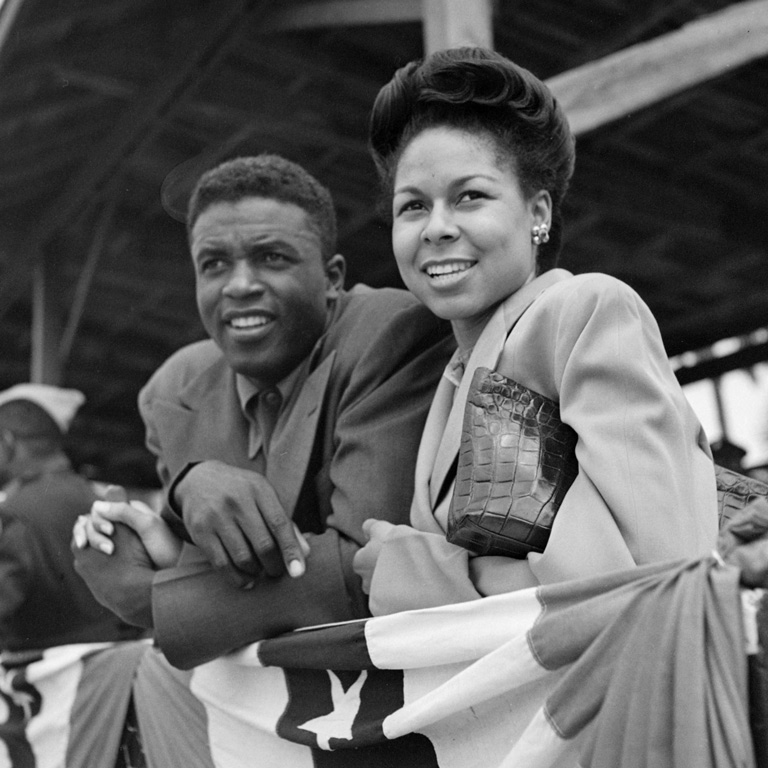
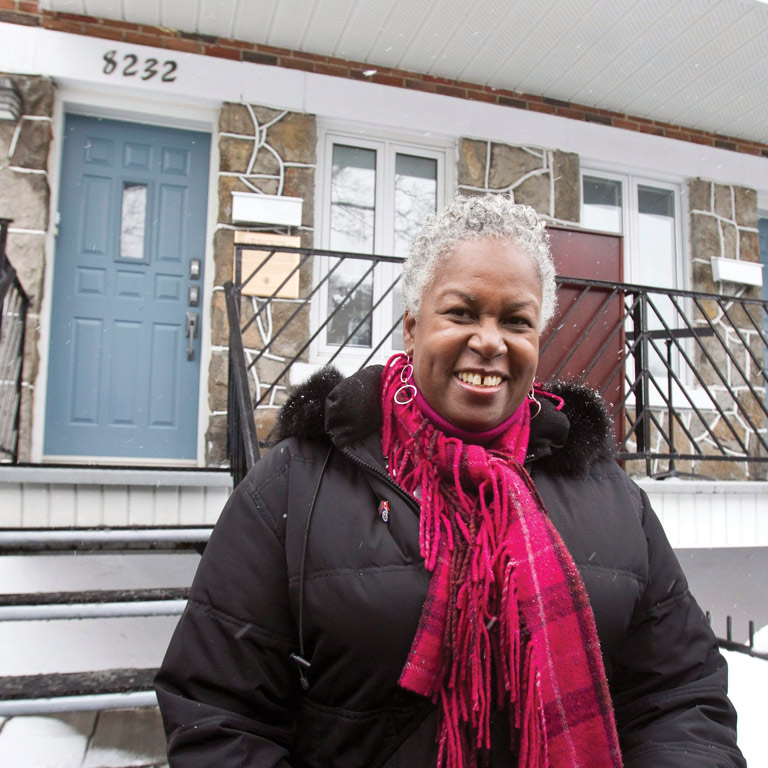
Rachel Robinson stood before the door at 8232 de Gaspé Ave. in the predominantly French-speaking east end of Montreal with much trepidation. Robinson and her husband, Jackie, had moved to the city only a few weeks before and they’d been given a list of apartments to view. As Rachel later recalled, “What do they know? This is not going to go well.”
It was a fair expectation. The Robinsons had recently experienced extreme racial prejudice during spring training in deeply segregated Florida, so Rachel anticipated the same treatment as she rang the doorbell. Instead, the landlady answered the door smiling, welcomed her in, showed her around and even insisted that the couple use her linens, china and glassware. “She was not discriminating against me,” Rachel noted in a 2005 interview with the National Visionary Leadership Project (NVLP), a series of interviews with Black leaders in the United States. “She was welcoming me in a very different way.” As it turns out, this was just the beginning of a relationship with the city that would change her husband — and baseball — forever.
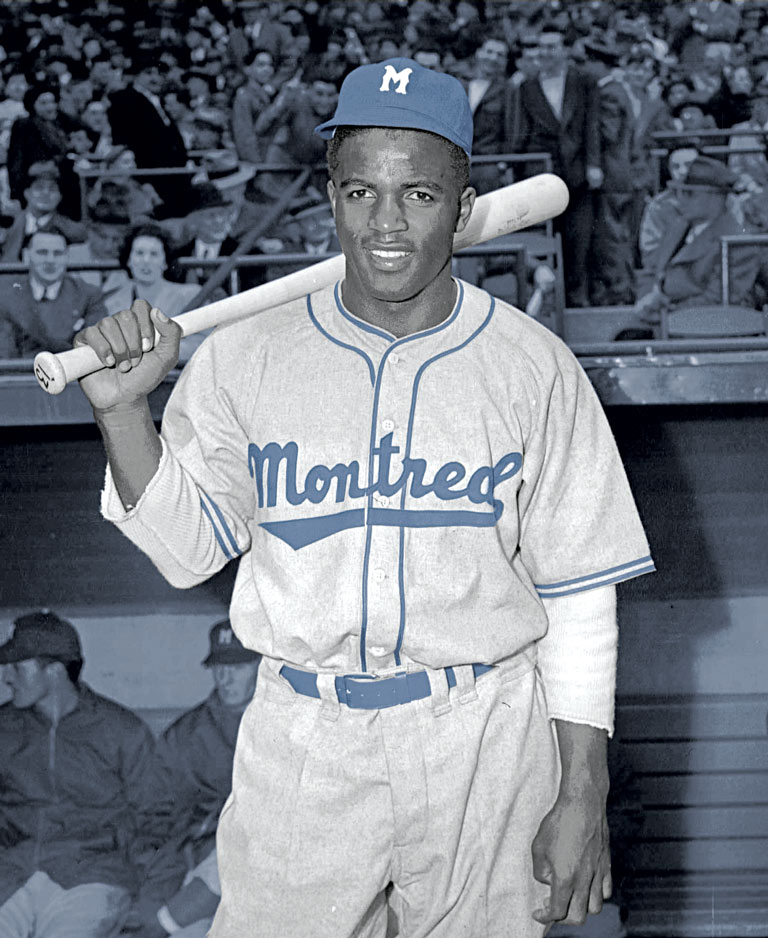
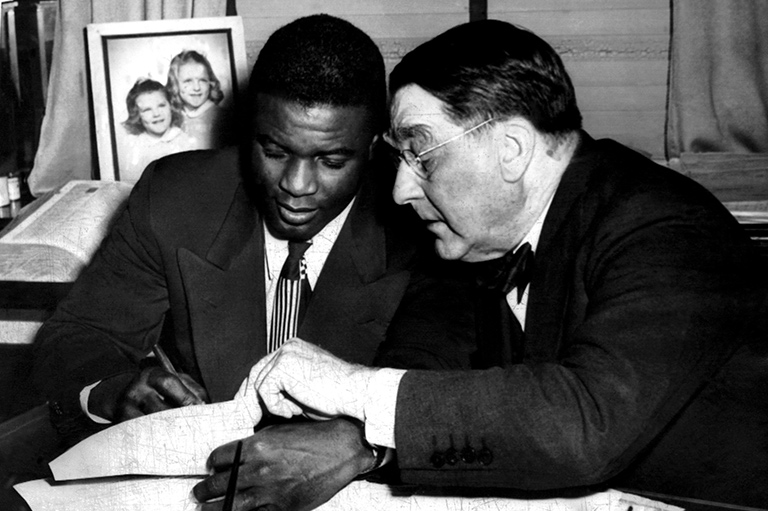
Eighty years ago, on April 18, 1946, Jackie Robinson broke Minor League Baseball’s colour barrier when he stepped up to the plate as a member of the Montreal Royals. Black athletes hadn’t been able to play in Minor or Major League Baseball since the 1880s, but that era ended on Oct. 23, 1945, when Brooklyn Dodgers general manager Branch Rickey signed Robinson to a Minor League contract to play for the Dodgers’ farm team in Montreal.
Robinson later said it was the friendly reception he received in Montreal that helped him become the legendary player he was with the Dodgers — where he would be a six-time All-Star, win National League Player of the Year and help the team win the World Series in 1955. In an interview with Star Weekly in 1957, Robinson said, “I owe more to Canadians than they’ll ever know. In my baseball career they were the first to make me feel my natural self.”
With 7 uniquely curated newsletters to choose from, we have something for everyone.
A warm embrace
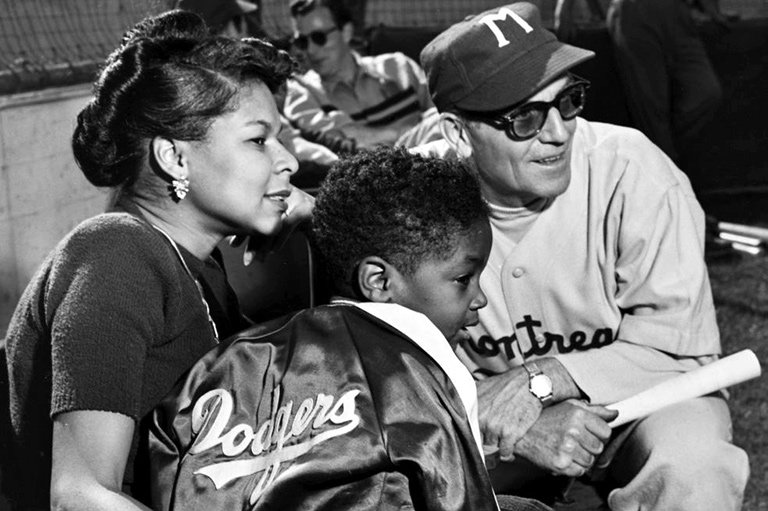
The experience stayed with Rachel Robinson as well. In an interview with the NVLP almost 60 years later, she recalled her time in the city: “There was a tendency on the block for people to come out on their back porches in the evening, so you’d wave to people down next door, down this way and that. When the women saw that I was pregnant, they came in to tell me that they wanted to help. Now, there was rationing, and you had to use food stamps [since the war had just ended] and they would come in and bring me extra stamps so I would get the proper nutrition.” The support didn’t stop there. “They knew I was sewing my clothes, so they came in to put the hems in my dresses. If I’d come walking down the street with my groceries the kids would come run and help me carry them into the house. [These were] things I wasn’t accustomed to anywhere.”
Perhaps not surprisingly, her husband also got a lot of attention. “Jackie was regularly surrounded by admirers on his streetcar ride back home,” Sam Maltin, a reporter for the Montreal Herald and Pittsburgh Courier, wrote in the former paper in 1946. “In restaurants, Jackie’s meal became cold as he was so busy signing autographs.”
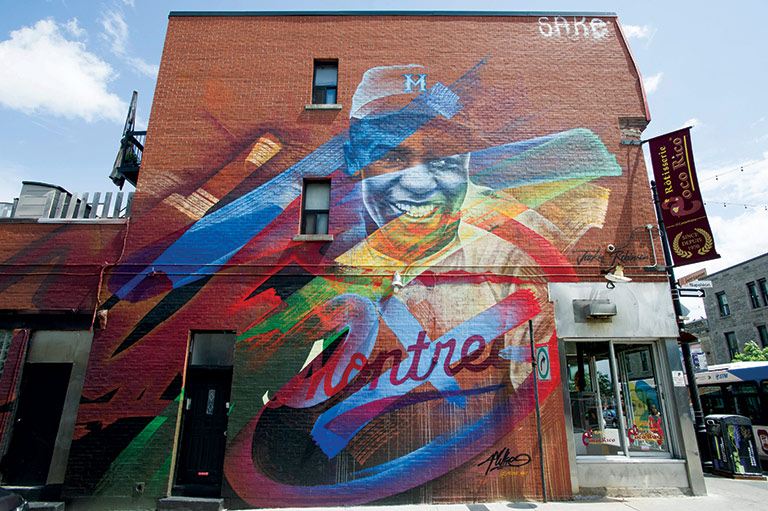
“Instantly he became our idol,” Quebec stage, film and television actor Marcel Sabourin says in Marcel Dugas’s book Jackie Robinson: Un Été à Montrèal (Jackie Robinson’s Summer in Montreal). “His photos filled our scrapbooks, and in the alleys all the youngsters playing ball wanted to be Jackie Robinson.”
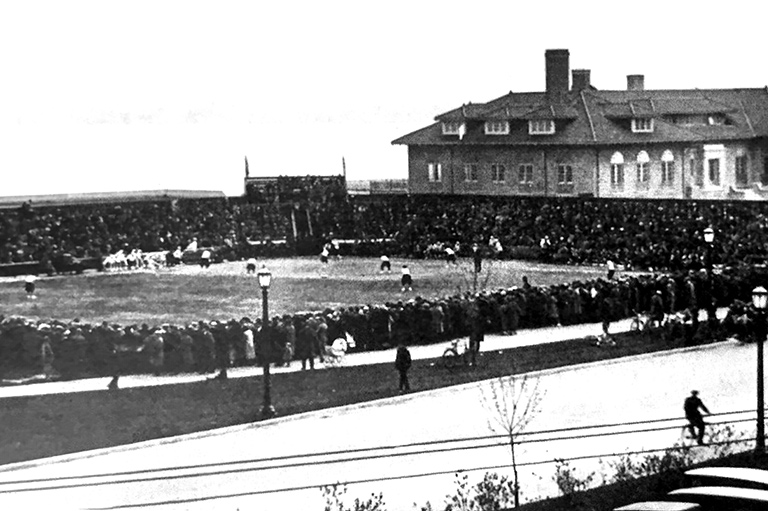
Kids like Mitzi Melnick and Chuck Este — then 15 and six, respectively — were dazzled by Robinson. Melnick, who later had a son, Mitch, who became a sports-radio personality, would take the streetcar with her friends to watch the Royals at Delorimier Stadium. She later recalls in True: The Four Seasons of Jackie Robinson by Kostya Kennedy, “Robinson was the player we were there to see. He got a standing ovation every time he got a hit. He just brought such excitement, the way that he played. You would be watching him and you would also be looking around and connecting with the other people there with you, like, ‘Isn’t this great?’ ”
“People headed out to the park, expecting him to do something magnificent,” Este, who became a baseball player signed by the San Francisco Giants organization, adds in Kennedy’s book. “And we would wait for them to come back and tell us if he did. He was like our version of Maurice Richard.”
The fact that Montreal was chosen as the city to integrate Minor League Baseball gave a special sense of pride to the people who lived there, especially to Black Montrealers. “For us that year it was different, it felt different,” recalls Montrealer and future Canadian Football League player Ivan Livingstone, who was 15 in 1946. “As soon as you got near the park, you got the energy. There were not a lot of Black people in the stands, but we gained a level of respect. I remember people smiling at us, as if we were associated with Jackie, as if we had something to do with it! And the truth is, we kind of felt like we did have something to do with it. Like we were on the inside.”
“In the alleys all of the youngsters playing ball wanted to be Jackie Robinson”

Advertisement
The Montreal impact
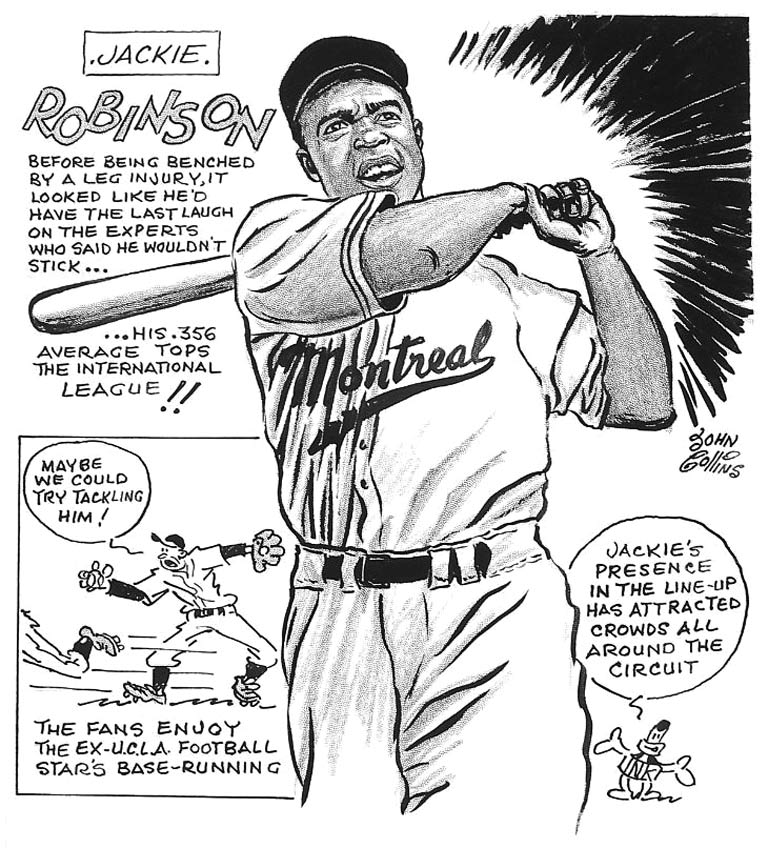
Robinson excelled during his time in the city. He led the league in batting average (.349) and runs scored (113). He also finished second in the league with 40 stolen bases. As well, the second baseman had the highest fielding percentage in the league for that position.
The Royals made it to the Little World Series against the Louisville Colonels. The first three games were played in segregated Kentucky; the jeering from racist fans had got to Robinson and he had only one hit out of 11 at-bats. Robinson recalls in his 1972 autobiography, I Never Had It Made, “The worse I played, the more vicious that howling mob in the stands became. I had been booed pretty soundly before, but nothing like this. A torrent of mass hatred burst from the stands with virtually every move I made.”
Down two games to one, the Series switched back to Montreal. As Robinson writes in I Never Had It Made, “When we came on the field, our loyal Canadians did everything but break the stands down.” Montrealers had heard how he’d been treated in Louisville and they came to his defence. Every time a Louisville player stepped up to bat, he was soundly booed by the Montreal faithful. “I didn’t approve of this kind of retaliation,” Robinson writes, “but I felt a jubilant sense of gratitude for the way the Canadians expressed their feelings. When fans go to bat for you like that, you feel it would be easy to play for them forever.”
The throaty cheers inspired Robinson. In Game 4, he hit a single in the 10th inning to drive in the winning run and tie the Series. In Game 5, he had three hits in five turns at bat, with a double, a triple and a run batted in, and scored the winning run to lead the Royals to a 5-3 victory. In Game 6, Robinson had two more hits, and the Royals won 2-0, thereby winning the Series four games to two.
After the victory, the Montreal crowd rushed the field and chanted Robinson’s name. “Jackie came out and the crowd surged on him,” wrote reporter Sam Maltin in the Pittsburgh Courier. “Men and women of all ages threw their arms around him, kissed him and pulled and tore at his clothes, and then carried him around the infield on their shoulders, shouting themselves hoarse. Jackie, tears streaming down his face, tried to beg off further honors.”
After he changed, the crowd still followed him and chased him down the streets, wanting to touch him one last time. “When I hear of bad things that are happening in other places — where people are fighting or being violent and are trying to exclude African-Americans — I think back to the days in Montreal. It was almost blissful,” Rachel Robinson told the Globe and Mail in 2013.
In 1948, Robinson reflected on his time in Montreal in his other autobiography, My Own Story: “As my plane roared skyward and the lights of Montreal twinkled and winked in the distance, I took one last look at this great city where I had found so much happiness. ‘I don’t care if I never get to the Majors,’ I told myself. ‘This is the city for me. This is paradise.’ ”
“There were not a lot of Black people in the stands, but we gained a level of respect”
Save as much as 40% off the cover price! 4 issues per year as low as $29.95. Available in print and digital. Tariff-exempt!
A Seed is Planted
Seeing racism spurred Rickey to root it out
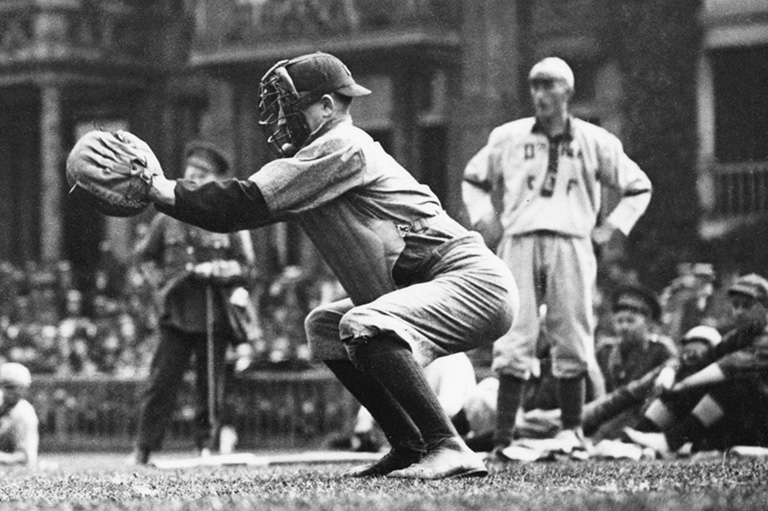
Branch Rickey had a personal reason for wanting to sign Robinson to the majors. In his youth, Rickey had been the coach of the Ohio Wesleyan University baseball team. At a game in South Bend, Ind., the team’s catcher, Charles Thomas, was denied entry at a hotel due to the colour of his skin. Rickey eventually convinced the manager to allow Thomas to sleep on a cot in Rickey’s room. When he entered the room, he found Thomas crying and scratching at his skin. “Damned skin … damned skin. If I could only rub it off,” he said.
“That scene haunted me for many years,” Rickey later recalls in Jackie Robinson: A Biography, “and I vowed that I would always do whatever I could to see that other Americans did not have to face the bitter humiliation that was heaped upon Charles Thomas.”
We hope you’ll help us continue to share fascinating stories about Canada’s past by making a donation to Canada’s History Society today.
We highlight our nation’s diverse past by telling stories that illuminate the people, places, and events that unite us as Canadians, and by making those stories accessible to everyone through our free online content.
We are a registered charity that depends on contributions from readers like you to share inspiring and informative stories with students and citizens of all ages — award-winning stories written by Canada’s top historians, authors, journalists, and history enthusiasts.
Any amount helps, or better yet, start a monthly donation today. Your support makes all the difference. Thank you!
Themes associated with this article
Advertisement