Sam S.
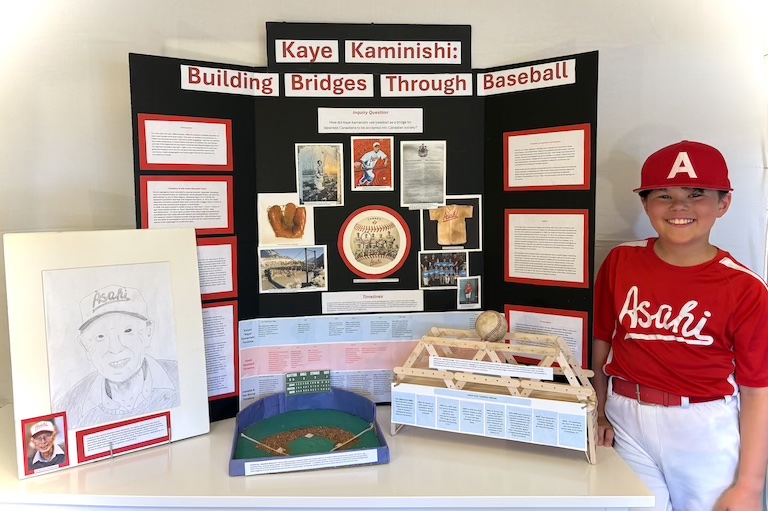
Kaye Kaminishi: Building Bridges Through Baseball
Sam S.
Vancouver Heritage Fair
Vancouver, BC
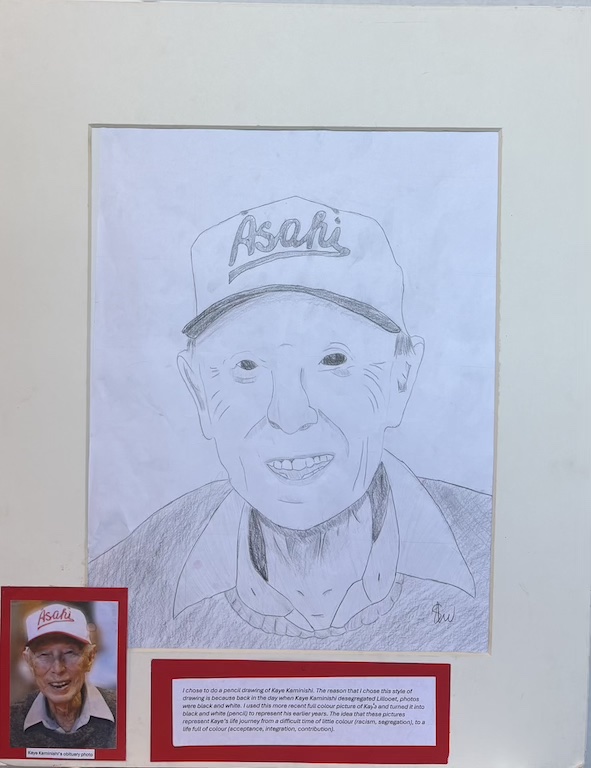
Koichi “Kaye” Kaminishi, a Japanese Canadian baseball player helped build bridges between Japanese Canadians and the broader Canadian community during a time of discrimination and segregation.
In the early 1900s, Japanese Canadians faced racism, were excluded from many jobs, and not allowed into certain public places. This segregation extended to baseball.
In 1914, the ‘Asahi’ Japanese Canadian baseball team was created to show they could be just as good as the Caucasian teams. Kaye was recruited by the Asahi at age 17. Kaye helped the team win three Pacific Northwest Championships.
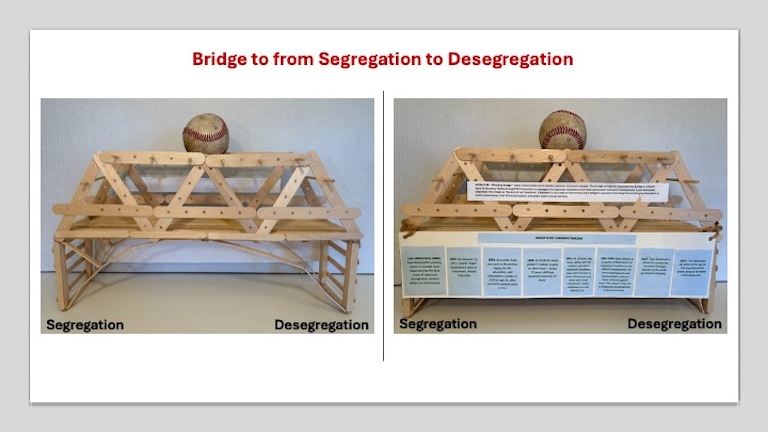
During the Second World War, Japanese Canadians, even if born in Canada, were classified as “enemy aliens”. Families were removed from their homes, property taken, and forced to relocate to internment camps or resettlements. Kaye’s family ended up in Lillooet, B.C. where they were only allowed to be on the far side of the bridge, away from town. Kaye described that bridge as “the end of our freedoms”.
Life in Lillooet was difficult, lacking proper water, food and shelter. To lift spirits Kaye organized a softball team. He noticed local guards would watch the games and linger. Kaye asked if they would want to form their own team and play friendly games. These games changed everything. They broke down barriers and allowed people to see each other as neighbours rather than enemies. Over time, Japanese Canadians were welcomed into town and became more accepted.
Kaye continued to promote understanding through sports and community involvement. In 2003, he and the Asahi were inducted into the Canadian Baseball Hall of Fame. Kaye passed away in 2024 at the age of 102, but his legacy lives on. Because of Kaye Kamanishi and the efforts of others, today I feel included and love to play in a culturally diverse little league and with the new ‘Shin’ Asahi.
Please click here to watch and hear more about my personal connection to Kaye’s story, more on the bridge, and how Kaye’s actions of the past impact my life today.
What sources and evidence did you consult for your project? What different perspectives did they provide on your topic?
For my project I benefitted from a large variety of sources ranging from books, online articles, films, personal interviews, and personal family artifacts. Some of my favourites:
- A great NFB film directed by Jerry Osborn called "Sleeping Tigers: The Asahi Baseball Story".
- A book written by Norio Goto published in 2016 called "Story of Vancouver Asahi: A Legend in Baseball".
- The Historica Canada Heritage Minutes – Vancouver Asahi (narrated by Kaye Kaminishi).
- The Website for the town of Lillooet, BC.
- The Vancouver Asahi Baseball website.
- Article "The Last Living Asahi: Kaye Kaminishi and His Life in Baseball" from Nikkei Images, a publication in Burnaby, B.C.
- Nikkei National Museum and Cultural Centre in Burnaby, BC has a Kaye Kaminishi exhibit.
- After discovering an online article about Yosh Kamachi in the North Bay/Nipissing online newspaper, I followed this up with a personal phone call to Yosh and his wife Jean.
- The photo of the wall mural at Nat Baily Stadium was taken by me, as I live just a few blocks away and play baseball just beside it.
- Photo of my grandfather when he was interned working on a sugar beet farm, I got from my father's photo album.
What is the historical significance of your topic?
Many Japanese-Canadians were affected by racism and discrimination from the time they first started to come to Canada in the late 1800s. During World War II about 20,000 Japanese Canadians, even those who were born in Canada, were officially considered 'enemy aliens', had their personal possessions taken away from them, and were unfairly shipped off to internment and work camps for a number of years.
It was people like Kaye Kaminishi, who even though so many terrible things were happening around and to them, maintained hope and integrity and even compassion. I feel like Kaye knew the people doing these things weren't bad people, but that they were misled people. Kaye could also see a bigger better picture and continued contributing to making that better Canada happen all the way to his very last years. Whether it was his role in the desegregation of Lillooet through baseball, or his continued education and quiet advocacy later in life, Kaye always saw how baseball could be used to help make a more inclusive, better country.
Why did you choose this topic?
When I started this project I wanted to do something on Asahi Baseball, knowing it has important roots in Japanese-Canadian history, though I didn't know who to focus on. As I researched I came across Kaye Kaminishi and I recognized his name because I have played summer baseball with the Asahi club (this will be my fourth summer) and participated in the annual Legacy Games which honours the history and values of the Asahi and of Kaye Kamanishi who was the last living member of the original Asahi. I even saw Kaye throw the first pitch at one of the Legacy Games.