Your history. Your inbox.
7 uniquely curated newsletters to choose from.


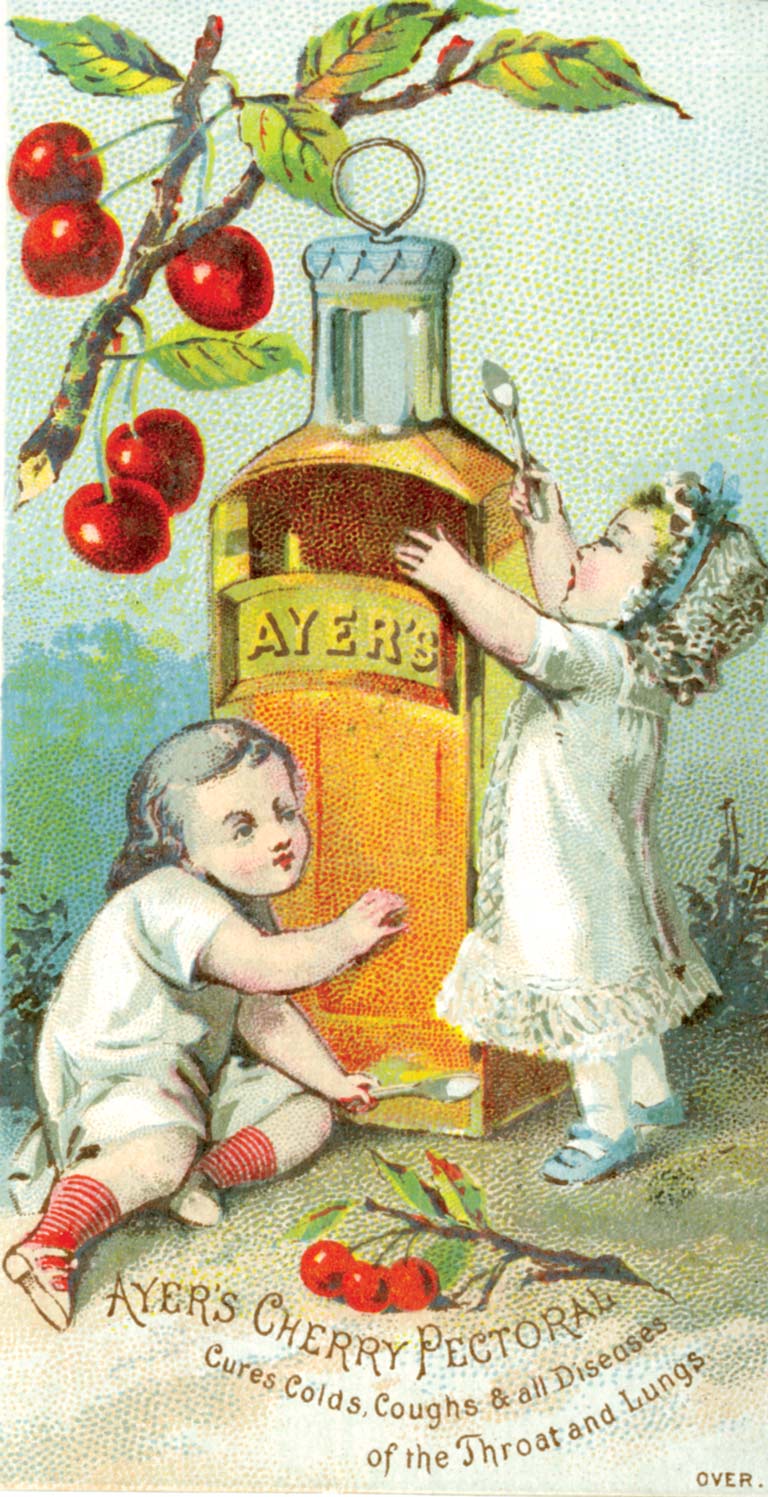
The amber bottle of Ayer’s Cherry Pectoral — and the bright advertisement showing children beneath a cherry tree reaching toward an oversized version — captures an early moment in commercial cough medicine. But before such products populated drugstore shelves across Canada, their key ingredient had long been a medicinal staple.
Wild cherry bark has been used for generations across First Nations communities of the Eastern Woodlands, in regions that now include southern Ontario, Quebec, the Maritimes and the eastern United States. The inner bark is gathered with careful seasonal knowledge and prepared to relieve persistent dry coughs and ease pain. These effects come from prunasin, a naturally occurring compound known for soothing the respiratory system and acting as a mild sedative.
When Euro-Canadian physicians were introduced to wild cherry bark by Indigenous Peoples, they quickly added it to their growing medical tool kit. By the 1800s, it appeared in major pharmaceutical references, and by the early 20th century, companies were producing standardized cherry-bark extracts for pharmacies across the country. Remedies like Ayer’s Cherry Pectoral incorporated this long-used plant into one of the country’s first widely distributed cough syrups.
Today’s formulas may rely on synthetic ingredients, but wild cherry bark is still used in herbal practice for the same properties that made it indispensable generations ago.

With 7 uniquely curated newsletters to choose from, we have something for everyone.
We hope you’ll help us continue to share fascinating stories about Canada’s past by making a donation to Canada’s History Society today.
We highlight our nation’s diverse past by telling stories that illuminate the people, places, and events that unite us as Canadians, and by making those stories accessible to everyone through our free online content.
We are a registered charity that depends on contributions from readers like you to share inspiring and informative stories with students and citizens of all ages — award-winning stories written by Canada’s top historians, authors, journalists, and history enthusiasts.
Any amount helps, or better yet, start a monthly donation today. Your support makes all the difference. Thank you!
Advertisement