Your history. Your inbox.
7 uniquely curated newsletters to choose from.


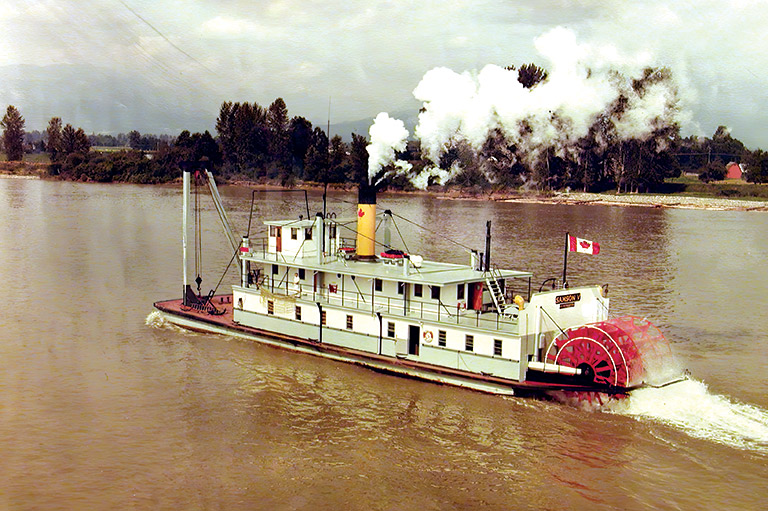
For 100 years, the gold rush was a boom for the maritime industry in New Westminster, B.C. With the arrival of globalization in the 1960s — and with that, the use of massive container ships — the city lacked the necessary space and the industry went bust. Today, the waterfront is better known as a prime area for a leisurely stroll by the Fraser River and carries no trace of the once-lively port. But docked at the quay, Samson V, a steamboat powered by a paddlewheel in its stern, serves as a reminder of the city’s past.
Built in 1937 for the Department of Public Works and in operation for almost 50 years, Samson V was sold to the City of New Westminster in 1983 for the token amount of one dollar, with the understanding that it would become a museum. It was the fifth in a series of snag-boats — vessels that were tasked with clearing logs, providing navigational aids, maintaining buoys and helping fishing boats.
Initially, the city considered turning Samson V into a tour boat, but the idea was rejected. In addition to being expensive, the considerable changes required would have eroded its historic value. Now a museum managed by the New Westminster Museum & Archives, Samson V is open to visitors during the summer.
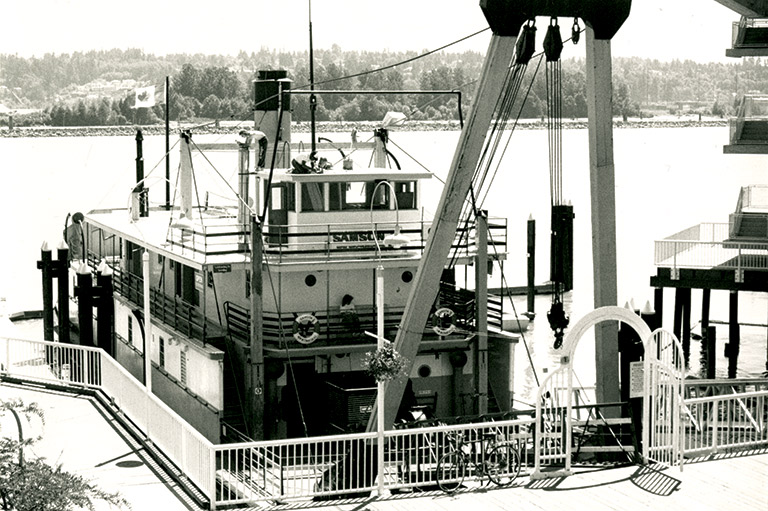
After taking in the boat’s striking A-frame crane — with winches that can lift more than 70 tonnes — visitors enter through the boiler room, which houses the remarkable steam engine that powered both the paddlewheel and the crane. As a sternwheeler, Samson V could operate well in shallow water, making it perfect for North America’s wilderness areas.
Mid-deck features quarters for the crew and officers, washrooms, a kitchen and a crew mess, while the upper deck is home to the nearly 12-metre-tall wheelhouse. Detailed labels throughout the museum describe the technology that powered the boat and highlight life on the river.
Unlike the previous vessels in the series, Samson V was built with creosoted timber, one of the oldest forms of preserved wood, that not only aided with icebreaking but also helped the ship survive two sinkings. (Creosote is now known as a probable human carcinogen.) Despite being the only intact and floating sternwheeler in North America, the vessel is relatively smaller than most museum ships in Canada and around the world.
Originally meant to survive 20 years, Samson V has had an unexpectedly long life. From the 1980s to the 2000s, it was looked after by various volunteer-run organizations, including the Royal Agricultural and Industrial Society of British Columbia, the local organization focused on turning the vessel into a museum. The society handled smallscale repairs on the canvas decking and staircases as well as repainting the exterior.
Mark Mackenzie, who had experience working on SS Moyie, Canada’s oldest sternwheeler, joined the society as restoration supervisor. “When I started in 2001,” he says, “we discovered to our horror that the A-frame was hideously rotten, and we had to take it down.” Like the A-frame, most of the accumulated damage was because the boat was no longer in use and, therefore, not serviced regularly.
The upkeep of a floating museum can be paradoxical. While water prevents a vessel’s wood from cracking, over time it also rots the wood. In 2024, Samson V went through a major revival: all of the old timber on the side decks was repaired and replaced with new wood, increasing its life by another 20 years.
With new technology came new realizations. Keeping the original structure was never an option. The paint first used for the vessel contained lead — as was common at that time. Like the creosoted timber, the paint was great for the longevity of the boat but not safe for people on board or the environment.
“The biggest thing is keeping it painted,” says Robert McCullough, manager of New Westminster’s museum and heritage services. “If we keep the paint in place, it keeps the wood safe and secure for longer. But it’s a lot of work, and we have to make sure we do it in a safe manner so none of it goes into the river.”
Other restoration work was done using traditional methods. “We did jack beams [which support other beams], we did decking,” says Lyle Franklin, a shipwright and owner of Favourite Boatworks in Richmond, B.C., who worked on rebuilding the side decks in 2024. “We replaced the guard and did a bunch of traditional woodwork.” They also sealed deck gaps with oakum — a kind of hemp — cotton and hot tar, an old-school method for making wooden ships watertight.
The repair work wasn’t hidden from the public. As McCullough explains, “It’s important for people who come on the ship to actually see some of these things and have our guides tell them about what’s going on.” Samson V’s long life is not only a testament to community spirit but also to the value of doing things the old-fashioned way.
Advertisement