Your history. Your inbox.
7 uniquely curated newsletters to choose from.


Abandonment is a frank illustration of how things change over time. Vacant one-room schoolhouses mark the shift from numerous widely scattered rural classrooms to centralized education. Small wooden grain elevators have yielded to a few concrete giants. Other ruins speak of ambitions never fully materialized or priorities quietly changed. These places aren’t just relics; they’re also lessons in how a province has evolved. What follows is a small selection of empty structures — a handful from among hundreds — that illuminate Manitoba’s settler past.
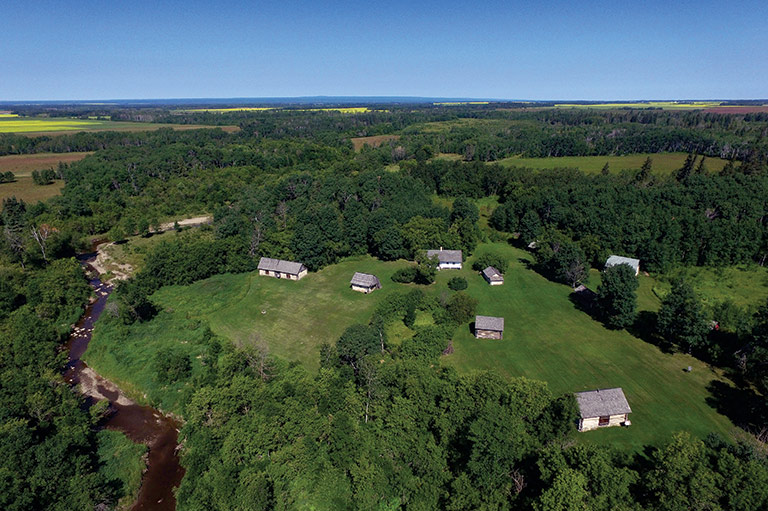
In 1897, when Ukrainian immigrants Wasyl and Anna Negrych settled with their children in the Gilbert Plains area of northwestern Manitoba, they built a home, along with an earthen-floored bunkhouse (for the boys), a barn, a pigpen, a chicken coop and three granaries. They had extensive gardens as well as a fruit orchard and grew grains on fields carved from the surrounding forests. Two of the Negrych children lived there — without electricity, running water or a telephone, and using a wood stove to cook meals — into the 1980s. Widely regarded as Canada’s most complete and best‑preserved pioneer homestead, the National Historic Site is now maintained by the local municipality for visitors.

With 7 uniquely curated newsletters to choose from, we have something for everyone.
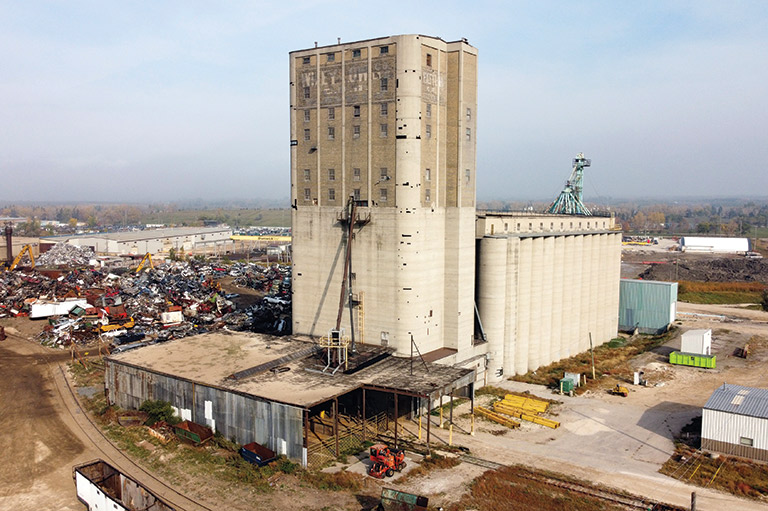
A concrete grain elevator on Winnipeg’s northeastern edge was among the first of its kind — and an ongoing lesson for geotechnical engineers on the importance of a solid foundation. Built in 1912 as a one-million-bushel transfer elevator for the Canadian Pacific Railway’s new North Transcona yard, it was meant to hold Prairie grain before shipment to market. But over 12 hours on Oct. 18, 1913, the cylinders of its annex sank and tilted, eventually leaning nearly 27 degrees as its western side dropped 13 metres into the ground. After the grain was removed, workers righted the structure and built a new foundation. It has remained stable for more than a century. Operated by a succession of grain companies, the elevator closed in 2021 and was sold to a neighbouring scrap-metal firm.
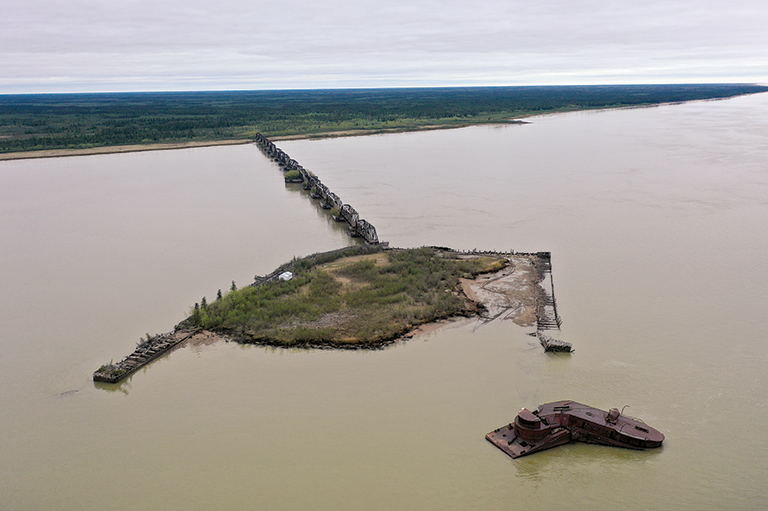
The idea of a seaport on Hudson Bay isn’t new; it first emerged in 1913 with Port Nelson at the mouth of the Nelson River. Millions were spent on a state‑of‑the‑art dredge to build an artificial island one kilometre offshore, linked to the mainland by a 17‑span railway bridge. Trains would deliver Prairie grain to a terminal on the island, then ocean tankers would load it for export. The First World War halted the project as workers enlisted and funding dried up. Later, experts identified the site’s fatal flaw: it was too shallow. The island would only be accessible through constant dredging, and then only at high tide. The mouth of the Churchill River, with its natural deepwater harbour, was a better choice. Port Nelson faded into obscurity.
Advertisement
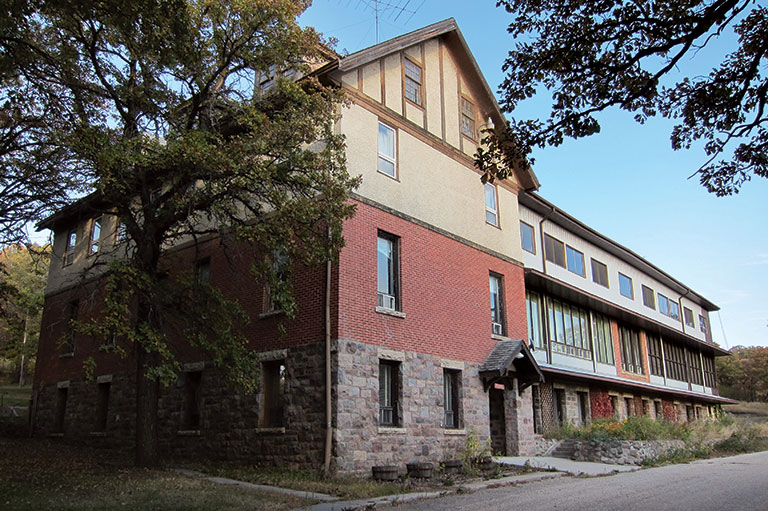
Tuberculosis was — and, in some regions, still is — a serious medical challenge. In the early 1900s, a combination of rest, fresh air and sunshine was considered the only effective treatment, making a sanatorium overlooking the tranquil waters of Pelican Lake in southern Manitoba an ideal refuge. Opened in 1909, it expanded into a sizable complex of buildings with dozens of staff. Advances in tuberculosis treatment led to Ninette’s closure in 1972, after which it operated as a training centre for people with intellectual disabilities. Closed for good in 2000, the site has stood empty ever since.
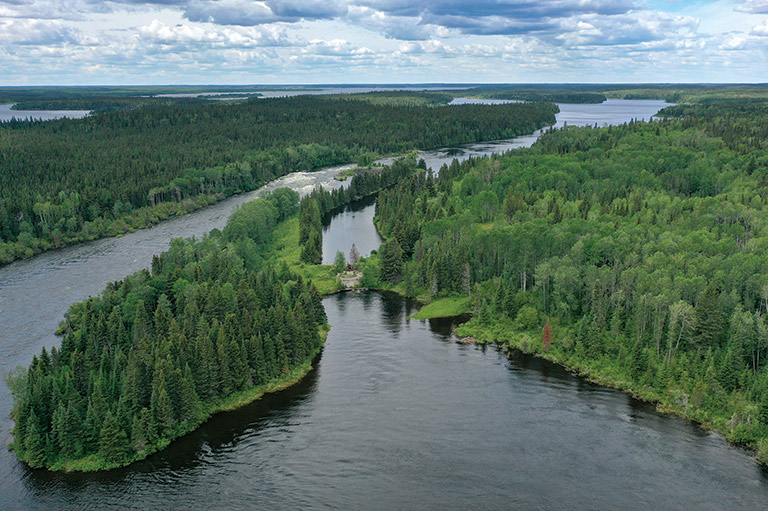
Gold was the driving force behind the 1934 development of a mine on remote Elk Island, in Gods Lake in northern Manitoba. Along with the mine buildings and infrastructure, the operation needed a reliable power source. The solution: a 68-kilometre transmission line running southwest to the Kanuchuan River that flows into the lake’s south basin. There, a 1.4-megawatt hydroelectric generating station was built and began producing electricity in October 1936. But the mine’s life was short; the ore body was depleted by 1943, leaving the generating station without its original purpose. Despite decades of no maintenance, the station produced small amounts of power for a fly-in fishing camp located above its intake. The site was remediated in 2008, but the forebay and dam were left in place.
Save as much as 40% off the cover price! 4 issues per year as low as $29.95. Available in print and digital. Tariff-exempt!
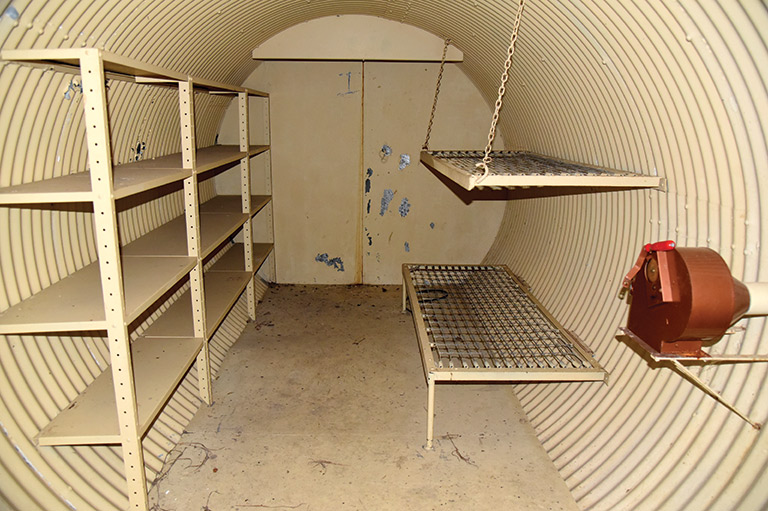
In the early 1960s, Canadian military planners considered how to respond if the United States and the Soviet Union exchanged nuclear missiles. They concluded that Canada needed the ability to detect blasts and coordinate mass evacuations, prompting plans for a network of more than 1,000 radiation‑monitoring stations. Manitoba’s share included nearly 200 Fallout Reporting Posts, each staffed by personnel who would measure radiation and relay the data to a central hub. Technological advances soon rendered the system obsolete. Many survive across Manitoba, tucked into basements of government buildings. This FRP has since been dug out, moved to a community museum and furnished as it might have looked when equipped.
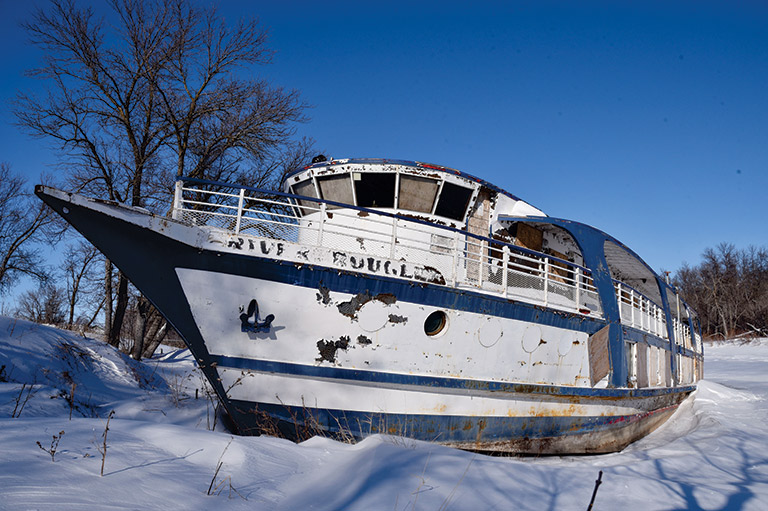
At their peak in the 1960s and ’70s, cruise ships on the Red River carried thousands of passengers on leisurely outings from Winnipeg to such destinations as Lower Fort Garry National Historic Site. Some trips, especially those chartered by engineering students and high school grads, became notorious for rowdy antics. Launched in 1967 and billed as “Canada’s largest cruise ship,” the River Rouge saw ridership decline from the 1980s onward due to falling tourist traffic, high river levels that complicated bridge clearances and shrinking church and fraternal memberships that had been the core constituency.
We hope you’ll help us continue to share fascinating stories about Canada’s past by making a donation to Canada’s History Society today.
We highlight our nation’s diverse past by telling stories that illuminate the people, places, and events that unite us as Canadians, and by making those stories accessible to everyone through our free online content.
We are a registered charity that depends on contributions from readers like you to share inspiring and informative stories with students and citizens of all ages — award-winning stories written by Canada’s top historians, authors, journalists, and history enthusiasts.
Any amount helps, or better yet, start a monthly donation today. Your support makes all the difference. Thank you!
Advertisement