Your history. Your inbox.
7 uniquely curated newsletters to choose from.


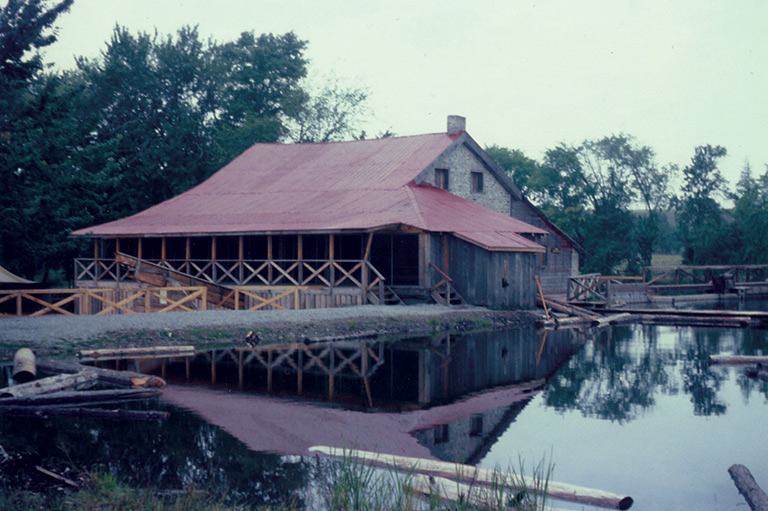
The jobs on the whiteboard could have been assigned to workers almost any time in Hope Mill’s long history. Today, though, it’s volunteers pulling logs in from the Indian River, crafting new wooden teeth for a gear, shovelling sawdust and sawing logs.
There’s more grey hair and less urgency now. “We’re not in a hurry to do stuff,” observes David Reeves, who’s providing the tour. “We’re happy to get to do it.”
A rare sawmill of its vintage that’s still turning out lumber, Hope Mill is among the best preserved. The original stone wool-processing mill was finished in the mid-1830s, with a shingle mill added in 1858. After a fire, the owners shifted to sawing logs.

With 7 uniquely curated newsletters to choose from, we have something for everyone.
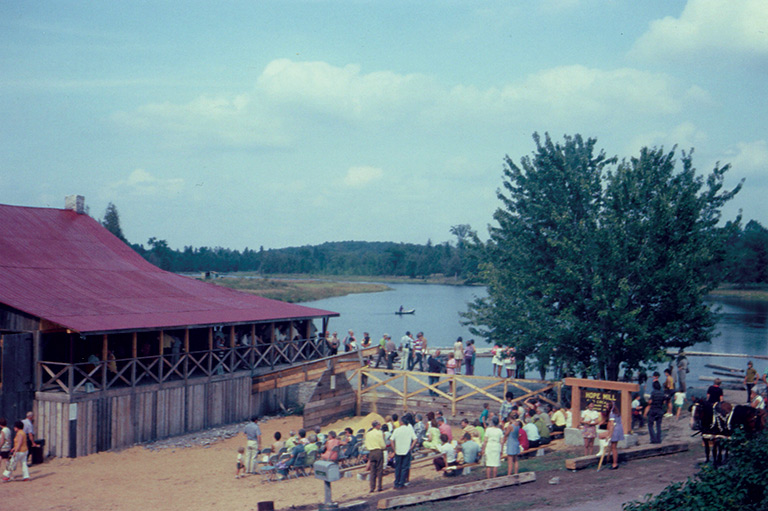
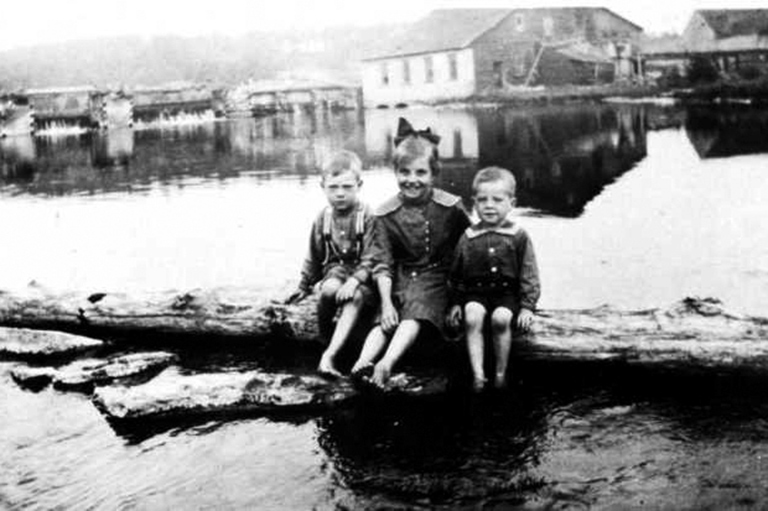
The mill is nestled in peaceful rolling farmland and mixed forest about 150 kilometres northeast of Toronto. Named for Richard Hope, son-in-law of original owner William Lang, it operated as a business until 1966. The Hope family sold it to the local Otonabee Region Conservation Authority, which made much-needed repairs and added exhibit space and a viewing gallery. The mill was open to the public from 1972 until 1993, when budget cuts closed it.
Soon, raccoons, mink and other wildlife moved in. Weather and vandals attacked. Like so many other heritage buildings, Hope Mill would have been demolished as a hazard or left to collapse if Bob Rehder, an electrical engineer with General Electric Canada in nearby Peterborough, and a friend hadn’t peered through the protective fencing in 1999. What, they wondered, would be involved in getting that powerful machinery working again?
Within a year, Rehder had drawn the municipal government, Fleming College and Trent University in Peterborough, and the conservation authority into discussions. A closer look at the mill revealed it could still be saved despite rotting sawdust, broken floors and ancient wiring. The newly formed Hope Mill Restoration Volunteers got to work.
Their efforts were almost obliterated when two youths set the building on fire in April 2001. A passing cyclist called the fire hall. Volunteer firefighters rushed over and kept the damage to a minimum, allowing the restoration to continue.
The project inspired support at every turn. GE Canada executives provided crews to remove the huge iron turbines and repair them at the company’s Peterborough plant — for free. A crane from the Trent-Severn Waterway extracted the turbines and moved them onto a flatbed truck. People offered their expertise just to be part of it all.
On July 12, 2005, the saw blade finally bit into its first log. On June 3, 2006, Hope Mill reopened as a heritage demonstration site. With help from the Ontario Historical Society, the volunteers incorporated as Friends of Hope Mill in 2017, leasing the site from the conservation authority.
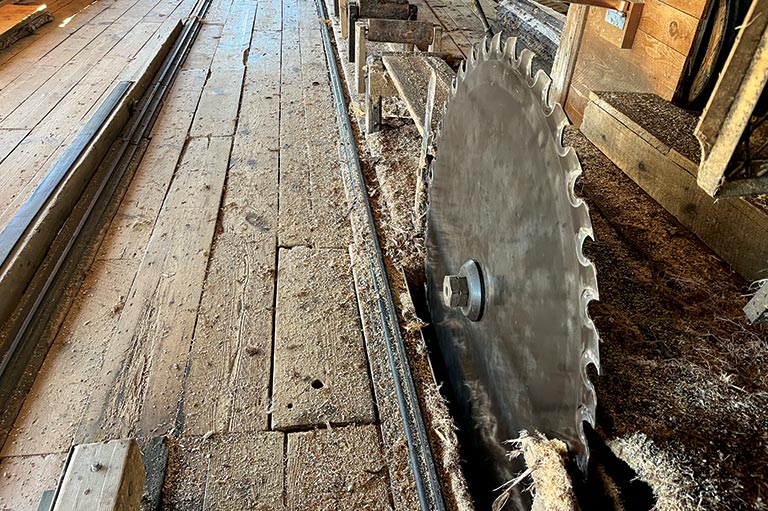
Today, they aim to preserve the 19th-century water-powered milling technology and promote knowledge of local history. At one point, there were at least 11 mills on the Indian River between Stoney and Rice lakes, a distance of a little more than 40 kilometres.
“These mills built this country,” says Reeves. “We’re all about preserving this as far into the future as possible.”
Advertisement
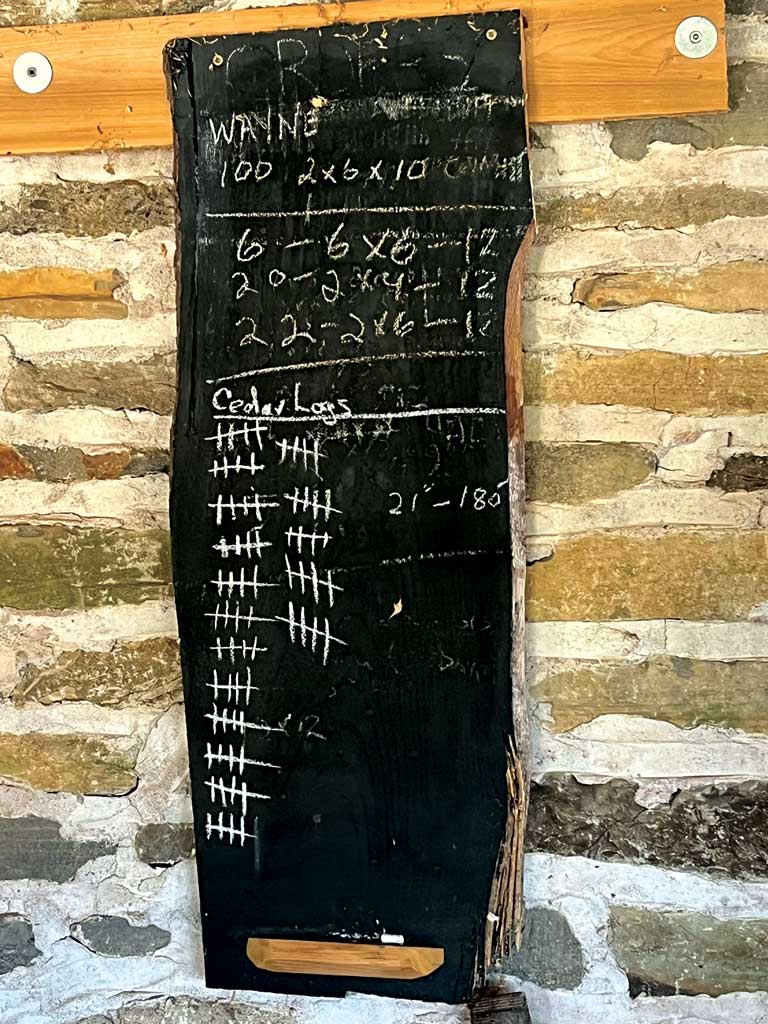
The operation spends thousands every year on logs, but stays in the black by selling lumber for non-structural use in things like docks and furniture. Donors, including Hope family descendants, also provide financial support. The slash — outer lengths discarded as a log is squared off — is cut into firewood, sawdust goes to a local farm and shavings become bedding at an animal shelter. Anything left is composted.
The mill is too dangerous for school groups to visit, but children come with their families. In typical Hope Mill fashion, volunteers started making precut and pre-drilled birdhouse kits to give the under-10 set something to do. The first year, the team ended up handing out more than triple the number they’d expected.
“I love to see [the kids] come through the gate and they’re not really happy to be there,” says Alex McCubbin, president of the Friends of Hope Mill. “Then, they go to the mill and see how it works. They build a birdhouse and leave with a smile on their faces.”
The mill wouldn’t survive if the volunteers didn’t love what they were doing. McCubbin joined after a career as a chemistry teacher. “The mill offered me a chance to make a bunch of new friends,” he says. “It’s for our fun, too.” Volunteers gather on site once a week, and while no one wishes for problems to crop up, “if a belt breaks, we figure it out. Sometimes, we go to local machine shops, but mostly when something goes wrong, the engineers get excited about finding a solution.”
One or two thoroughly vetted people join the volunteer roster in a year; younger folks who don’t mind hoisting logs and stacking heavy boards are especially welcome. Recruits undergo extensive training and testing before operating equipment.
The morning’s work over, volunteers gather in the sunshine near the sparkling river, birdsong replacing the saw’s whine as they unpack their lunches. The historic wooden building nearby links them to centuries of community history.
“I was hooked as soon as I saw it,” says Reeves, who’s been volunteering since 2012. “The pay is lousy, but the benefits are fabulous.”
Save as much as 40% off the cover price! 4 issues per year as low as $29.95. Available in print and digital. Tariff-exempt!
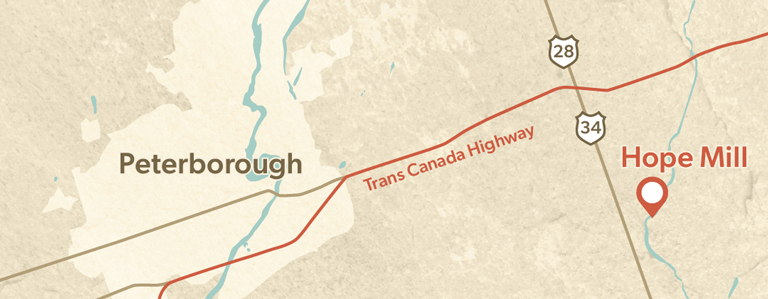
Hope Mill lies about 20 minutes south of Peterborough, Ont. It offers free guided tours on Thursdays from 9:30 a.m. to 4 p.m. between mid-April and late October. In addition to sawing demonstrations, there are displays on woodworking history and the process of carding and fulling wool. About four times a year, the mill opens on a Sunday, often to tie in with activities at Lang Pioneer Village Museum just a kilometre to the south. Lang (which was profiled in our August-September 2022 issue) is also well worth a visit. Bring your swimsuit and a picnic to enjoy on the mill property.
We hope you’ll help us continue to share fascinating stories about Canada’s past by making a donation to Canada’s History Society today.
We highlight our nation’s diverse past by telling stories that illuminate the people, places, and events that unite us as Canadians, and by making those stories accessible to everyone through our free online content.
We are a registered charity that depends on contributions from readers like you to share inspiring and informative stories with students and citizens of all ages — award-winning stories written by Canada’s top historians, authors, journalists, and history enthusiasts.
Any amount helps, or better yet, start a monthly donation today. Your support makes all the difference. Thank you!
Advertisement