While Ontario’s Niagara Peninsula and British Columbia’s Okanagan Valley are now recognized as the heart of Canada’s winemaking industry, it was an island in Lake Erie where this country’s first successful vinicultural venture began — thanks to the American Civil War.
When that conflict started in 1861, the state of Kentucky chose the Union side. Still, a substantial number of Kentuckians favoured the Confederacy, and winemaker D.J. Williams was one of them. Williams was part of an industry that, by the mid-19th century, had made Kentucky the third-largest wine-producing jurisdiction in the United States, according to Susan Richards, author of History of the Kentucky Wine Industry. Civil War destruction brought that to an end.
Unwilling to accept the defeat of the Confederate states and determined to restart his business, Williams set out to find a new home. He looked northward, to the British North American colonies — and, more specifically, to Lake Erie. Williams’ search resulted in a little-known chapter in Canada’s early winemaking industry, a chapter the heirs to his work say they’re determined to teach Canadians more about.

Your history. Your inbox.
With 7 uniquely curated newsletters to choose from, we have something for everyone.
When Williams arrived, wine was already being produced on Bass and Kelleys islands, both of which sat on the American side of the boundary line that divided Lake Erie’s western basin. A few miles away, on the British side of the boundary, lay Pelee, the largest island in the lake.
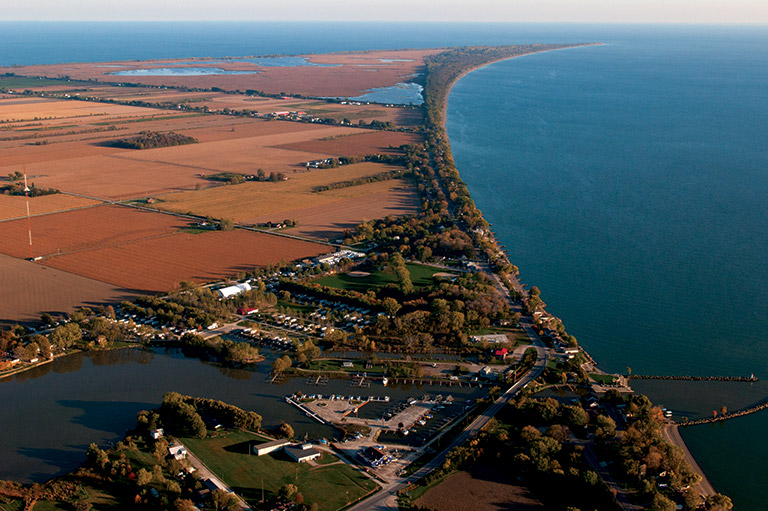
Pelee Island is a flat, marshy expanse of more than 4,000 hectares, 500 kilometres north of Kentucky, and the southernmost inhabited territory in Canada. It enjoys a moderate climate with hot and humid summers, extended autumns and — by Canadian standards — short winters, conditions not all that different from Kentucky. It could be just the place for a southern winemaker to make a fresh start.
Pelee Island had become Canada’s most famous grape region
In 1865, Williams headed to Windsor, a town in the British colony of what was then Canada West that sat across the Detroit River from the growing industrial powerhouse of Detroit. There, he met David McCormick, a ship owner from Pelee, whom he hired to give him a tour of Erie’s western islands. Williams was impressed by what he found on Pelee and sent word home to his brother, Thomas, and their friend Thaddeus Smith to come take a look. In his 1899 book Point au Pelee Island, Smith writes that, in their estimation, Pelee provided the ideal location to establish a new winery in a new country. Grapes can thrive in a variety of soils, from sand to gravel to clay, but they demand proper drainage so their roots don’t rot. Pelee Island offered those conditions.
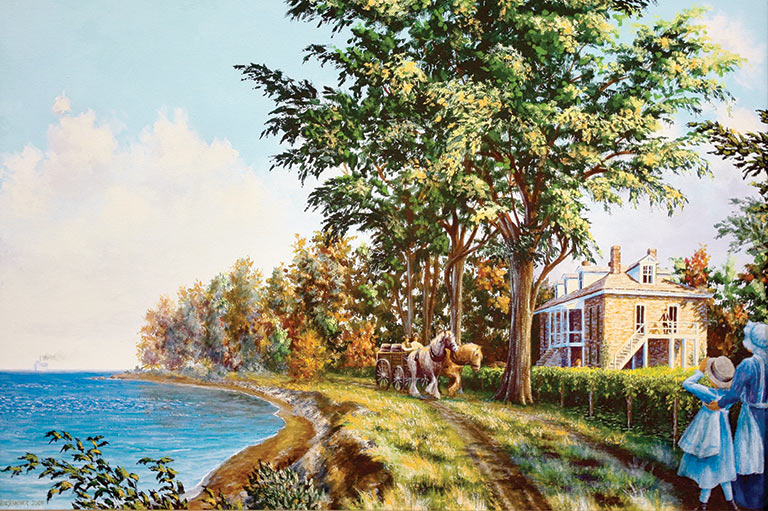
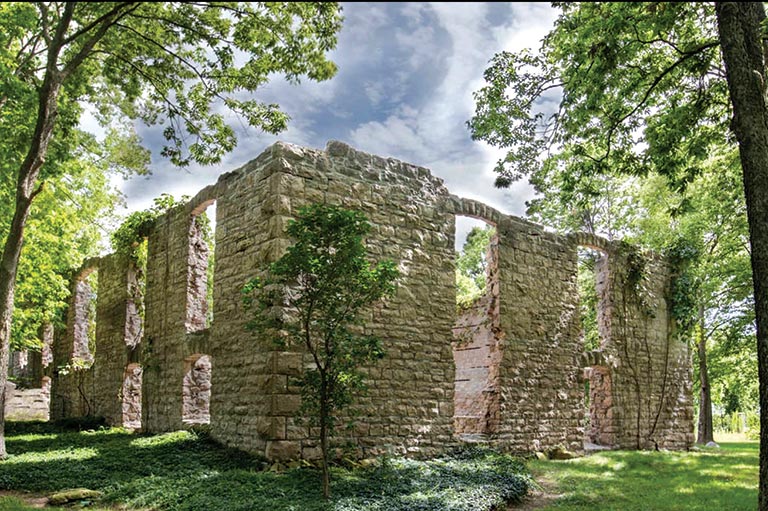
The partners purchased land on the island’s northwest corner and, in 1866, they planted 10 hectares of native North American grapes. They also built an imposing stone wine house and cellars that they called Vin Villa.
To be fair, the Vin Villa partners weren’t the first to make wine in Canada. There are reports of individuals, including priests and monks, producing wine for their own consumption or for religious services as far back as the 1600s; an Englishman named Justin McCarthy de Courtenay even attempted to start a business. De Courtenay grew grapes in Cooksville, near Toronto, and established the Canada Wine Growers Association in 1864 (it went out of business in 1869).
In an article for the Ontario Historical Society in 2011, author Richard Jarrell said de Courtenay also investigated conditions in Essex County, where Pelee Island is located. Hampered by tax issues and lack of funds, however, de Courtenay shuttered his business and returned to England in 1869. The Pelee project then stood alone as Canada’s first and only stable commercial winemaking enterprise.
While Williams had been the project’s instigator, Smith quickly became its principal. He resettled his family on Pelee Island in a house built atop the winery. In Point au Pelee Island, the building is described this way: “A wine cellar was dug through solid strata of rock to the depth of 12 feet, 40 feet wide and 60 feet long and completely arched over with stone. Above it was a basement and a stone house one and a half storeys high. Other buildings were already built. The cellar and house were completed in 1868 and ready for the first crop of grapes.”
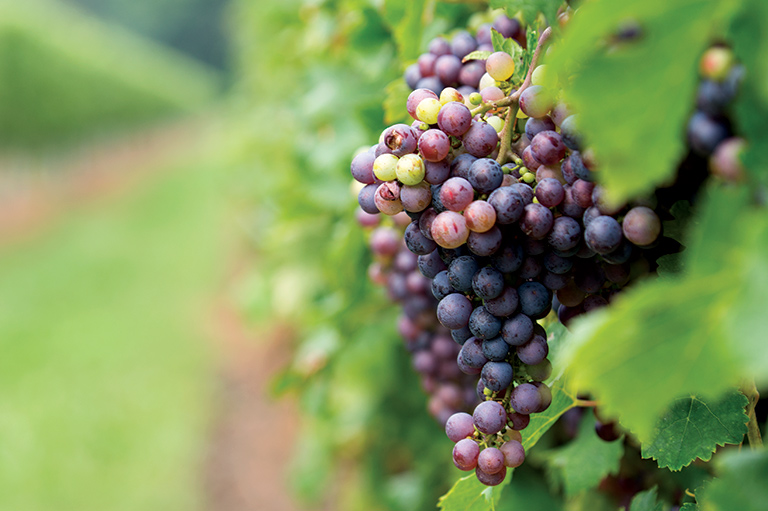
Those early grapes grown on Pelee produced a wine that bore little resemblance to the Chardonnays, Merlots and Pinot Grigios that Canadians enjoy today. Made from varieties of native labrusca plants, they included Catawba, a North Carolina invention; Delaware, from Ohio; and Concord, which had been developed in Massachusetts. Word of Pelee spread to other regions of the former Confederacy and more grape growers arrived from as far away as Alabama. Pelee was transformed into a vintner’s paradise.
While sales in those early years were brisk, Smith was always on the lookout for new opportunities. In 1873, during a sales tour to the industrial town of Brantford, Ont., Smith met businessman Joshua S. Hamilton. He sampled the wine, liked it, bought the whole lot and shared some marketing ideas. The two men penned a sales deal.
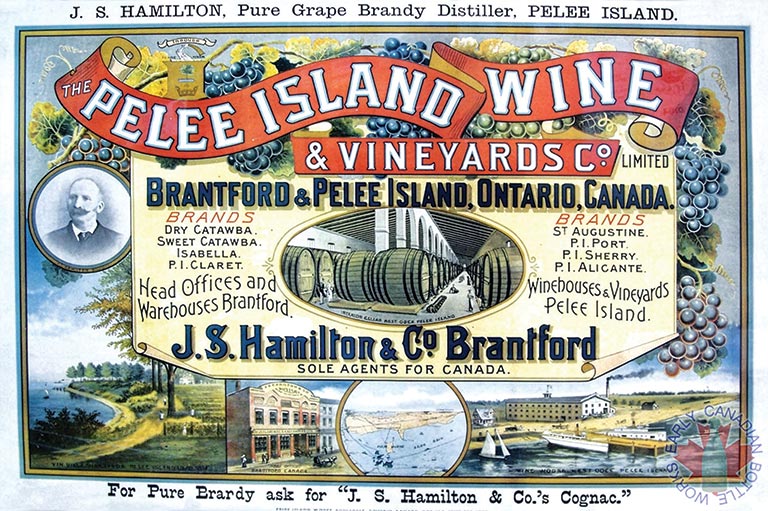
Hamilton signed up Pelee’s other winemakers and grape growers and eventually represented the island’s entire wine stock, which he brought together under the name Pelee Island Wine & Vineyards Co. Ltd. Already a purveyor of distilled spirits, including cognac, brandy, Scotch whisky and port, as well as beer, he also opened an office in Montreal.
As Hamilton’s hometown newspaper, the Brantford Telegram, reported in 1888: “In the production of Canadian wines, Mr. Hamilton has always taken a great interest and from his connection therewith, more especially with the great vineyards of Pelee Island in Lake Erie, has gained for himself the appellation of The Canadian Wine King.”
The Telegram also noted that, under Hamilton’s direction, Pelee Island had become “Canada’s most famous grape region.” It said Pelee Island wines were a “household word” across Canada and into Newfoundland.
With an ever-increasing reach, the Pelee winery was faced with a shortage of production and storage facilities, so in 1891, a three-storey wine house was built and a new winepress was brought in. That year, the wine house cellared 1,000 tons, or 907 tonnes, of grapes, which translated into about 140,000 gallons, or 530,000 litres, of wine.
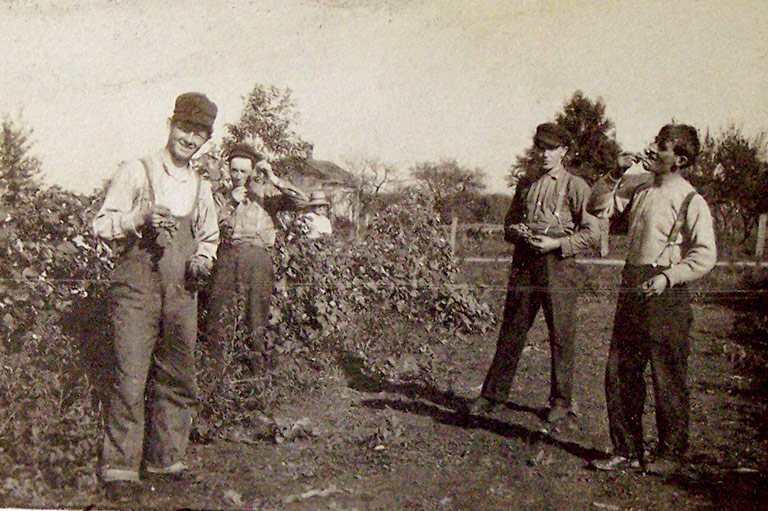
Grape growing, winemaking and the associated growth in tourism boosted the island’s economy, and just about every worker was involved in the industry in some manner. Student exams were delayed from October until December so the children could take part in the fall harvest. In her book Sketches and Stories of the Lake Erie Islands, Lydia Jane Ryall writes: “Nearly every island dweller picks grapes, regardless of standing or occupation. Men, women, children, all take a hand at the grape harvest. Dishes go unwashed, floors unswept.”
As wine’s popularity grew throughout the 1890s, more wineries began to pop up on the nearby mainland, and at one time, there were more than 20 of them stretching across Essex County, from Pelee Island to Windsor.
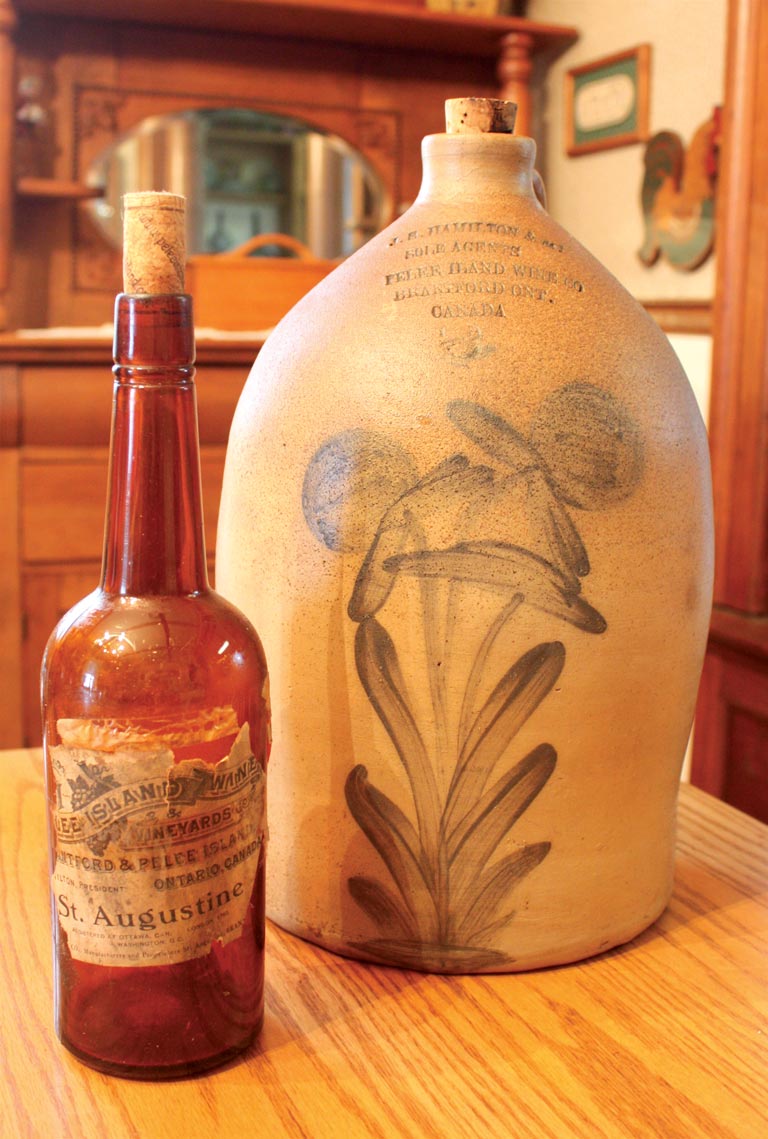
In September 1900, The Canadian Magazine reported that Pelee Island wines were featured at that year’s world’s fair in Paris. By that time, Hamilton was producing sweet and dry Catawba wines, as well as a communion wine named St. Augustine that was used by hundreds of Canadian congregations. The Anglican bishop of Montreal once proclaimed, “I know of no other wine equal to it for sacramental purposes,” reported the magazine. The company also produced an unfermented grape juice that appealed to teetotalling Methodists and Baptists.
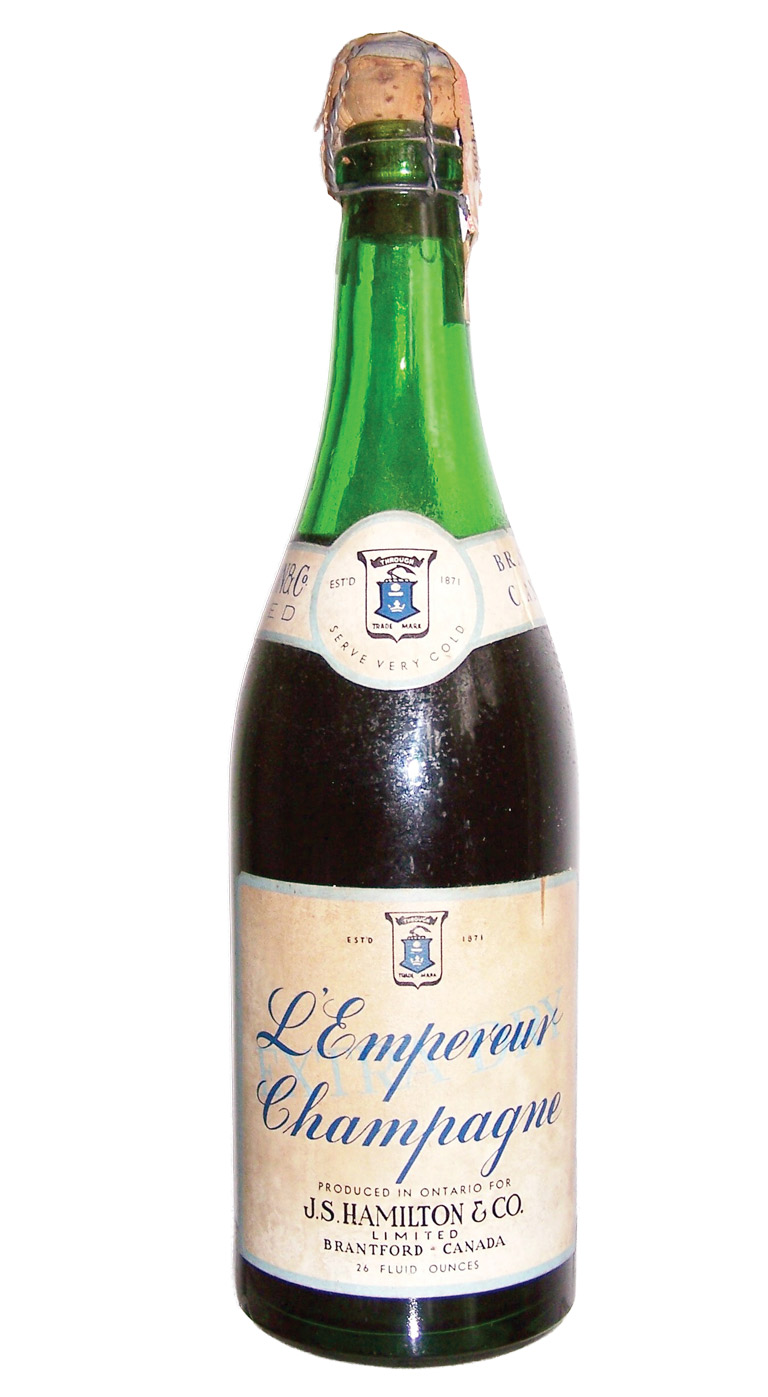
As well as wine, they made port and sherry. In the 1890s, there was even a Canadian wine produced in the traditional champagne style, called L’Empereur, one of the earliest in North America (see “Canadian Champagne”).
With the industry’s strong start, Pelee Island would seem destined to give birth to a burgeoning Canadian wine business that might have placed this country in the upper echelons of New World wine-producing regions on par with California, Argentina, Chile, South Africa and Australia. But that didn’t happen. Instead, Pelee’s economic climate was about to be struck by a figurative cold snap. Soon after newspaper reports of bountiful crops in 1912, farmers began to tear out graperies, production declined and, in 1916, the wine house and its contents — from presses to casks — were sold off.
Subscribe to Canada's History
Save as much as 40% off the cover price! 4 issues per year as low as $29.95. Available in print and digital. Tariff-exempt!
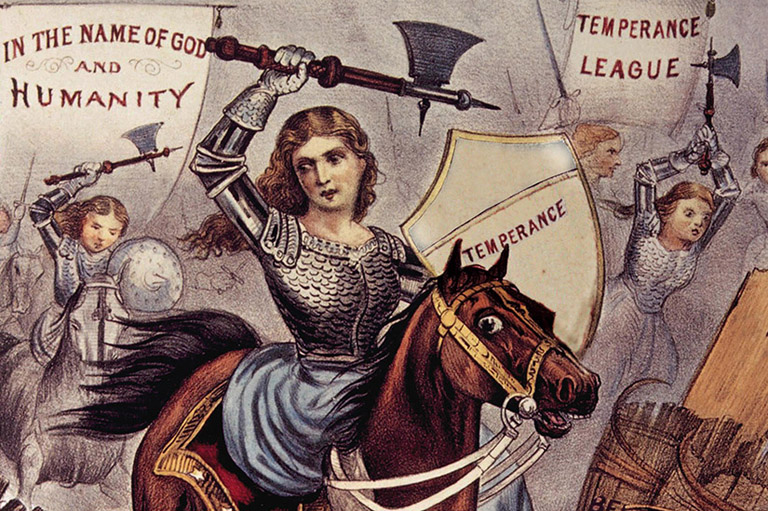
There were two reasons for this rapid turnaround in fortunes: the rise of the temperance movement certainly cast a pall over the industry, but more importantly, another crop featured at the Paris fair was becoming increasingly profitable: tobacco. With growing demand and a favourable tax structure, tobacco fields replaced vineyards in the coming decades. Within a few years, grapes were relegated to a few paltry acres and the industry turned its back on Pelee in favour of the Niagara Peninsula.
J.S. Hamilton & Company itself disappeared when it was purchased by London Winery in 1945. The story of a booming industry on Pelee Island seemed to have come to an end. It would take Canadians’ changing tastes and the arrival of innovative entrepreneurs, starting in the 1970s, to reverse the decline.
Initially, the newcomers were drawn to the Niagara Peninsula and began to plant European varietals to see how they would take to Canadian soils and growing conditions. In 1974, Canadian-born Donald Ziraldo and Austrian Karl Kaiser received the first winery licence to be granted in Canada since Prohibition and founded Inniskillin Wines. Over the next few years, others followed.
Meanwhile, winemaking’s Canadian birthplace was about to be resurrected, thanks to the dream of an Austrian entrepreneur. Walter Strehn grew up in the village of Deutschkreutz without the faintest idea that wine could be produced in Canada, a place he considered covered in ice and snow. In the late 1970s, Strehn learned through Canadian contacts that wine had once been produced on Pelee Island. He studied the island’s climate and was surprised to learn it enjoyed hotter summer temperatures and nearly the same number of frost-free days as France’s Burgundy region.
Tobacco fields replaced vineyards within decades
Armed with this information, Strehn partnered with a group of Austrians in 1979 to establish the modern-day Pelee Island Winery and imported European roots from the Pinot Noir, Gewurztraminer and Riesling varietals. “A lot of people thought they were crazy,” recalls Pelee Island historian Ron Thiessen in his book The Vinedressers.
But Strehn reasoned that if others had done it before, there was no reason he couldn’t do it again. Although his confidence was well placed, there were setbacks in those early years. Strehn believed Canada was well suited to produce icewine, with winter conditions that weren’t all that different from Germany, the home of icewine. The first time he tried, however, marauding birds destroyed the grape crop before it could be picked, so the next year, Strehn covered the vines with netting. Many birds became entangled in the netting and an irate neighbour reported him to the Ministry of Natural Resources. Charges were laid but dropped when authorities heard the explanation. Finally, in 1983, all the problems had been addressed and Pelee Island Winery produced its first batch of icewine.
Today, Pelee Island Winery is the largest of 23 wineries in Essex County and pays proud homage to its 1860s-era predecessor. The estate winery obtains its grapes from its 283 hectares of vineyards on the island and transports them via the Pelee Islander II ferry to its mainland winery in Kingsville. “The island is our heart and soul,” says Annemarie Heikenwalder, the company’s managing director. “It’s where we come from.”
Inspired by those 19th-century pioneers of winemaking, Heikenwalder is determined to re-establish the island’s reputation as a national leader and says a new little-known varietal should be production-ready within about two years. “It’s going to differentiate our region,” she says.
“Canada has never managed to establish a world reputation as a winemaker”
It won’t be a battle without challenges. Canada remains relatively unknown among international wine producers. In recent years, this country has stood at No. 27 in production, behind even Romania, Moldova and North Macedonia. (The world’s top four producers are Italy, France, Spain and the United States.) Canada’s portion of total world wine production is just 0.27 per cent. While Canada does excel in icewine, it’s a minuscule market and not considered “real wine” in many circles.
Wine historian Rod Phillips, a professor at Ottawa’s Carleton University and author of The Wines of Canada, says most of the country’s wines are sold and consumed within Canada. In fact, internal trade restrictions have inhibited the two largest producing provinces, Ontario and British Columbia, from taking advantage of the country’s robust market for wine consumption, although those restrictions are being slowly eliminated. “Canada has never managed to establish a [world] reputation as a winemaker,” says Phillips. “We make very little wine and there’s not much to export.”
While France, Italy and Spain were establishing a reputation based on centuries of production and a culture of wine consumption, Phillips says drinking wine is a much more recent addition to Canada’s culinary culture. Waves of postwar European immigration began to change that, but for many of those who arrived on our shores, much of what they consumed was produced at home.
Only in the 1990s, after the Canada-U.S. Free Trade Agreement forced Canadian winemakers to develop better products at reasonable prices, did Canadians turn to wine in a bigger way. Until recently, “Canadians were beer and spirits drinkers,” says Phillips. “Wine was something better-off people drank.”
Heikenwalder and the other heirs to the Vin Villa tradition are determined to draw Canadians’ attention back to where winemaking began, back to Pelee Island. “We’re rooted in such deep winemaking history, and we want people to understand that,” says Heikenwalder. “The story is unique in all of Canada.”
Canadian Champagne
L’Empereur Champagne was first produced at Vin Villa in 1894 for Pelee Island Wine & Vineyards Co. Ltd. It was among the first “champagnes” to be produced in North America. But just because a wine is produced using the champagne method, can it be called champagne?
The 1891 Treaty of Madrid, on the source of goods, determined that only sparkling wine produced in France’s Champagne region could be called “champagne.” That agreement wasn’t widely recognized, though, until 1936, when the drink received AOC (Appellation d’origine contrôlée) status.
Today, Canada is one of many countries to accept that international accord, so wine produced here in the champagne method is known as “sparkling wine.” However, L’Empereur was produced by Pelee Island Wine & Vineyards in 1894 — long before the 1936 accord — so it was designated champagne.
Top wine-producing nations*
| Country | Millions of hectolitres
| % of world population
|
1. Italy
| 44.1
| 19.5
|
2. France
| 36.1
| 16.0
|
3. Spain
| 31.0
| 13.7
|
4. United States
| 21.1
| 9.4
|
5. Argentina
| 10.9
| 4.8
|
6. Australia
| 10.2
| 4.5
|
7. Chile
| 9.3
| 4.1
|
8. South Africa
| 8.8
| 3.9
|
9. Germany
| 7.8
| 3.4
|
10. Portugal
| 6.9
| 3.1 |
27. Canada**
| 0.7
| 0.31
|
* Top 10 figures are from International Organisation of Vine and Wine for 2024
** Canadian figure is courtesy of Rob Taylor, Director for Policy and Government Relations, Wine Growers Canada
Wine consumption in decline
- In 1961, Canadians drank 1.77 litres of wine per capita.
- Consumption peaked in 2015 at 12.2 litres.
- By 2021, consumption had fallen to 7.39 litres and has continued to fall annually since.
- Canadians rank about No. 36 in per-capita consumption; Portugal and France are first and second, consuming 52 litres and 43 litres per capita, respectively.
Help keep Canada’s stories true, strong, and free
We hope you’ll help us continue to share fascinating stories about Canada’s past by making a donation to Canada’s History Society today.
We highlight our nation’s diverse past by telling stories that illuminate the people, places, and events that unite us as Canadians, and by making those stories accessible to everyone through our free online content.
We are a registered charity that depends on contributions from readers like you to share inspiring and informative stories with students and citizens of all ages — award-winning stories written by Canada’s top historians, authors, journalists, and history enthusiasts.
Any amount helps, or better yet, start a monthly donation today. Your support makes all the difference. Thank you!