Your history. Your inbox.
7 uniquely curated newsletters to choose from.


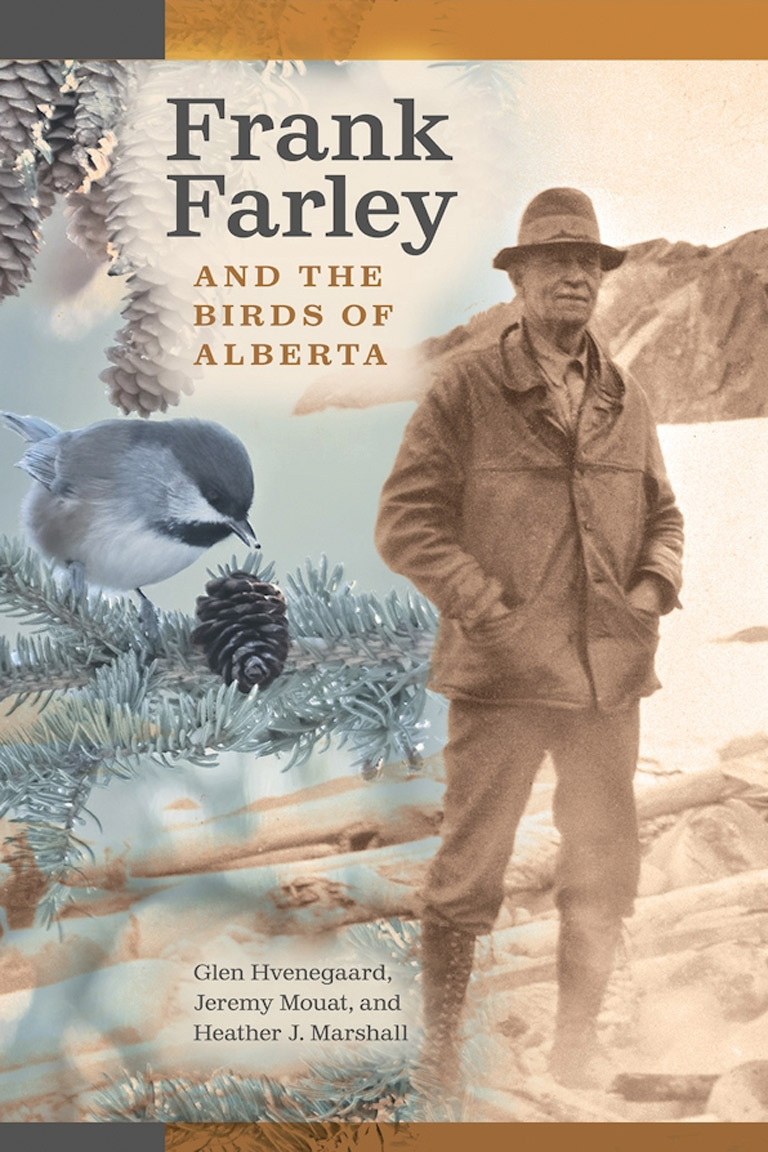
Frank Farley and the Birds of Alberta
by Glen Hvenegaard, Jeremy Mouat and Heather J. Marshall
Univeristy of Alberta Press
280 pages, $32.99
Frank Farley isn’t exactly a household name. Unless you’re a birder or live in Camrose, Alta., you may not know of him. But the authors of Frank Farley and the Birds of Alberta argue that you should.
Born in St. Thomas, Ont., in 1870, Farley was a self-trained naturalist. He arrived in Alberta in the early 1900s as a homesteader and became one of the province’s foremost bird advocates — a man who, in the words of his famous grandnephew (celebrated author Farley Mowat), loved birds more than he loved sleep.
The trio of authors — Glen Hvenegaard, a professor of environmental science; Jeremy Mouat, a professor emeritus of history; and Heather J. Marshall, a freelance writer and graphic designer — bring scholarly depth and expertise to Farley’s story. They trace his life from his Ontario boyhood, when he was already publishing in ornithological journals, to his decades in Camrose, where he juggled roles as a real estate man, business booster, game officer and, above all, keen observer of the natural world.

With 7 uniquely curated newsletters to choose from, we have something for everyone.
Ornithologist Frank Farley loved birds more than he loved sleep
Farley’s place within Prairie settlement and conservation in colonial Canada is made clear in the book. That context is vital: his rise as an amateur ornithologist was inseparable from settler colonial expansion in the West and European ideas about environmental science and land management. Yet, alongside this reality, Farley mentored youth, founded associations and left behind publications that remain part of Alberta’s ornithological canon.
Frank Farley and the Birds of Alberta’s greatest strength lies in its use of primary source visuals; archival photos, telegrams, municipal records and newspaper clippings to bring Farley’s story to life. Less successful are the lengthy detours into the personal lives of his acquaintances, where non-specialists may lose the thread.
Still, the reward is a nuanced portrait of a man who bridged environmental conservation, politics, education and a deep love of his province. For bird and nature lovers, or anyone interested in the intersection of conservation and colonialism in Western Canada during the early 1900s, this book is worth perching with.
We hope you’ll help us continue to share fascinating stories about Canada’s past by making a donation to Canada’s History Society today.
We highlight our nation’s diverse past by telling stories that illuminate the people, places, and events that unite us as Canadians, and by making those stories accessible to everyone through our free online content.
We are a registered charity that depends on contributions from readers like you to share inspiring and informative stories with students and citizens of all ages — award-winning stories written by Canada’s top historians, authors, journalists, and history enthusiasts.
Any amount helps, or better yet, start a monthly donation today. Your support makes all the difference. Thank you!
Advertisement