Your history. Your inbox.
7 uniquely curated newsletters to choose from.


In the 1950s and ’60s, while many Torontonians were getting ready for trick-or-treaters, a sizable clutch of people opted for another cherished Halloween tradition — namely, heading downtown to watch the glamorous contestants arrive at the city’s biggest and best-known drag ball.
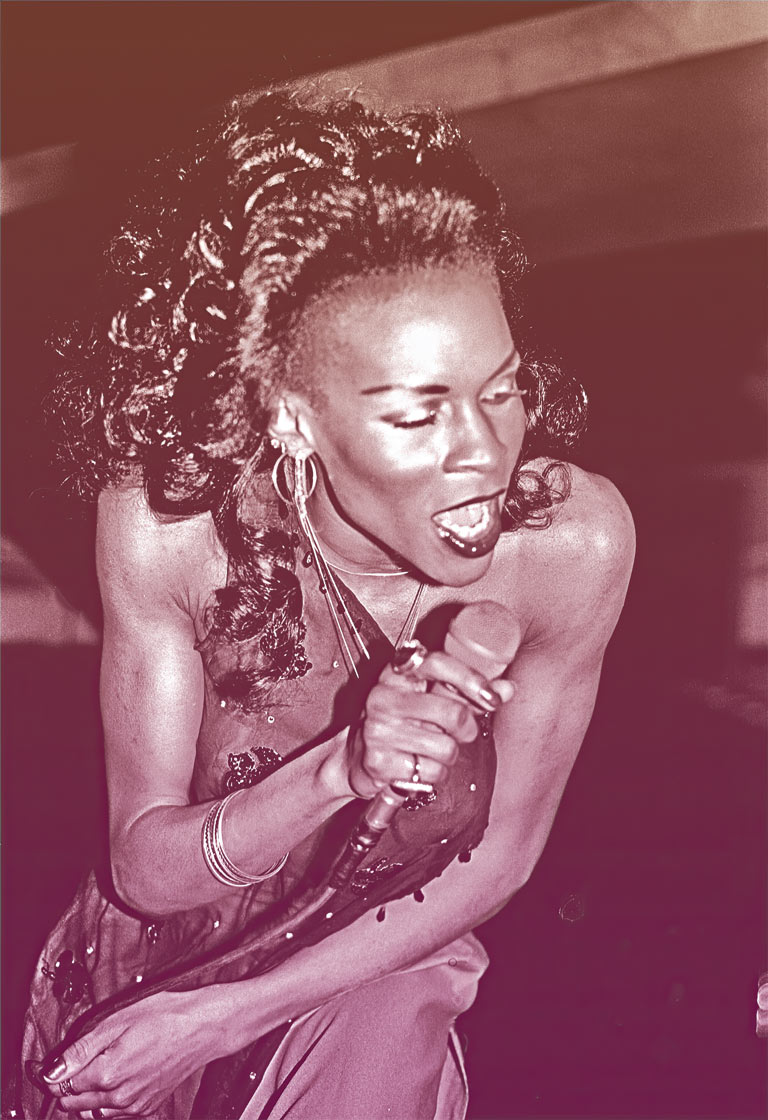
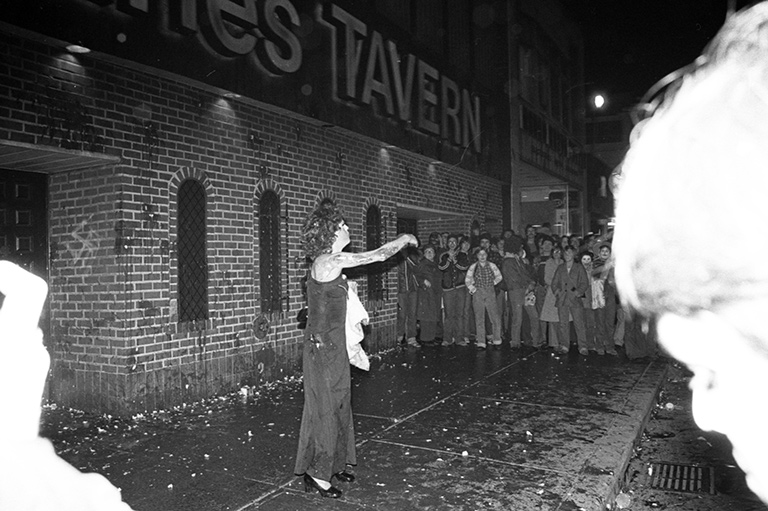
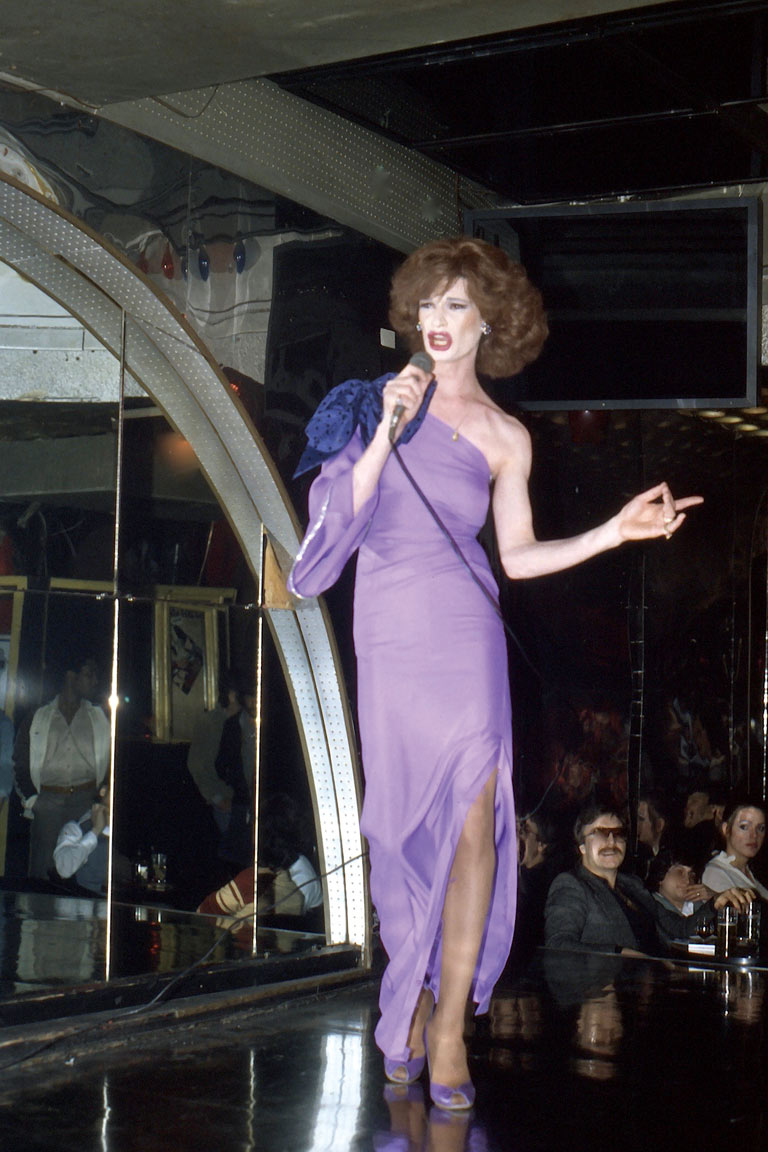
“Miss Letros” was an annual pageant held from 1951 to 1969 at the Nile Room, a lower-level piano bar within the Letros Tavern on King Street, just east of Yonge Street. For most of its lifespan, Letros was gay-owned, gay-operated and, by and large, patronized by gay men. Every Halloween for nearly two decades, hundreds of well-dressed onlookers — gay and hetero, young and old — arrived in the twilight hours to watch as hopefuls arrived for the Halloween ball. Contestants typically performed on an imaginary red carpet in front of the bar and played with the crowd before heading in, which is what made it such a big draw.
Since Toronto’s daily newspapers studiously ignored the event, it’s hard to know how big a draw it was, but in a 1961 story in Tab, a local weekly tabloid, a journalist estimated attendance in the thousands.
That may have been an exaggeration, but when Neil Gilson arrived that year, he recalled that his “London-style taxi” (specially ordered because it was the only car roomy enough to not crush his “showgirl-style headdress”) had to let him off down the street. Traffic was frozen, putting a bit of a damper on his grand entrance, but Gilson persevered. He made his way through the throngs, past the “burly” bouncers, then downstairs to the bar. The main floor was open that night for overflow, but even that couldn’t accommodate all the people who wanted to attend that night. As Gilson remarked, the only surefire way to get in was to come as a contestant.

With 7 uniquely curated newsletters to choose from, we have something for everyone.
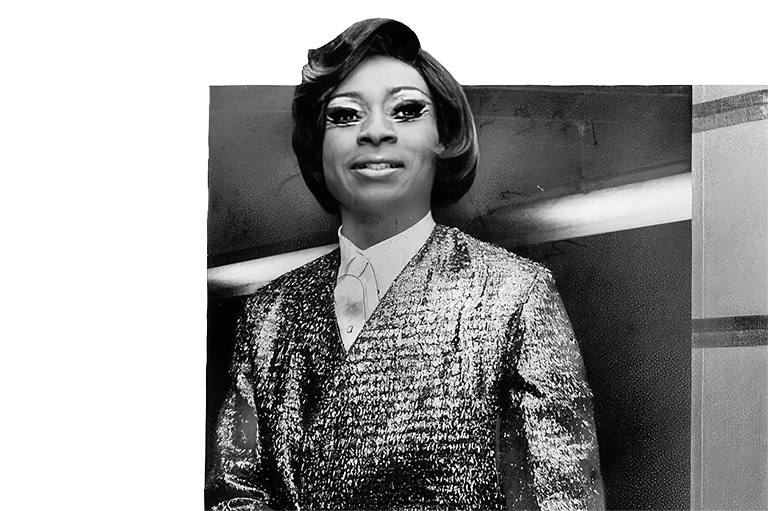
Gilson was joined by roughly 30 other hopefuls that year, including “Blaze,” described in Tab as the first Black contestant to enter the Miss Letros pageant. Also competing were multiple dowagers, a political satirist dressed as a municipal politician whose mission involved closing all of the neighbourhood’s “sin bins” and a cigarette girl from the King Edward Hotel across the street who was pretending to be a man pretending to be a woman. It was a drag ball for the ages.
This is what gay pride looked like before Pride. One of the central features of postwar discrimination against the queer community was forcing people to live under the conditions of the closet, so a drag party in that era represented a brave stance against injustice. And the many iterations of drag performance in Toronto and elsewhere in that time helped galvanize communities and spur on organizations to become more assertive about rights activism and eventually form an official Pride movement in Canada. But it wasn’t a straight line to this achievement.
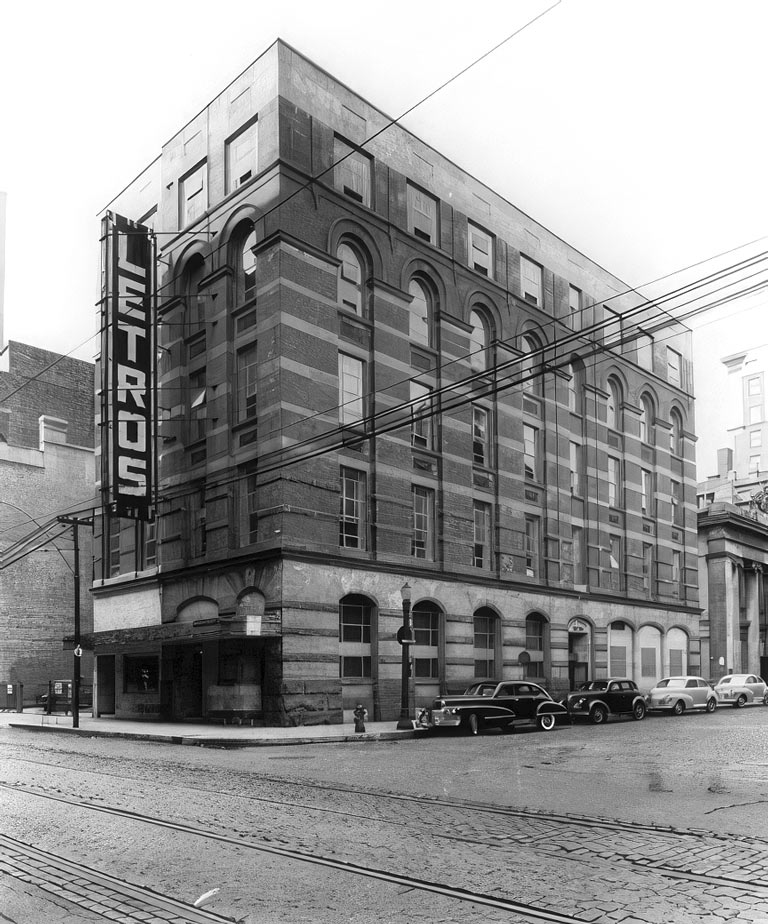
It’s difficult to say exactly when Toronto’s Halloween drag ball tradition began. But a 1949 story in Flash, another local tabloid, about a party held in an “unnamed hotel” revealed that the practice was already well underway then. In 1951, a Tab columnist wrote that Letros had hosted the ball that year and it was “jammed to the rafters on both floors.” Although there were rival parties in other bars, hotels and private homes, Letros became the “it” spot for the event.
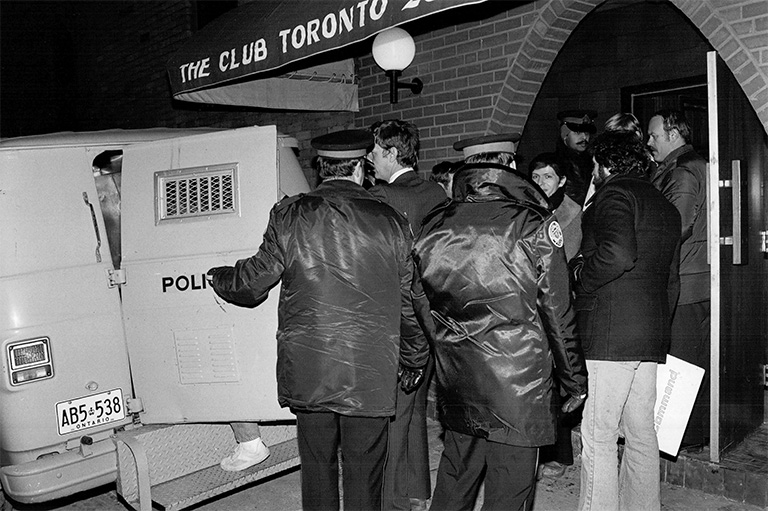
That crowd in 1961 was described as “mixed” — young and old and a medley of gawkers and members of the local queer community who couldn’t get in. And despite the presence of an ominous police wagon and more than a dozen officers, there are no incidents on record.
There may well have been unknown incidents over the years. It’s hard to imagine there weren’t any. And it should go without saying that straight “tourists” and “gawkers” at events and in gay bars have provoked controversy for decades by treating 2SLGBTQ+ folks’ lives as entertainment — especially when accompanied by a homophobic attitude or hostile intentions.
The onlookers at Letros didn’t seem to have been there for a confrontation, though. Instead, they’ve typically been characterized in multiple interviews, as well as in tabloid newspapers from the period, as happy, friendly and engaged. And although there aren’t any known photographs of the spectators from the 1961 event, there are several from Halloween 1967 that tell a story of a multi-generational audience having a good time. The images help corroborate the oft-repeated reflection that the atmosphere at Letros felt like Mardi Gras.
Advertisement
The atmosphere at Letros felt like Mardi Gras — the onlookers have been characterized as happy, friendly and engaged
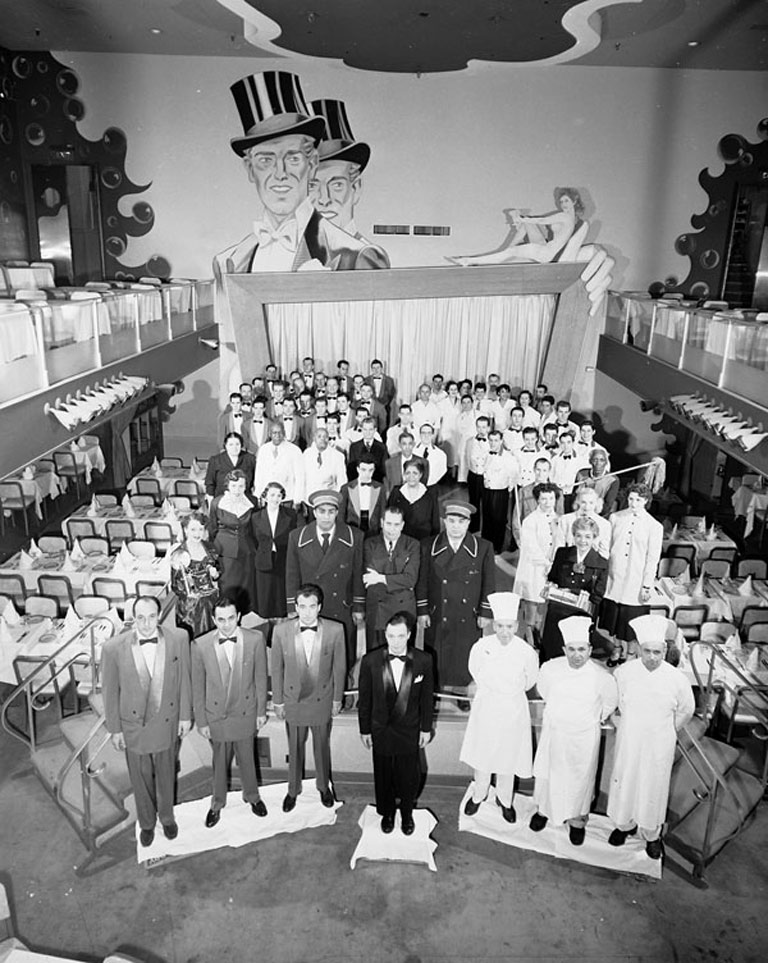
In some ways, the Toronto story is unique, in that it was home to one of the era’s most defiant, loud, proud and continuously running celebrations of drag in Canada. It wasn’t the only postwar drag tradition in the country, however. Concordia University researcher Viviane Namaste found that in Montreal, the city’s Black clubs regularly featured female impersonators circa the late 1940s. In the Little Burgundy neighbourhood, says Namaste, Rockhead’s Paradise held shows with local luminaries as well as Billie McAllister, billed as America’s foremost female impersonator.
Rockhead’s wasn’t a gay bar, though. Neither was Chez Paree or most of the other clubs that featured regular drag appearances in Montreal. One exception was the Tropical Room, later known as P.J.’s, a bar dominated by the presence of Armand Monroe (a.k.a. La Monroe), an activist, performer and MC whose influence on the city’s queer scene is still felt today.
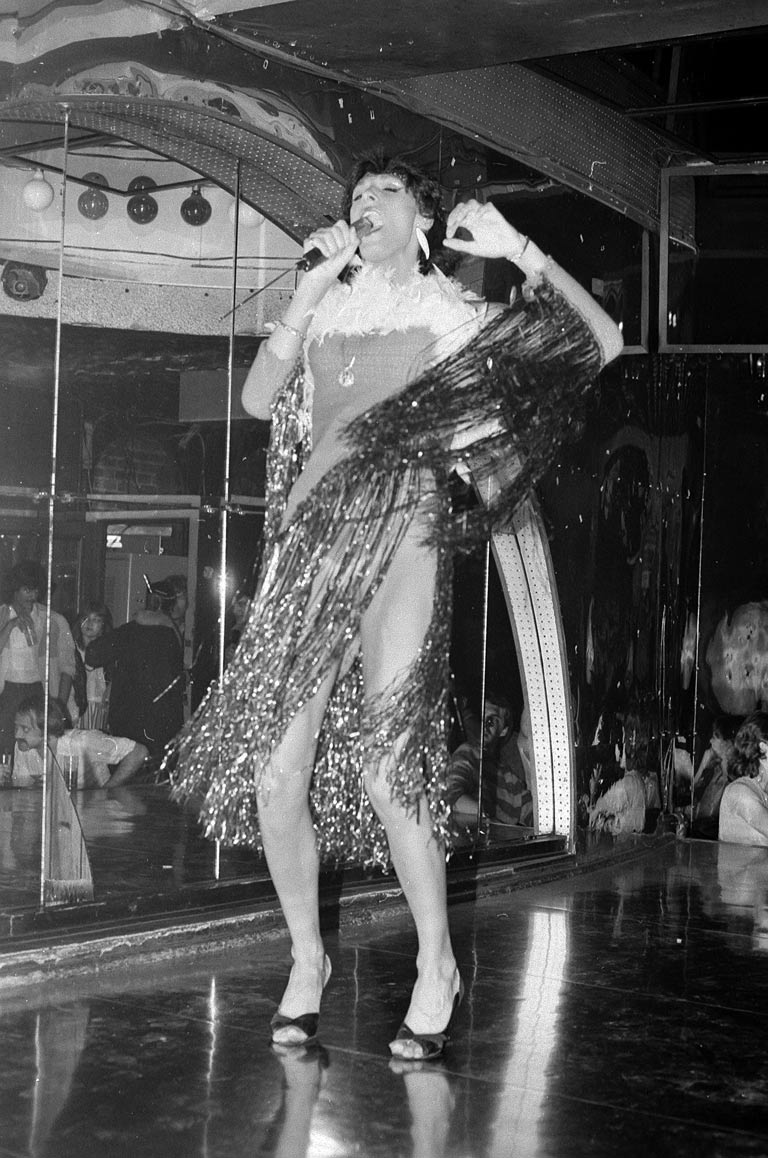
Over on the West Coast, Vancouver resident ted northe was campaigning in full drag for the decriminalization of homosexuality in the late 1950s. A little more than a decade later, northe became co-owner of the drag-friendly August Club. He would also open the first Canadian chapter of the Imperial Court System, a non-profit organization built around drag performance that was designed by José Sarria (the first openly gay man to run for public office in the United States) to be a safe haven for the queer community.
There may be drag balls yet to be uncovered, but at this point, it looks as if the era’s drag landscape was unique to each city.
The Halloween street-party tradition in Toronto devolved into something much darker after the Halloween drag ball migrated north to Yonge Street above College Street. Even before the Letros Tavern closed in 1970, this stretch of Yonge was becoming one of the city’s leisure hubs, attracting a younger generation with arcades, strip clubs, bright lights, cheap eats, pornographic bookstores, live music and other forms of entertainment.
It was also home to the St. Charles Tavern, a big straight-owned bar known for treating gay patrons abusively. Despite contempt for the clientele, the owners of “Charlie’s” enjoyed the revenue stream from their business. To bring in even more money, they started up a rival drag ball in the 1960s and, by the end of the decade, the bar was home to the city’s biggest Halloween party. It, too, attracted a crowd, albeit a markedly different one. The Yonge Street mob, by contrast, was driven by homophobia. Many were there to challenge the contestants’ right to attend a Halloween drag ball.
Save as much as 40% off the cover price! 4 issues per year as low as $29.95. Available in print and digital. Tariff-exempt!
At its 1974 Halloween party, it took “forty policemen, eight cruisers and two officers in a hotel room overlooking [Yonge Street] to maintain order” over an “ugly mob” estimated in the thousands, wrote Dick Beddoes in Toronto’s Globe and Mail. In retrospect, it’s important to point out that, while the police may have maintained some order, they failed to stop the contestants from being pelted with eggs, paint and ripe tomatoes.
The following year, participants gave up the “parade” tradition that was a vital component of challenging heterosexual monogamy and the conditions of the closet. For safety reasons, performers entered through a rear door. In 1976, Gerald Hannon, a legendary activist-journalist, referred to Halloween on Yonge as a “yearly festival of homophobia” in the groundbreaking gay publication The Body Politic.
Beddoes commented on a profound difference between the “heterosexual gawkers” in front of the Letros Tavern in the 1960s. Another glance at photos backs up the reporter’s general impression. Some photos from the 1967 scene outside the Letros look outright joyful. Photos from outside the St. Charles tell a story of hate, anger and a surly horde. One chilling image, captured by gay-rights pioneer Hannon, is of four youths in a car, one of whom is masked.
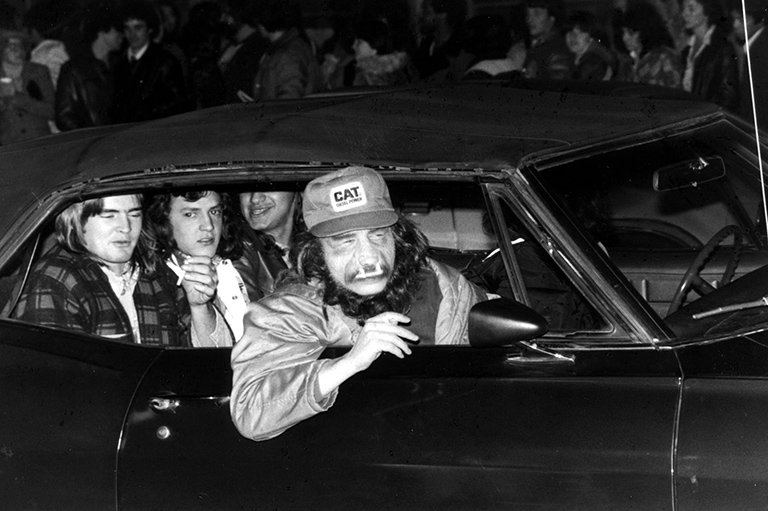
Whether it’s referred to as a backlash, reactionary times or retrogression, such a sharp illustration of a dramatic reversal of progress that openly and aggressively pushed back on gay rights is worthy of deeper consideration.
What happened? Wouldn’t most people expect the 1950s to be more conservative than the ’70s? Didn’t Trudeau settle this issue in 1969 when he famously declared there was “no place for the state in the bedrooms of the nation”?
There were a lot of factors in the mix, including an economy plagued by stagflation, the unique character of the Yonge Street strip as a place for people to explore their sexuality and a continent-wide push-back on gender-rights activism and queer rights from a burgeoning religious right.
This didn’t just happen in Toronto. All of the distinct postwar communities experienced a backlash that threatened the well-being of queer people of all genders. On June 29, 1973, police raided the Hampton Court Club, a gay disco in Vancouver, and took photos of the patrons. Whether they understood the significance of choosing a date so close to the anniversary of the beginning of the Stonewall Uprising — the New York City event in 1969 that prompted the creation of Pride — is unclear. What is clear is that it kicked off a campaign of harassment of 2SLGBTQ+ patrons in parks and on beaches and roughly a dozen raids on queer-friendly licensed spaces.
On Oct. 31, 1975, police raided the Montreal lesbian bar Baby Face, as well as Limelight, a mixed queer-friendly disco. Both were part of a month-long series of raids that largely targeted lesbian bars in the early days of the Olympic cleanup operation led by Mayor Jean Drapeau. It was a campaign with considerable reach and staying power, given that it was also associated with a police raid on Ottawa’s Club Baths on May 22, 1976. In Montreal, the Olympic cleanup extended into 1977, when police raided the gay bars Truxx and Le Mystique, well after the Olympics had packed up and left.
Those last two raids led to massive protests, which pushed Quebec — by the end of that year — to become the first province in Canada to pass legislation prohibiting discrimination on the grounds of sexual orientation in its Charter of Human Rights and Freedoms.
All those courageous protests and parades helped create change, whether we’re talking about the roughly 2,000 people who took to the streets in Montreal on Oct. 22, 1977, to protest raids on bars or Neil Gilson in making his way through the crowds to take part in the Miss Letros pageant. It was well worth it for Gilson, who emerged, a couple of hours later, sporting a very special sash. He’d been crowned “Miss Letros 1961.”
Courageous protests helped create change
“There were flashbulbs all over the place and the crowds on the streets were unbelievable,” Gilson recalled. He took a quick turn around the Times Square Lounge in the King Edward Hotel, then left so he could kick off his heels and savour his victory.
Neil Gilson died in 2019 at the age of 83, after years of helping younger generations learn about Toronto’s queer history. The author is grateful to him for sharing his wisdom and stories with her.
Advertisement