Lesson Overview |
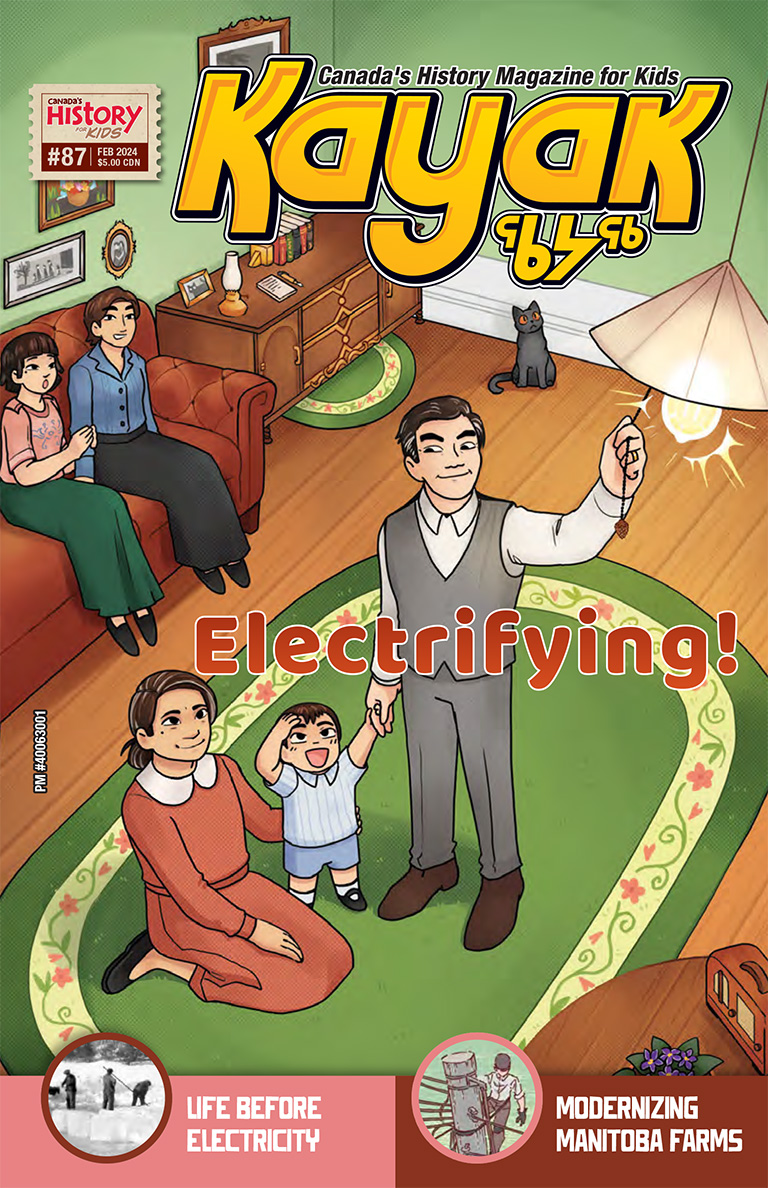
Grade Levels: 7/8, 9/10 Subject Area: Social Studies, History/Geography, Civics, Science Time Required: 2 lessons + Presentation This lesson is inspired by the article “Power to the People” in the Electrifying! (February 2024) issue of Kayak: Canada’s History Magazine for Kids. |
Students will learn about different types of energy sources used throughout Canada’s history, exploring the challenges, benefits, and harms associated with creating electricity. They will research current energy projects and proposals and consider the different perspectives people hold and why some of these projects can cause conflict and controversy in our communities. |
Historical Thinking Concept(s) |
- Use primary source evidence
- Analyze cause and consequence
- Consider historical perspectives
|
Learning Outcomes |
Students will…- explore different energy sources which generate the electricity we use to power our lives in Canada.
- investigate the pros and cons of each energy source, and why they are controversial in different communities.
- research controversial energy projects across Canada and look at various points-of-view and perspectives on the projects.
- develop critical thinking skills while looking at different sources of information (websites, news articles, etc.) and properly recognizing the purpose and perspective of the creator.
- create a presentation to showcase an energy source, describing the pros and cons related to a specific project and the events surrounding it, including the current status of the project.
- evaluate different perspectives and consider their own stance on the issue.
|
Background Information |
Starting with the first hydroelectric generating station on Ottawa’s Chaudière Rapids, energy projects have long been controversial. As explained in the February 2024 issue of Kayak, “Making electricity and moving it around is a big challenge in such a big country. The benefits and harm caused along the way haven’t always been shared equally.” There are many factors to consider — such as the positive or negative impacts on the economy, environment, and to local communities — and often, Canadians are in disagreement about the best path forward.
By exploring the pros and cons of energy projects in the past and those currently being proposed, students will gain insight into what controversial issues are at play and how these issues might affect the projects themselves and their development in the future. |
Lesson Activity |
ACTIVATING- Think-Pair-Share or begin a K-W-L (Know-Want to Know-Learned) chart with students on what they already know about current or proposed energy sources, including key factors that affect energy use and development (students may discuss climate change and sustainability, economic factors, technology and infrastructure, public safety, etc.).
- The teacher may choose to use a guided discussion to cover any types of energy not discussed.
ACQUIRING- As a class or individually, have students read the article “Power to the People” in the February 2024 issue of Kayak: Canada’s History Magazine for Kids. While reading, have students make notes about the different types of energy sources, identifying some of the arguments in support of or against that specific energy source / project throughout history.
- Break students into small groups and tell them to pick one of the types of energy sources that they will investigate further (i.e. wind farms, solar farms, tidal generated electricity, hydroelectricity, nuclear reactors, coal mining, oil and gas). Give students time to further research the pros and cons of that resource.
APPLYING- Assign students (individually or in their small groups) to research and create a short presentation on a contemporary example of a proposed or successful energy development project that used the specific type of energy source they have researched.
- In their presentation, encourage them to consider and share:
- What are the pros and cons of this type of energy source?
- Who was in support of the project? What reasons did they have or arguments did they make?
- Who was against the project? What reasons did they have or arguments did they make?
- Are there other opinions or points-of-view on the project?
- Was there a main point of contention or controversy surrounding the project?
- Did public engagement change the project at all?
- How did the media report on the issue?
- Was the project successful? Provide the current status of the project (i.e. was it completed, modified, cancelled?).
- Following each presentation, ask students to evaluate the merits of each perspective presented and think about where they would fall on the issue.
|
Materials/Resources |
Students will need access to device for online research. If this is the first time students are using primary sources (such as online news articles) they will need an introduction on how to use and interpret sources. This should include having them ask questions about the creator’s purpose, perspective, and audience. Remind students that they will need to seek many sources and compare those that have multiple viewpoints to help them confront the complexity of the issue. Students will also need to know how to determine whether the information in the article would be considered a primary or secondary source. Some possible articles to look at when preparing for the lesson and/or to provide to students as a “jumping off point” for their research: Wind energy:Hydroelectricity:Nuclear power: |
Assessment |
- Success Criteria List or Rubric — this may be teacher-created or co-created with students before they begin creating their presentation.
|


 2019 recipient of the Governor General’s History Award for Excellence in Teaching