Your history. Your inbox.
7 uniquely curated newsletters to choose from.


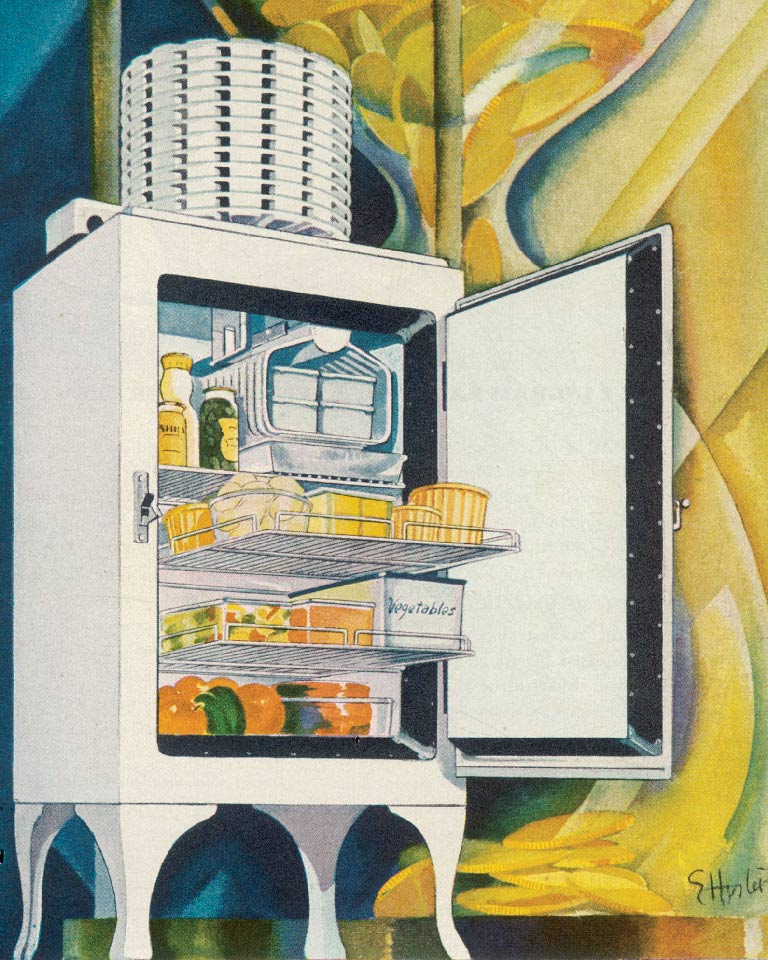
The May 9, 1931, Hamilton Spectator reported that Canadian General Electric had manufactured and sold more than a million monitor-top refrigerators in four years. Saturday’s paper explained that “refrigerator sales volume indicate that the public is learning the importance of constant low temperatures to proper food preservation and health.” The household fridge was becoming increasingly popular, replacing clunky wooden iceboxes. Almost a century later, nearly every Canadian home has a refrigerator.
But food preservation wasn’t always so easy as popping leftovers into the freezer. It should come as no surprise that Canadians perfected cold storage — after all, the country feels like a tundra much of the year. Food-preservation methods that developed out of a sense of practicality have given rise to some of our comfort foods, whether you’re sitting down to a spread of smoked salmon in British Columbia, a heaping of sauerkraut on your plate of perogies in Winnipeg or a feed of salt fish and brewis in Newfoundland and Labrador. The foods we preserved and the ways we preserved them varied across history and region. Like most cuisines, necessity sparked the evolution of cold storage — and with it, a fascinating history of getting through the Canadian winter.

With 7 uniquely curated newsletters to choose from, we have something for everyone.
Which food is in season has always determined what Indigenous Peoples hunted, gathered and preserved to survive the colder months.
Joseph Shawana, who grew up in Wiikwemkoong Unceded Territory on Manitoulin Island in Ontario, recalls long summer days spent picking berries and sweet cicely, which they called Indian candy. “I remember going out to the bush with my friends as soon as we’d wake up, then coming home when the street lights turned on,” says Shawana. “Even though we were on Manitoulin Island and there was access to an abundance of grocery stores and so forth, a lot of us grew up hunting, foraging and fishing.”
Shawana, who is Odawa and a chef, is the Indigenous culinary and foodways guide at Centennial College in Toronto and says when he was a child, the Elders hunted and preserved the meat by smoking. “I always saw Elders go moose hunting or deer hunting, then they’d smoke it outside,” says Shawana. (They still do, he notes.) His mother would also can berries and fruit picked over the summer months.
In pre-contact southern Ontario and eastern Quebec, the Haudenosaunee Confederacy would store their crops — typically corn, beans and squash, also known as the Three Sisters — in longhouses and pits. Corn was hung from the rafters of longhouses to dry, prepping it for planting, while other foods were stored in rectangular pits lined with sand and bark or grass to keep the oxygen levels and the chance of spoilage low.
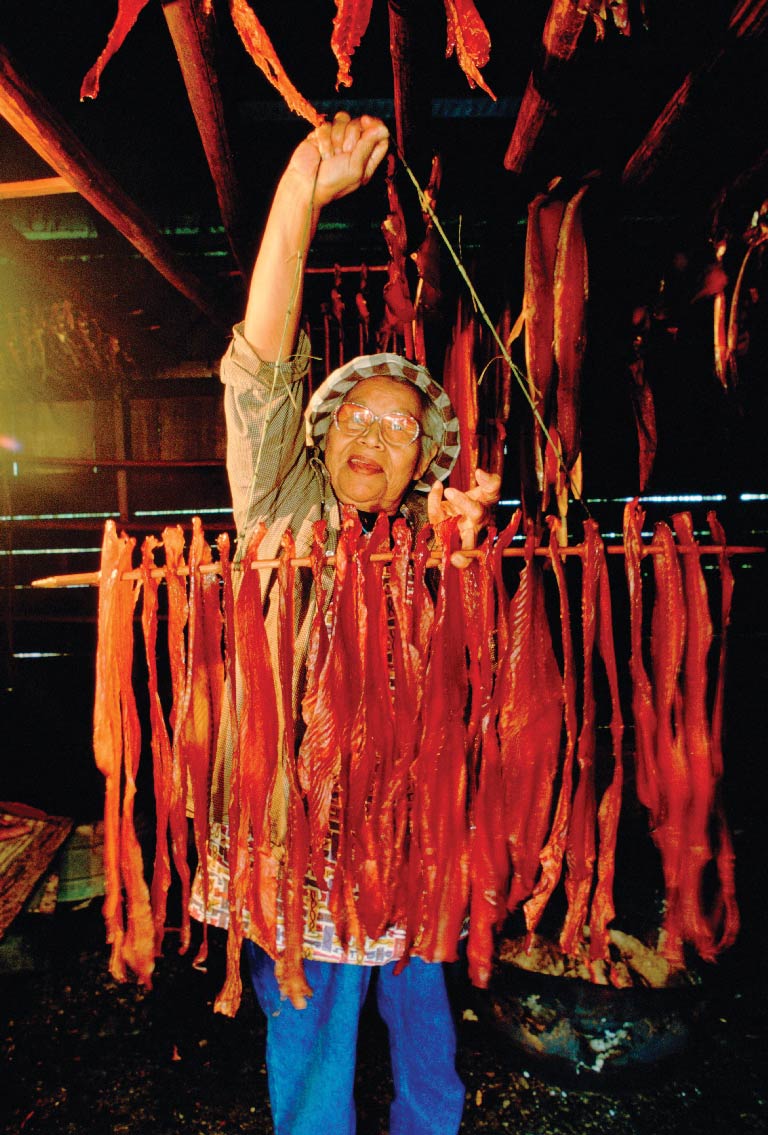
On the West Coast, where there’s smoke, there’s salmon. It’s all about that pink-orange migratory fish, and fish in general. First Nations peoples, such as the Nisg_a’a and the Coast Salish, spend summers by British Columbia’s rivers taking full advantage of the salmon runs. Salt and sugar were largely unavailable pre-contact, so in keeping with tradition, they rely on drying and smoking to preserve the fish for winter. They process it by wind, sun or woodsmoke, the smell of alders burning permeating the walls of communal smokehouses for days as the salmon is smoked, then hung on poles and racks.
Advertisement
The foundation of cold storage — and survival — lies below bedrock across the country. From the creation of permanent colonial settlements in the 1600s through to the Industrial Revolution, root cellars were a popular means of preserving food for the winter. In technical terms, a root cellar is any type of storage that uses the earth to naturally cool a space and keep it moist, protecting it from winter’s frost, whether it’s a hole in the ground or a cellar on the side of a hill. Sometimes, barrels were used to create hatches; other times, the entrances were made from stone, but all served as veritable grocery stores where owners “shopped” their stocked vegetables, fruit and meat.
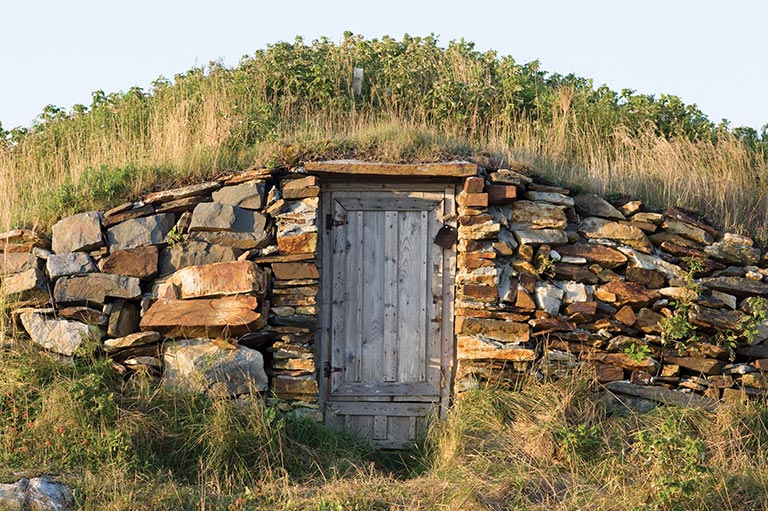
In 2013, Heritage NL designated root cellars as a Distinctive Cultural Tradition and Practice. If you visit the town of Elliston, N.L., on the Bonavista Peninsula, you can experience the “Root Cellar Capital of the World,” with more than 130 of these preservation places — hidden below their sod roofs, sometimes only visible because of their brightly coloured doors. Inside, shelves upon shelves of jars contain a rainbow of summer’s bounty: pickled vegetables, berry jams, bottled moose and rabbit, and salted pork, along with barrels of root vegetables and dried and salted cod fillets.
Naturally, ice has played a big part in the evolution of cold storage in Canada and changed when and how we ate fresh foods like fish and dairy. An American, Enoch Piper, patented the salting and freezing of fish, first in Maine in 1861 and then in New Brunswick in 1865 (patents were necessary for each country), which had a huge impact on Canadian fisheries. By using a mixture of salt and ice to attain subfreezing temperatures, whole fish could be frozen in pans and stored in insulated storage rooms, which widened the fish trade’s distribution.
The invention of flash-freezing is credited to New Yorker Clarence Birdseye, who, while working as a fur trader in Labrador in the early 1920s, had a stark realization. After a particularly fruitful fishing trip with local Inuit, he noticed that because of the extreme cold, the fish froze immediately after coming out of the water, and he realized how fresh the fish tasted months later when it thawed and was cooked. Quickfreezing became the gold standard for food preservation and the distribution of many foods.
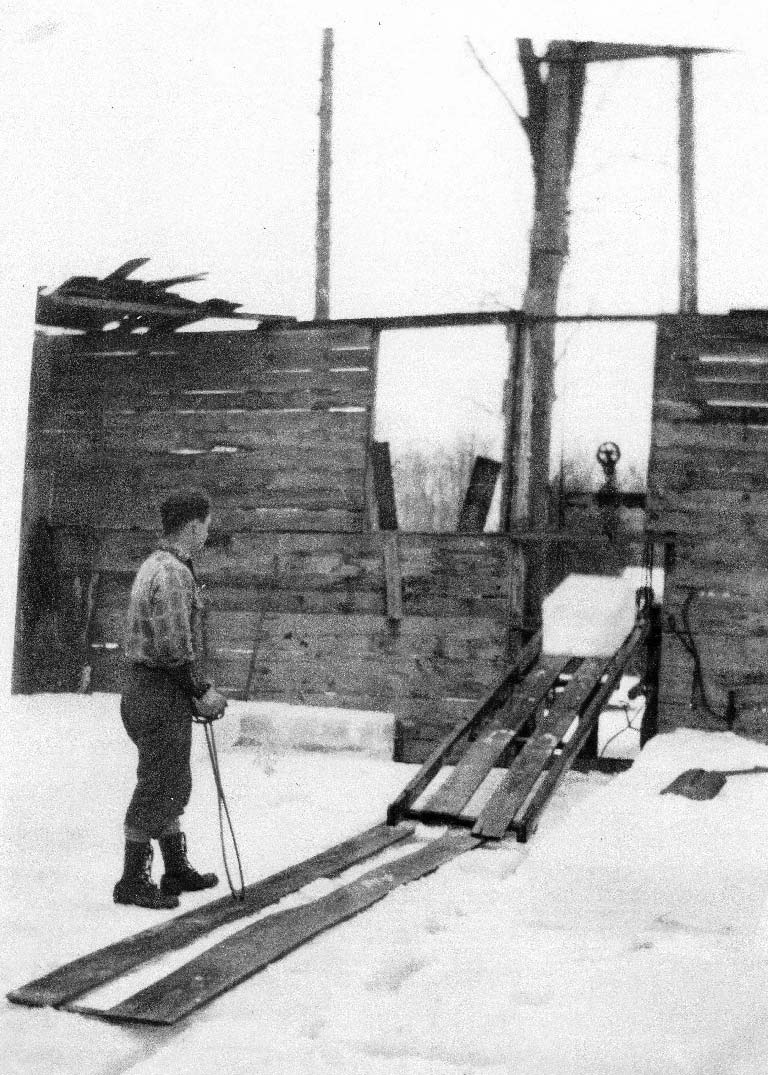
While food-freezing techniques were evolving quickly at the turn of the 20th century, it was the ice harvesters who facilitated the cooldown. Refrigeration using natural ice harvested from the Great Lakes became more common and a thriving industry was born, with thousands of pounds of ice hacked from the lakes by hundreds of men. Ice harvesting was at its peak in January and February, when the ice was between 35 and 40 centimetres thick, which allowed men to work safely on it. Still, that precaution didn’t prevent the deaths of many men and horses.
Harvesting companies like James Fairhead’s Springwater Ice Company, founded in 1876, serviced the Greater Toronto Area and harvested massive blocks of ice from Lake Simcoe, Lake Wilcox and Bond Lake. Lake Simcoe was famous across North America for its pure and clean ice in the late 19th century, and Fairhead’s biggest competitor, Elias Chapman, founded the Belle Ewart Ice Company on its shores in 1891.
Save as much as 40% off the cover price! 4 issues per year as low as $29.95. Available in print and digital. Tariff-exempt!
Those large blocks of ice would be stored in wooden cabinets called iceboxes, keeping dairy, meat and eggs cool. By the 1920s, the word “refrigerator” began to appear more frequently in local papers and women’s magazines, eventually replacing the term “icebox.” The Cornwall Standard reported on May 13, 1920, that Mayor Adam Fetterly, along with two other gentlemen, had tested the Barnet refrigerator, sealing it up for three days stocked with milk, wet salt, “native tobacco” and sliced oranges, among other things, to find the ice only about “half used,” claiming “one should be in every home.” In an advertisement for a combination kitchen cabinet and refrigerator in the June 9, 1920, Globe and Mail, the Murray-Kay Company asserted its $50 fridge was “needed in every home.” Most ads for this new refrigerator made the same claim. The most modern of conveniences, until General Electric came along.
Canadian General Electric, which was a subsidiary of American General Electric, introduced the first-ever monitor-top refrigerator to the Canadian market in 1927. Consumers loved the all-steel construction and porcelain interior (and no need for ice delivery). Four years later, that Spectator article reporting the company’s sale of more than one million fridges went on to say that “the formative years, when electric refrigeration was new and little known, except as a rather expensive luxury, are definitely past.” However, the majority of homes didn’t feature a fridge until the 1950s. By the 1960s, things were in full swing, with 90 per cent of households having one, which changed more than the layout of your kitchen. With the ability to store fresh fruit, dairy and meat in the home, Canadians consumed more fruit and milk than ever before, and the country’s diet was forever altered. There was less of a need for tiresome preparation and preservation during the summer months. By the end of the 1940s, supply chains, chilly supermarket shelves and cold food at home meant preserving and eating were transformed. The rest is Canada’s frosty past.
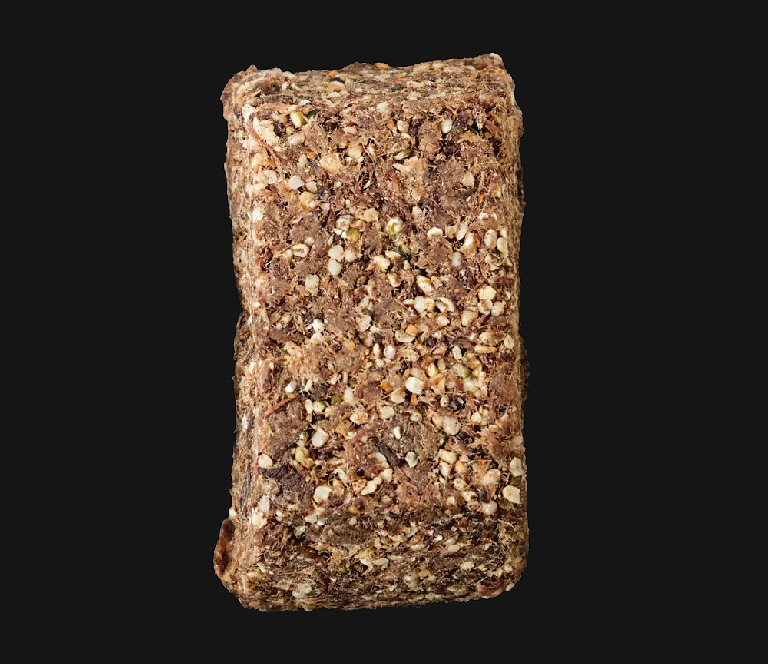
Pemmican could be considered the first protein bar from these lands. Indigenous Peoples, in particular the Cree, Ojibwa and Métis, have been making and eating it for thousands of years. Descended from the Cree word pimîhkân — a derivative of the word pimî, which means fat or grease — pemmican is a mixture of ground meat, dried fruit and rendered fat that’s cut into squares or rolled into balls. It’s high in protein and never freezes solid, making it easy for hunters to carry with them when travelling long distances, particularly in the winter.
Settlers found it so impressive that they’ve been copying the recipe for centuries. In the late 1770s, the Denesuline introduced pemmican to fur trader Peter Pond and word quickly spread among traders. Pemmican’s protein power became a major source of sustenance; there was even a war over access to it (the Pemmican War, which lasted from 1812 to 1821). There are a variety of recipes, but Métis make pemmican with bison, cutting strips of meat and hanging them on wooden slats to be dried in the sun, like beef jerky. Some of the strips are laid out on a hide and pounded into a powder with a stone hammer, then melted bison fat is poured over the meat and worked together to make a mixture that could be shaped into a handy meal to go.
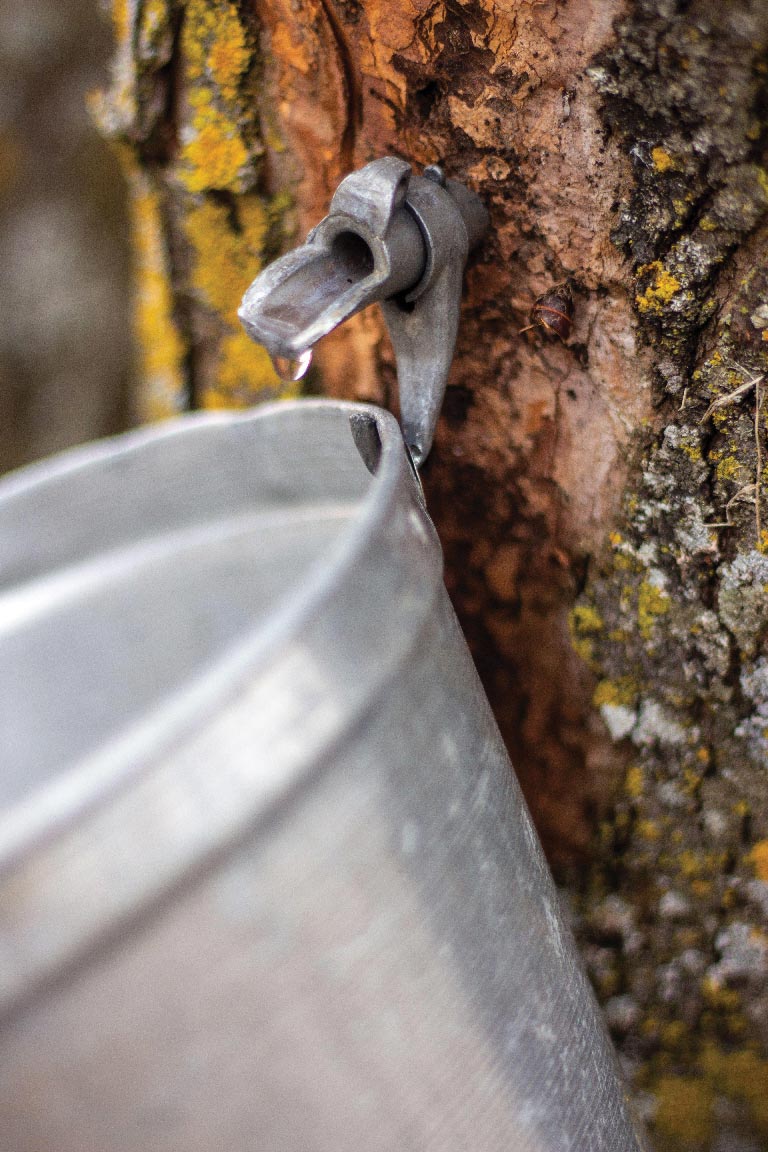
The history of maple syrup is a sticky one, literally. Canada’s ubiquitous sweetener is ingrained in our pop culture psyche from our Flag to our breakfast table, and it all starts with the beloved maple tree. Indigenous Peoples such as the Anishinaabe, Haudenosaunee and Mi’kmaq in modern-day Quebec, Ontario and the Maritimes were the first to tap the red, silver and sugar maples in early spring. They passed on their knowledge to European settlers in the 1600s, and by the early 1800s, maple syrup was big business.
Today, Canada produces more than 75 per cent of the world’s maple syrup, a whopping 119.5 million kilograms in 2025. Sugaring season is more than collecting maple water — it’s a full-blown celebration! Quebec’s sugar shacks, where tappers held “sugar parties” as early as the 1860s, draw hundreds of thousands of sap suckers for sugaring-off season in early March and April, when the days are filled with sun but nights are still cold.
We hope you will help us continue to share fascinating stories about Canada’s past.
We highlight our nation’s diverse past by telling stories that illuminate the people, places, and events that unite us as Canadians, and by making those stories accessible to everyone through our free online content.
Canada’s History is a registered charity that depends on contributions from readers like you to share inspiring and informative stories with students and citizens of all ages — award-winning stories written by Canada’s top historians, authors, journalists, and history enthusiasts.
Any amount helps, or better yet, start a monthly donation today. Your support makes all the difference. Thank you!
Advertisement