Your history. Your inbox.
7 uniquely curated newsletters to choose from.


At the end of April 1915, as the world sunk deeper into war, a 20-year-old from Trois-Rivières, Que., boarded a train from Montreal for the Port of New York. Leslie Joy Whitehead had booked passage to England, determined to contribute to the war effort. When the train was delayed, however, she arrived too late to board the ship. It was a stroke of luck. She had missed the Lusitania, which the Germans torpedoed on May 7, killing 1,197 passengers. Even after such a close call, Whitehead booked another passage and sailed safely to England a few weeks later.
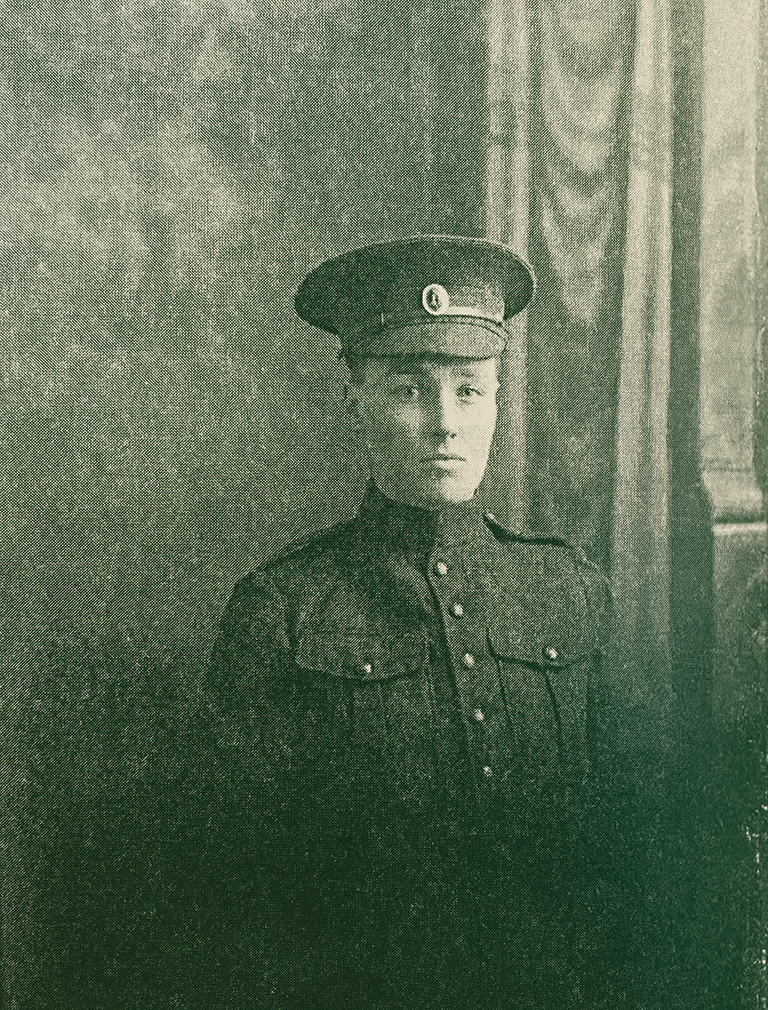
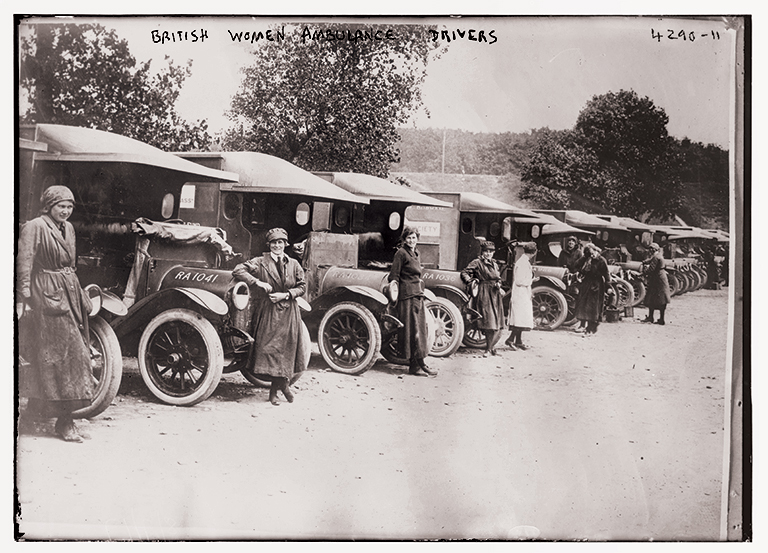
While many young Canadian women signed up to work as nurses, Whitehead wanted to be an ambulance driver. More than that, she wanted to be a soldier. Headstrong, resourceful and skilled as an outdoorswoman, Whitehead would make it happen. In everything she’d do during the war, she would defy stereotypes of who a woman was and what she could accomplish.
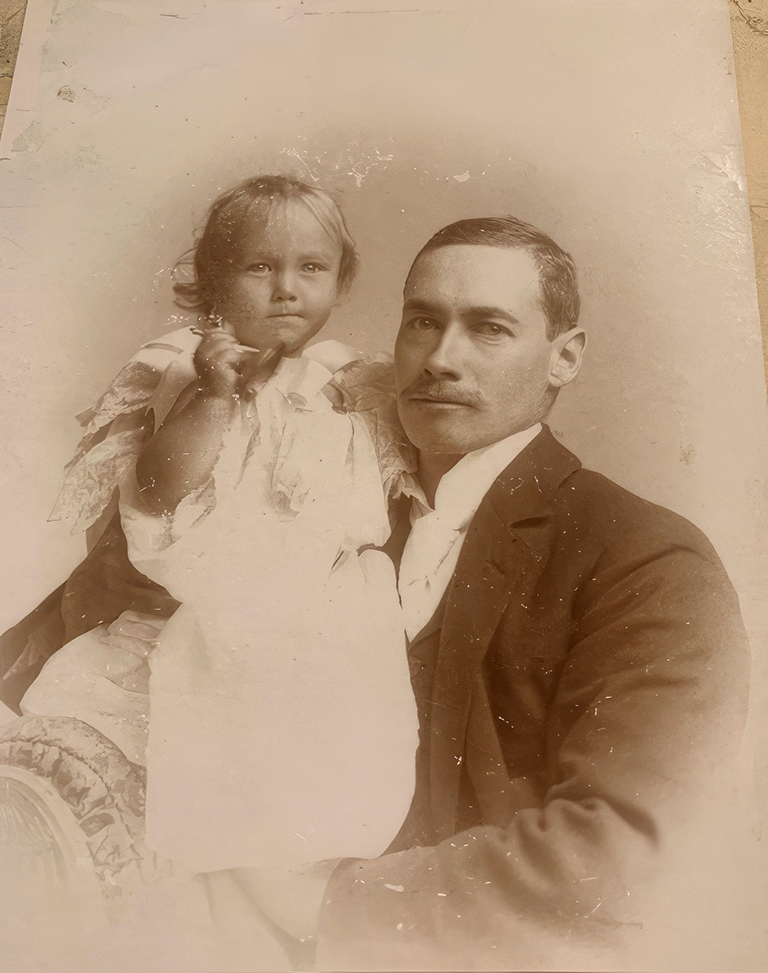
Leslie Joy Whitehead, known as Joy, was born in 1895 in Montmorency Falls, Que., to Charles Ross “C.R.” Whitehead, an industrialist and entrepreneur, and his wife, Winifred Stevenson. The family moved to Trois-Rivières around 1907, when C.R. founded the Wabasso Cotton Company factory and Wayagamack Pulp and Paper Company. Joy’s parents had a strong sense of civic duty: her father started the local Scouting movement, while her mother was president of many charities, including the Red Cross. Unusual for English-speaking elites of the time, they spoke French fluently and were liked and respected by all in the budding industrial town.

With 7 uniquely curated newsletters to choose from, we have something for everyone.
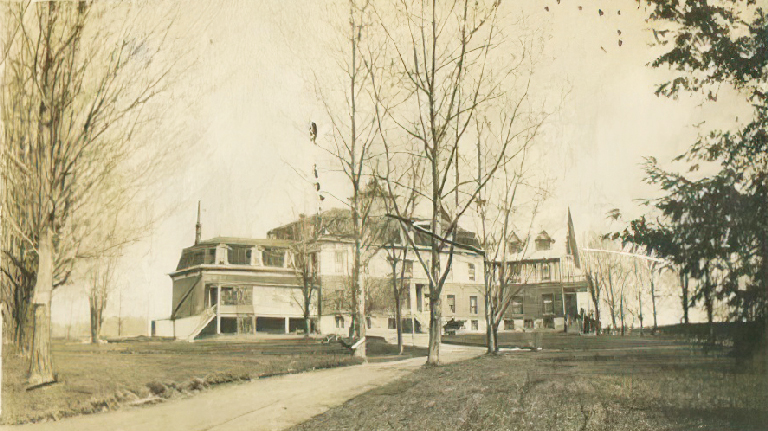
When she was 10 years old, Whitehead was sent to King’s Hall, a girls’ boarding school in the Eastern Townships run by the Anglican Church. Laura Joll, then the recently hired headmistress, stressed the importance of high academic standards to enable girls to pursue university studies, according to a dissertation on the history of the school by Elizabeth Hearn Milner. Joll built ties with Montreal’s McGill University and enriched English, history, geography and mathematics classes.
When she was just 14, Whitehead became one of eight girls to pass standardized McGill exams for the first time, excelling at history and languages. She was also athletic and enjoyed spending time outdoors. By her late teens, she was a great runner and spent entire days alone in the woods. Whitehead could also “handle a canoe and shoot better than most men,” says a 1916 Toronto Daily Star article. Plus, as the daughter of an engineer who ran both textile and paper mills, she was familiar with all kinds of machines. While Whitehead didn’t keep a journal, she did write a letter to the Great War Veterans’ Association of Montreal in August 1918, detailing her service record. From this, it has been possible to connect her wartime experiences to contemporary diaries and newspaper articles, both in Canada and the U.K., including a diary from Ellen Chivers Davies, a British woman who was a nurse in Whitehead’s unit, and Catherine L. Corbett, a physician active during the war years.
Whitehead arrived in England in May 1915, reported the Yorkshire Evening Post, with “other young lady volunteers” from Canada who had travelled there to help trace the country’s wounded soldiers. Whitehead shared with the reporter her plans to become an ambulance driver. She soon discovered that England was a good place to be for a young woman itching to get involved in the war on her own terms. Groups of suffragists were organizing feminists with wide-ranging skill sets to contribute to the war effort on equal footing with men.
Two such organizations, both with a focus on Serbia, were especially prominent. One of them, the Scottish Women’s Hospitals, was founded by Elsie Inglis, a pioneering physician and surgeon from Edinburgh. When war broke out, Inglis offered her services to the U.K. War Office. Part of Inglis’s legend is that she was stoutly refused, an official telling the “good lady” to “go home and sit still!” Instead, Inglis flew into action and set up 14 field hospitals staffed entirely by women.
She could handle a canoe and shoot better than most men
The second group was the Serbian Relief Fund (SRF), founded by humanitarians Lady Louise Paget of the U.K. and American-born Mabel Grouitch. As the wives of diplomats posted in Serbia, Paget and Grouitch had witnessed first-hand the poverty and disease rampant in a population already weakened by the Balkan Wars of 1912–13 and a typhus epidemic in late 1914 to 1915 (which killed 150,000 in Serbia, including one-third of its doctors). SRF raised funds, sent medical supplies and clothing, and set up hospitals all over Serbia that were desperate for help.
Whitehead signed up as an ambulance driver with the SRF’s 2nd British Farmer’s Unit (named for its financiers, not its membership). By the first week of June 1915, she was sailing out of Bristol on a foggy day for the Greek port of Salonika. The ship carried volunteers, medical and sanitation supplies, and ammunition and explosives. Whitehead’s colleague Chivers Davies wrote in her diary that four ships leaving port the same day were torpedoed. Despite the constant threat of coming under attack themselves, the unit’s members busied themselves on the two-week journey by studying Serbian grammar (“I believe only a native of Serbia can ever hope to speak grammatically or master the intricacies of seven cases,” wrote Davies, “and a habit of declining everything”) and gazing at the coastline.
Advertisement
Whitehead’s unit docked in the neutral port of Salonika (now known as Thessaloniki) on June 18. They travelled northward through landlocked Serbia up to Požarevac by train, horse and carriage and bullock cart, where they set up a base hospital 80 kilometres south of the capital, Belgrade. There was no fighting that summer, and therefore, no ambulances to drive. To busy herself, Whitehead likely did sanitation work, based on Corbett’s diary and Whitehead’s 1918 letter to the veterans’ association. Many of the British were suffering from water-borne digestive ailments, so boiling water for the 60-member camp was crucial. Despite these discomforts, life was relatively calm and Whitehead’s unit spent the summer treating civilians for common ailments and soldiers for gangrenous limbs.
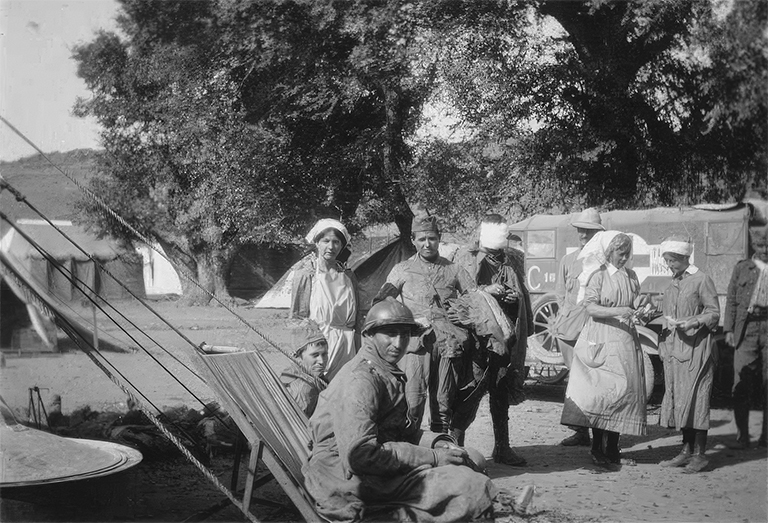
In September, the unit began gradually moving to Belgrade, where they would replace the 1st British Farmer’s Unit on Oct. 1. Although the 2nd British Farmer’s Unit had needed to adjust to a lot in Požarevac, from the “foul smells” of the hospital to the weather (“Rain in Serbia … is no joke,” wrote Chivers Davies), they had grown very fond of the local population. They were enchanted by the beauty of the countryside and the gracious welcome they received, which included singing, dancing and picnics. Later, though, within days of their arrival in Belgrade, all of this changed dramatically.
The Germans launched a massive offensive against Belgrade on Oct. 6, 1915 — and Whitehead, at last, became an ambulance driver on the front. Chivers Davies’ diary describes the bombs that rained on the city while it burned, when night was eerily as bright as day. “Earlier in the afternoon the cars were sent down to the trenches to collect wounded,” she wrote, “but down by the river there were no wounded to bring, only piles of dead. So the workers crawled into the toppling houses and dragged the wounded out while they lay caught like rats in a trap and crushed between blocks of masonry; civilians these.” Conditions deteriorated by the hour — “We bent over one man only to find he had no head” — and overwhelmed the hospital.
Whitehead acted as a guard, protecting medical supplies from thieves and women from unwanted advances
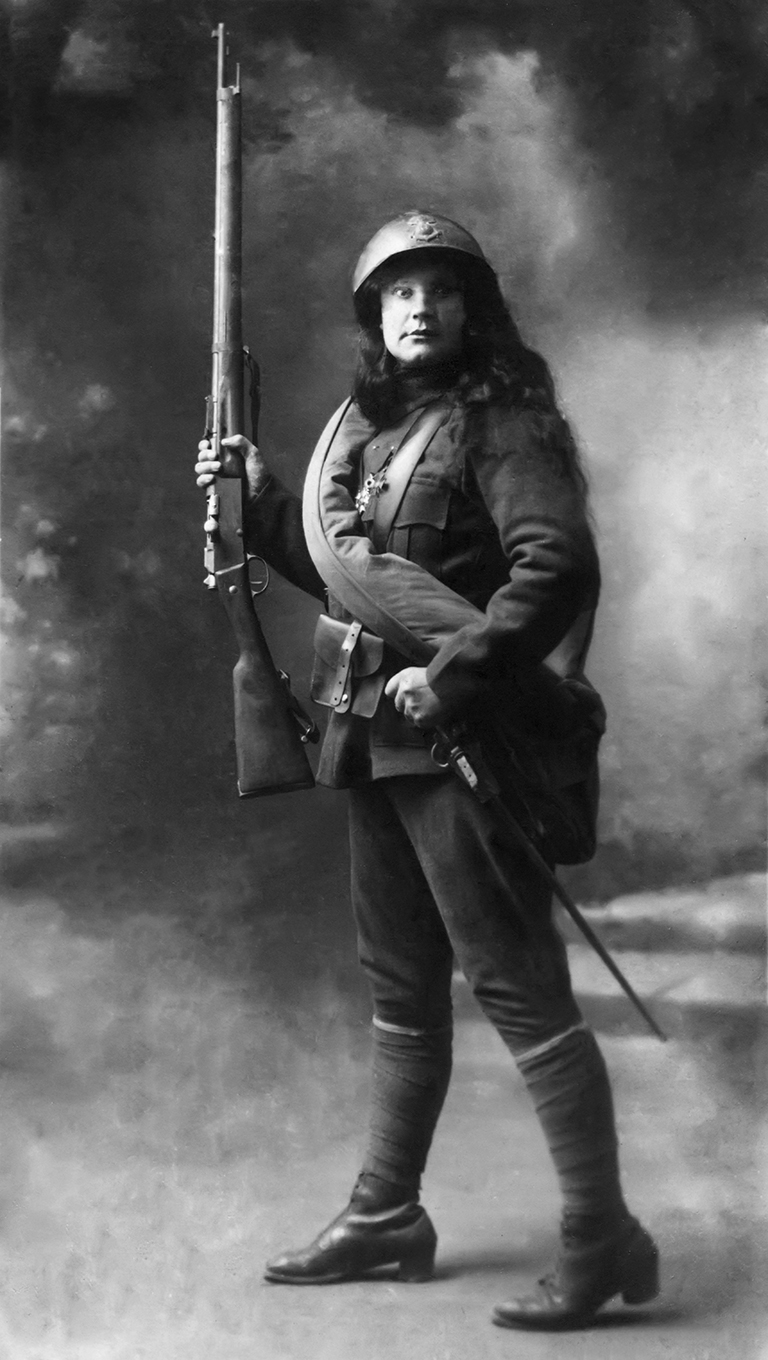
By Oct. 10, the city had fallen. Around this time, Whitehead enrolled as a regular infantry soldier in the 9th Serbian Regiment’s Danube Division. Casualties were high and the Serbs were outnumbered; the 10th and 7th regiments, the two units defending the Danube Quay, the main entry point to Belgrade, had been almost entirely wiped out. As the retreat began, Whitehead volunteered; she had the skills, and desperate times opened the door for her.
Women were forbidden by the Allies from direct combat on the front lines in the First World War. In Serbia, several women had disguised themselves as men to fight in the two Balkan Wars. Although their gender was eventually revealed, they continued to fight — this time openly as women — in the Great War. Živana Terzić, Natalija Bjelajac, Mara Petrović, Sofija Jovanović (in Belgrade at the same time as Whitehead) and especially Milunka Savić all received multiple awards and distinctions for their bravery. There was, therefore, a precedent, albeit a fragile one, when Whitehead offered to serve in Serbia.
Only a few weeks later, by early November, Whitehead was taken prisoner with the rest of her regiment and sent to Kruševac in central Serbia. Because of its train station, the Germans had a supply depot in the town. It became a clearing station for their prisoners of war, and it was there that Whitehead encountered the Scottish Women’s Hospitals. Either because she was a woman or due to her many skills, Whitehead was given leave to help them. Members of two of the Scottish hospital units had become prisoners of war as the Germans advanced. Permitted to keep functioning, they soon found their supplies were pitifully inadequate to meet the town’s needs. “Weary processions of thousands of prisoners are driven in day after day,” wrote Corbett. When one starving Russian prisoner was given a piece of bread, she noted that he “ate it like a wolf.”
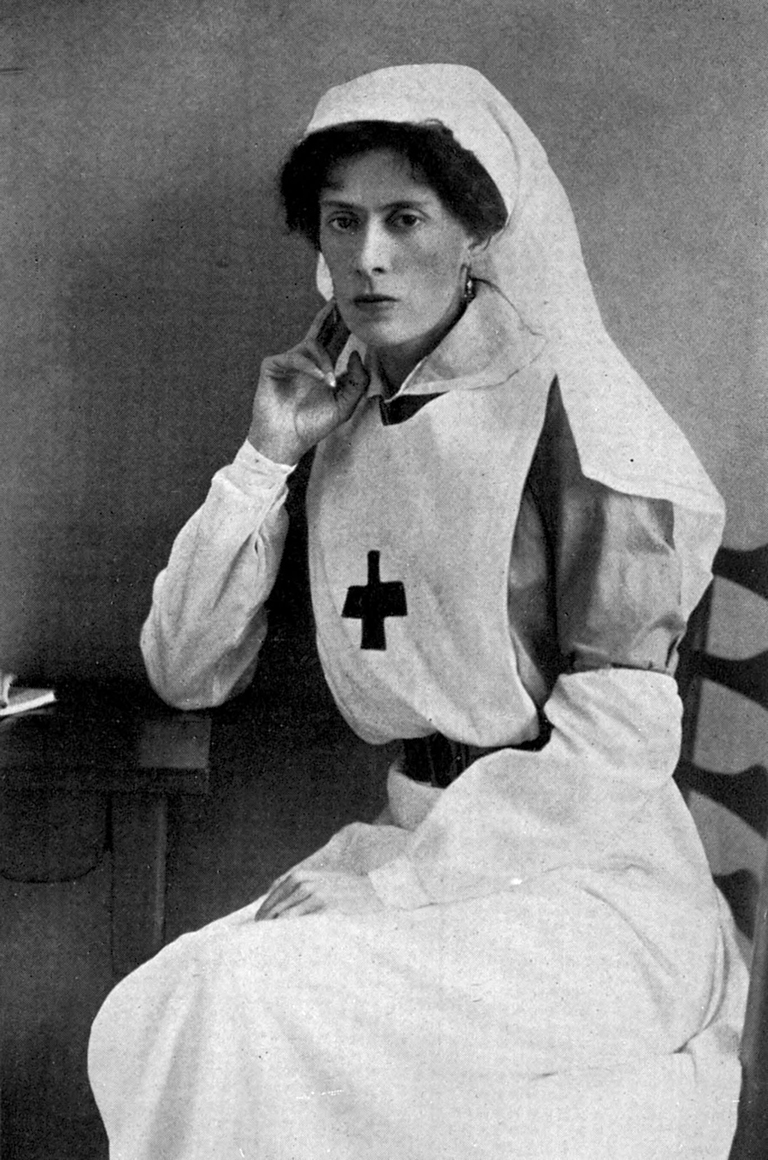
At first, Whitehead acted as a guard, protecting precious medical supplies from thieves and the women from unwanted advances. One time, dressed in her soldier’s uniform and mistaken for a man by two German soldiers, she listened as they ogled some of the Scottish nurses. She later warned the women. Following this, Corbett noted that “it is rather convenient having a man about who is a girl.”
It had been a wet fall, and the Scottish women’s major supplies had only arrived days before Kruševac fell under occupation. Piles of linens, clothing, bedding, soap and bandages were stacked in sodden, muddy heaps everywhere and were useless, since there was no way to dry or clean them. Corbett’s diary describes patients crowded in drafty wards, three or four to a mattress, wearing dirty rags. Their bodies crawled with lice and fleas, the source of typhus and other diseases. There was nowhere to bathe and the stench was overwhelming.
Day after day, Whitehead disinfected and dried the piles of filthy blankets, sheets and clothing
After the women got a giant disinfector, known as a Thresh machine, to function, Whitehead took action. Day after day, she used it to disinfect and dry the many piles of filthy blankets, sheets and clothing. “What we should do without Whitehead and Thresh’s disinfector I tremble to think,” Corbett wrote, “as washing the patients’ clothes has until now been impossible.” Whitehead next focused on the lack of baths. “The invaluable Whitehead has rigged up a first-rate bathing arrangement here, for which she carries buckets and buckets of water across the field from the pump.”
Advertisement
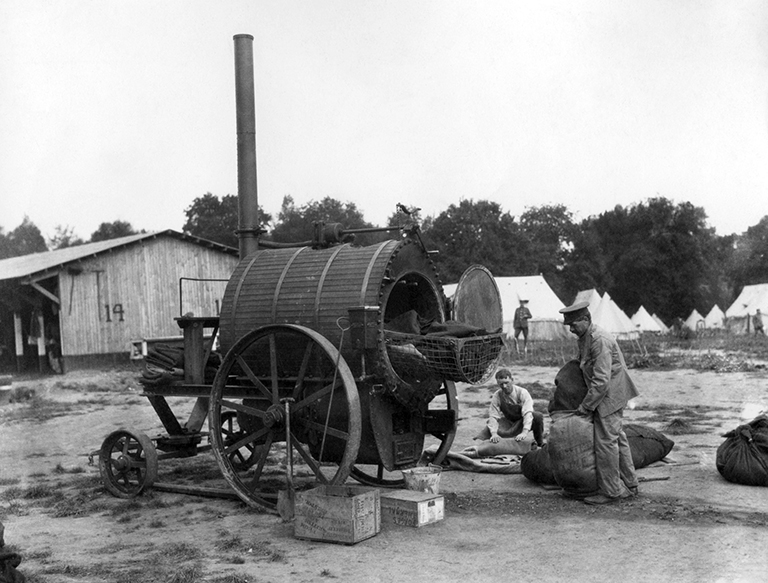
A few months later, in early 1916, the Germans began repatriating all the women connected with the Scottish hospital. In a Feb. 14, 1916, story that Corbett’s colleague Dr. Helen McDougall wrote for the London Standard, she described their “terrible retreat.” The women were first sent to Belgrade. McDougall wrote, “With our party was a Miss Whitehead, who was a chauffeur, and who had been assisting with disinfectant engines.” The women were placed on boats for the second leg of their journey, but “Miss Whitehead was arrested as a spy and taken back to Belgrade.” Unfortunately, nothing further is known of this episode, although in her letter to the veterans’ association, Whitehead mentions a certificate of hospitalization “while imprisoned in Belgrade.”
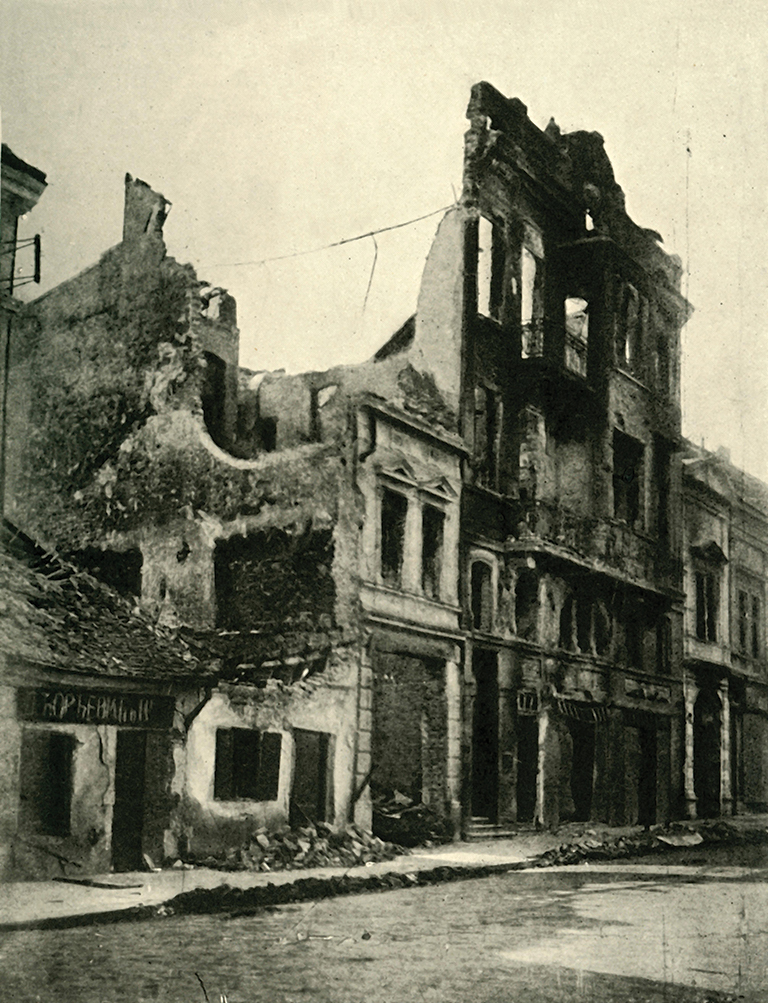
Eventually, Whitehead returned home, docking at New York on March 10, 1916. Within five months, though, she was back on the Eastern Front, this time stationed at Salonika as a military chauffeur and ambulance driver. She served until March 1917, when she was sent home sick with malaria. Accompanying her was Vouka Voyinovitch, her new Serbian husband.
The couple had three children in short succession but divorced soon after. Sometime between 1928 and 1930, Whitehead married an American, George Vaughan, and had her fourth child. Apart from two short stints in Nevada as a sheep rancher, she lived the rest of her life raising goats on a remote farm north of Princeton, B.C., surrounded by a wilderness in which she was most at home.
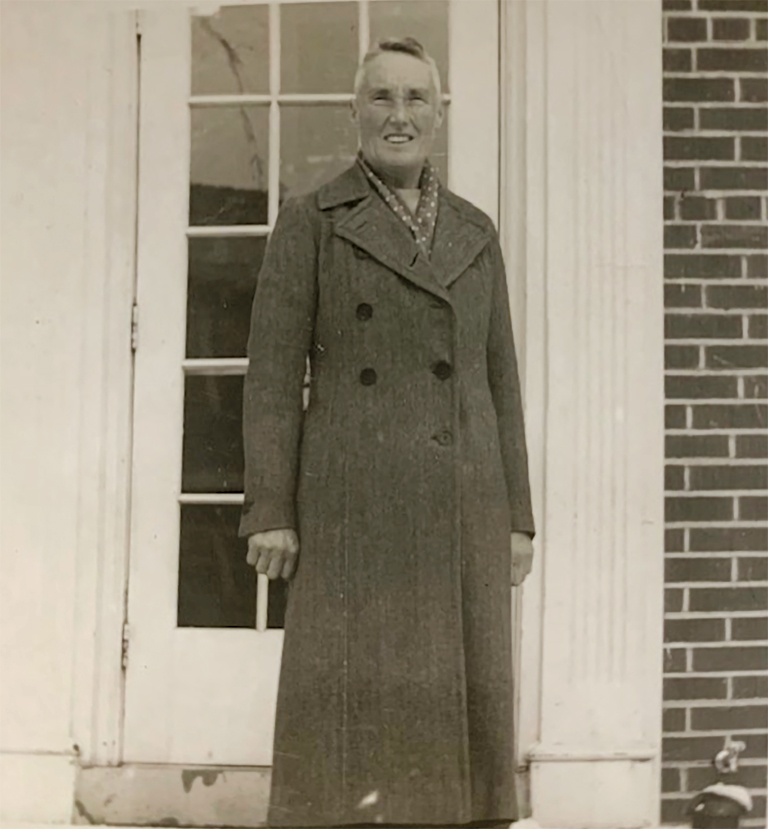
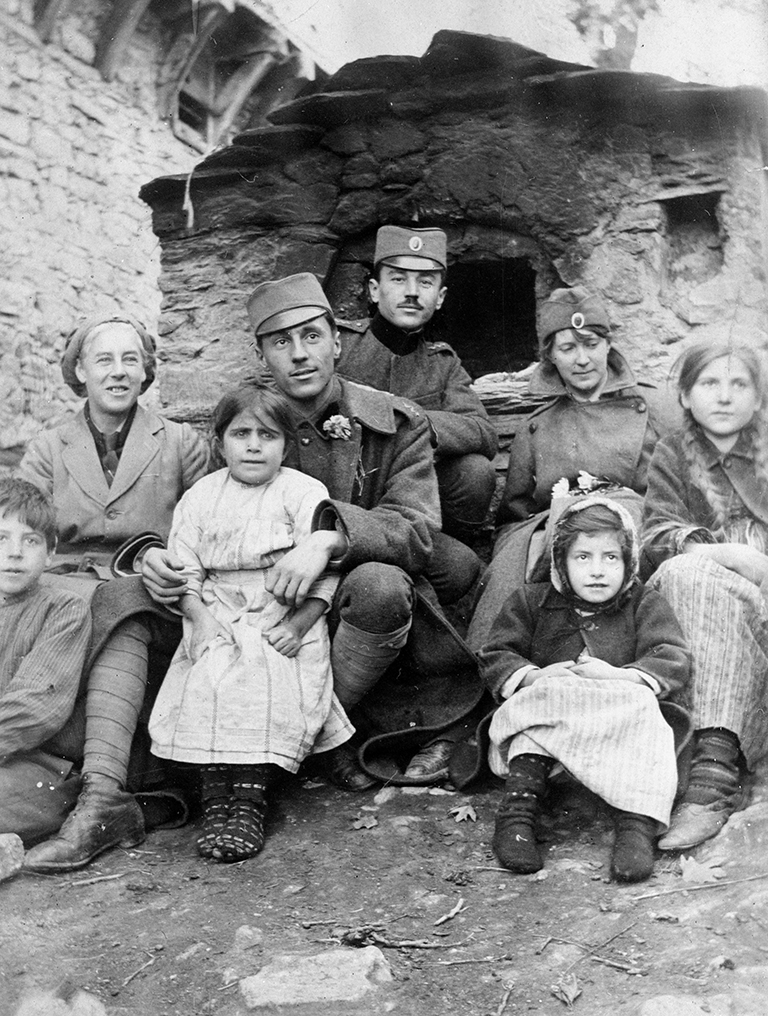
From her service in 1915, Whitehead became the only known Canadian woman to act in a combat role at the front during the Great War. Her wartime experiences have been forgotten; as she wrote in her 1918 letter, “I wish to avoid all publicity.” In the 1920s, no framework existed within which she could safely tell her story; in 1925, for example, Henri Bourassa, the publisher of Le Devoir, wrote in his paper that feminism would “result in the destruction of the family, the disorganization of social order, and the degradation of women themselves.” Since then, of course, many feminists have proven and continue to prove him wrong, including Pte. Heather Erxleben, the first female Regular Force infantry soldier in the Canadian Armed Forces, in 1989 — the role most closely aligned with the one that Whitehead herself had played 74 years earlier on the Eastern Front.
If you believe that stories of women’s history should be more widely known, help us do more.
Your donation of $10, $25, or whatever amount you like, will allow Canada’s History to share women’s stories with readers of all ages, ensuring the widest possible audience can access these stories for free.
Any amount helps, or better yet, start a monthly donation today. Your support makes all the difference. Thank you!
Advertisement