Your history. Your inbox.
7 uniquely curated newsletters to choose from.


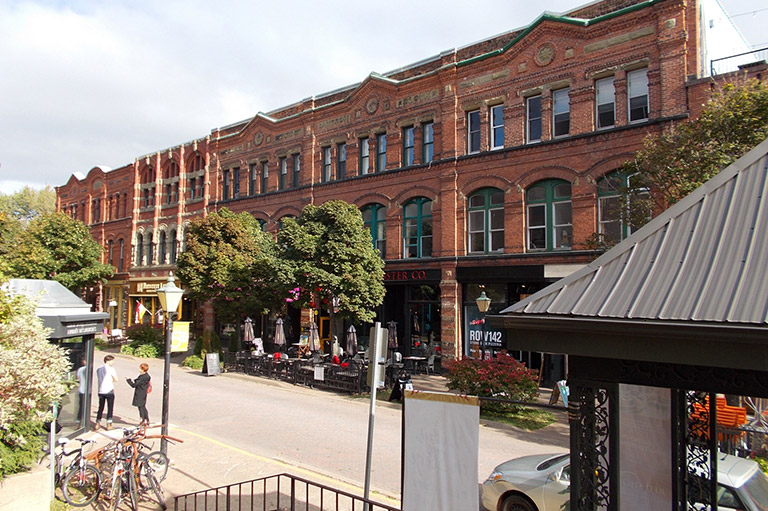
Charlottetown, PEI
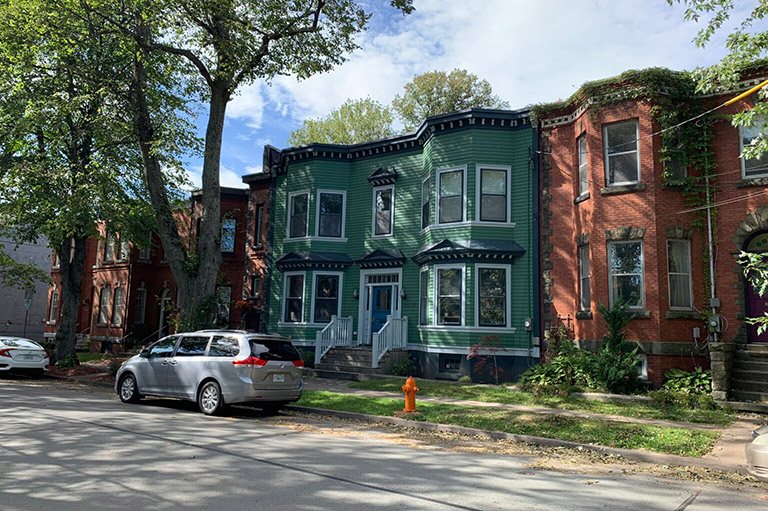
Stretching from Euston Street to the Charlottetown waterfront, the 500 Lot Area forms the historic core of Prince Edward Island’s capital. The neighbourhood is home to some of the city’s oldest, as well as most architecturally and culturally significant buildings — from late-19th and early-20th century single-family homes to grand 19th-century residences like Beaconsfield House, churches predating Confederation, and Province House, site of the 1864 Charlottetown Conference and a designated National Historic Site. Together, these landmarks reflect Charlottetown’s colonial roots, civic growth, and longstanding role as the Island’s political and cultural centre.
Designated a “Heritage Preservation Area” in 1979, the 500 Lot Area received national recognition in 2005 when the city was awarded the Prince of Wales Prize for its decades-long commitment to heritage preservation. In 2013, protections were expanded, and the city’s official plan at the time stated that demolition in the area would generally “not be permitted.”
Article continues below...

With 7 uniquely curated newsletters to choose from, we have something for everyone.
In 2018, protections for the 500 Lot Area were significantly weakened. The city no longer formally recognizes the 500 Lot Area as a “Heritage Preservation Area” or as a collection of “Designated Heritage Resources.”. In 2024 alone, six buildings in the area – once protected under the former bylaw – were demolished or approved for demolition.
A significant number of properties in Charlottetown’s heritage district are now owned by large real estate and property management firms, many of which have allowed historic buildings to deteriorate—undermining their heritage value—while pursuing redevelopment into larger, high-density apartment complexes. These projects often fail to consider how heritage areas, such as the 500 Lot Area, could instead be adapted to provide more affordable and sustainable housing alternatives. Many historic houses in the district are well suited for conversion into multi-unit apartments or secondary suites, or these properties could accommodate sensitive infill options that offer additional density while respecting the area’s existing character. Larger heritage buildings could be adapted for mixed residential and commercial use, adding housing and amenities while preserving the neighbourhood’s structure and vibrancy. Thoughtful adaptation allows these buildings to meet community needs without sacrificing the superior materials and craftsmanship that make them irreplaceable.
Without stronger, area-wide protections, preservation efforts will be reduced to fighting for individual buildings one by one – an approach that is unlikely to prevent further loss of these irreplaceable heritage resources.
This article is also available in French.
Advertisement
Advertisement