Your history. Your inbox.
7 uniquely curated newsletters to choose from.


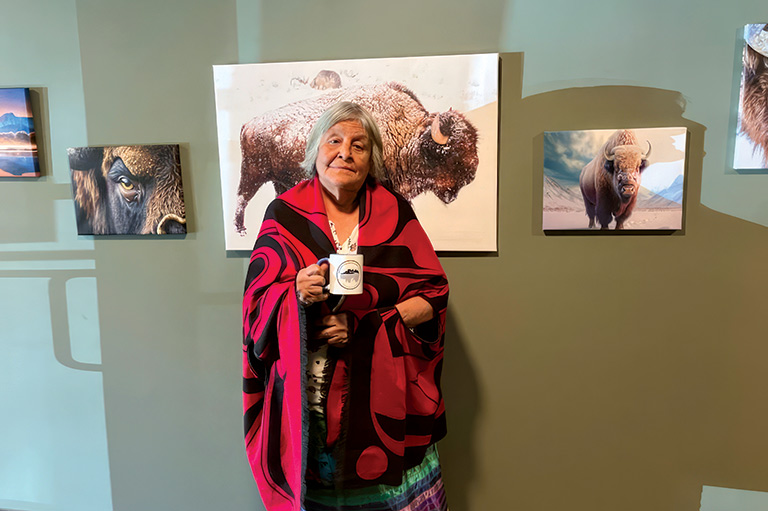
By the time Elder Geraldine “Gerry” Larose left the child welfare system at age 16, she had lived in 22 foster homes. “In my first three foster-care homes, the mothers refused me, rejected me,” she says. “So, I got moved to another one and another one.” A Sixties Scoop survivor, she lived through the institutionalized violence, racism and sexual abuse that has permeated the child welfare system’s treatment of Indigenous children.
Looking to reconnect with her family, Gerry tried moving in with her birth mother in Calgary, from whom she’d been taken when she was 2 years old. Her mother, however, was struggling with her own experiences of abuse and violence from her time in residential schools. Their combined generational trauma deeply strained their relationship, making it hard for them to get along, so Gerry decided to leave. With nowhere else to go, she turned to the streets.

With 7 uniquely curated newsletters to choose from, we have something for everyone.
Absent community or connection to her culture, Gerry wasn’t sure how to begin healing. For the next 30 years, she was stuck in a cycle of abuse and addiction. “I thought alcohol and drugs would help kill the pain,” she says, “but they never did.” After losing her partner in 2014 and dealing with life-threatening medical issues related to her addiction, Gerry was put into supported living — a housing program for individuals struggling with homelessness and addiction. As she began her healing process, Gerry stopped relying on the program’s resources and staff suggested that it was time for her to move on. After leaving, though, she struggled to find stable and safe housing.
Then, in early October 2023, she learned about the opening of the Aboriginal Friendship Centre of Calgary’s Elders’ Lodge, a culturally safe and affordable housing resource for Indigenous Elders. By December, Gerry had moved in — the first space where she’d ever felt at home. “I ain’t leaving till I die and they’re gonna have to carry me out in the body bag,” she says. “That’s my wish, to pass away at my home.”
The lodge is the realization of a long-held dream of Shane Gauthier, CEO of the Aboriginal Friendship Centre of Calgary (AFCC), back when he first started at the centre eight years ago. “His vision saved all of us who live here now, you know,” says Gerry.
Advertisement
The impact of friendship centres like the AFCC isn’t limited to Calgary; a web of these community spaces sprang up organically across the country as a way for Indigenous Peoples to support one another in urban spaces. The centres’ success is grounded in their nature; Indigenous Peoples know the needs of their communities and how to meet them in a trauma-informed and culturally appropriate manner. As a result, since their very beginnings, friendship centres have acted as pillars within urban Indigenous spaces.
Under Gauthier’s leadership, for example, the AFCC has expanded to eight locations from a small space inside a garage in one of Calgary’s industrial areas. This includes two buildings that are dedicated to providing affordable community housing. Elders’ Lodge staff are always there for the residents, Gerry says, making sure they have everything they need. “We’re family,” she adds. “We look out for each other.”
The AFCC has also established three dozen programs that aim to provide the community with social services, cultural resources and access to ceremonies. “I’m here for the real outcomes,” says Gauthier, “because when you look at the different generations, you also look at the impact you can make. And you may not see it today or tomorrow, but it will be there.”
Save as much as 40% off the cover price! 4 issues per year as low as $29.95. Available in print and digital. Tariff-exempt!
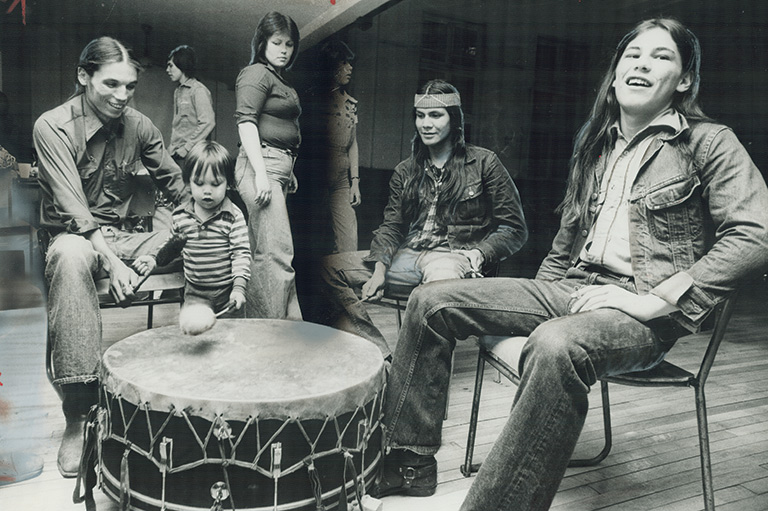
At the end of the Second World War, an increasing number of First Nations people began moving to urban centres across the country. While, historically, many of Canada’s First Nations practised seasonal migration to survive harsh weather, engage in economic activities such as trade or attend political meetings, this period of mass relocation was unprecedented. For the previous 56 years, First Nations had been restricted to their respective reserves — federally owned land set aside under the Indian Act in 1876 for use by First Nations.
The reserve system systematically displaced First Nations from their traditional territories and gave governments self-proclaimed power over the land that First Nation communities had inhabited for generations.
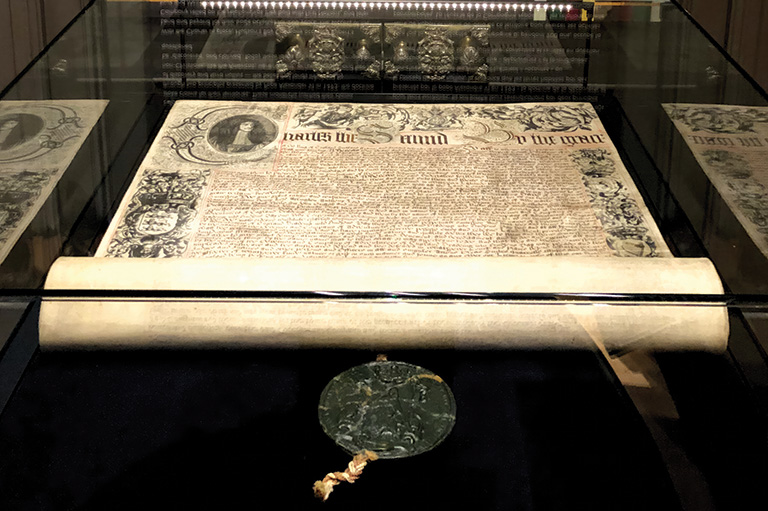
Reserves also became a means to restrict and police Indigenous mobility. In the summer of 1885, Hayter Reed, then assistant commissioner of Indian Affairs, composed the Memorandum on the Future Management of Indians, a report outlining a policy that would require First Nations to get written permission from an Indian Agent to leave their reserves. This policy was a response to the Northwest Rebellion, a five-month battle between federal troops and Métis forces and allied First Nations people from Saskatchewan and Alberta.
After the allied forces were beaten by federal troops, the pass system was implemented to tamp down resistance. Passes weren’t easily granted. Even though the policy was deemed unlawful, the system was enforced in some areas until the 1940s and wasn’t officially repealed until 1951.
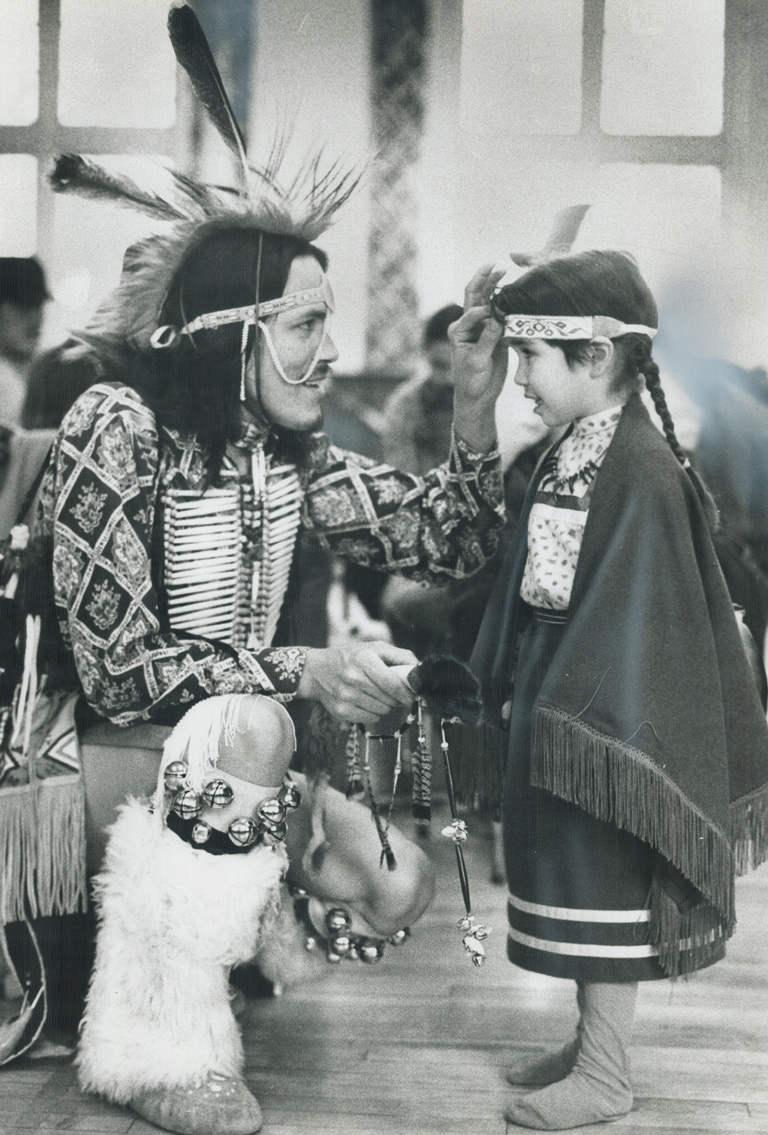
“It created a situation where, for the first time, Indigenous people had the autonomy to be able to choose where they wanted to go,” explains Jennifer Brazeau, executive director of the Lanaudière friendship centre in Joliette, Que., and a board member of the National Association of Friendship Centres (NAFC). However, nearly six decades of restricted freedom resulted in long-lasting impact, including food scarcity, increased poverty, a loss of cultural practice and strained relationships between families and other Indigenous communities.
A better life, thought many First Nations individuals, could only be found outside of the reservation. “Our people migrated to the city because that’s where the jobs were, that’s where the schools were, that’s where we could try to flourish,” says Arlene Dodge, executive director of the Native Canadian Centre of Toronto (NCCT).
As numbers of First Nations in urban areas increased, the need for community within those regions grew. “For Indigenous people across the country, a sense of family and a sense of connectedness are very important to our individual sense of safety and well-being,” explains Barb Ward Burkitt, executive director of the Prince George Native Friendship Centre in B.C. and secretary of the NAFC.
A better life, thought many First Nations individuals, could only be found outside of the reservation
The grassroots response to that need began to surface in the 1950s with the emergence of the first friendship centres: the North American Indian Club in Toronto, now the NCCT; the Coqualeetza Fellowship Club in Vancouver, now the Vancouver Aboriginal Friendship Centre Society; and the Indian and Métis Friendship Centre in Winnipeg, now the Winnipeg Indigenous Friendship Centre. The precise start date is unclear, as many “started in very small ways, often in someone’s living room or someone’s garage or our basement,” says Ward Burkitt, whose family has been involved in friendship centres for four generations. “It was really meant to be a place where Indigenous people could come together.”
Throughout Ward Burkitt’s teenage years, her mother and her aunt volunteered to make Elders’ lunches and dinners at the centre in Quesnel, B.C. When Ward Burkitt struggled with parenthood at age 17, her own mother encouraged her to take part in the social and cultural support offered through these community gathering spaces. “My mom and my auntie, along with the other Elders, were very wise in knowing that our young people needed the opportunity to come together in a safe place,” says Ward Burkitt.
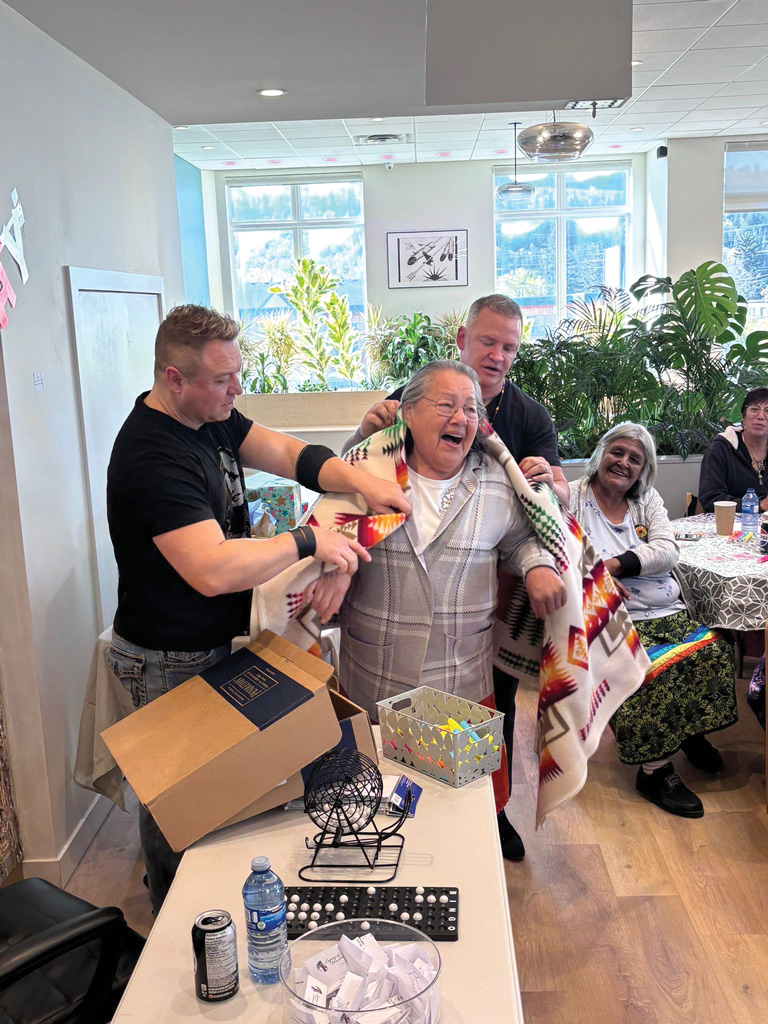
The spaces struck a strong chord and the movement quickly started to spread. By 1971, there were 43 centres established across Canada. That expansion precipitated the incorporation of the NAFC, providing national representation. The same year, the federal government created the Migrating Native Peoples Program to help fund the movement, acknowledging its vital role in the lives of urban Indigenous people. This fund covered such core operating costs as employment, with the actual amount of available funding based on the number of physical centres.
In the 1970s, as government agencies recognized that community-led places were uniquely equipped to support Indigenous Peoples, centres began to shift their focus from gathering spaces to hubs providing social services, mental health support and education resources. “Once our people got here, they didn’t quite know how to navigate these colonial systems,” says Dodge. Many of the health-care and education institutions in Canadian cities, for example, were built on colonial frameworks and not equipped to serve the unique needs of First Nations. Friendship centres could act as a guide for Indigenous Peoples.
“Once our people got here, they didn’t quite know how to navigate these colonial systems”
That kind of support proved popular. A 1976 services study by an independent consulting company showed social service agencies referring a growing number of Indigenous Peoples to friendship centres. That influx overwhelmed many of the operating centres at the time due to inadequate funding. In response, the NAFC successfully negotiated a funding increase for the federal Native Friendship Centre Program in the early 1980s.
Because this funding was short term and allocated through external operations, however, it became more challenging for leaders at individual centres to fund long-term resources and programs, based on their specific community needs.
Then, in 1988, the newly renamed Aboriginal Friendship Centre Program (AFCP) managed to secure long-term federal funding, finally allowing each centre to run its own operations and programs.
In an unprecedented effort to improve government and Indigenous relations, the federal government transferred administrative responsibility of the AFCP to the NAFC in 1996, giving friendship centres more independence and allowing them to better serve their communities.
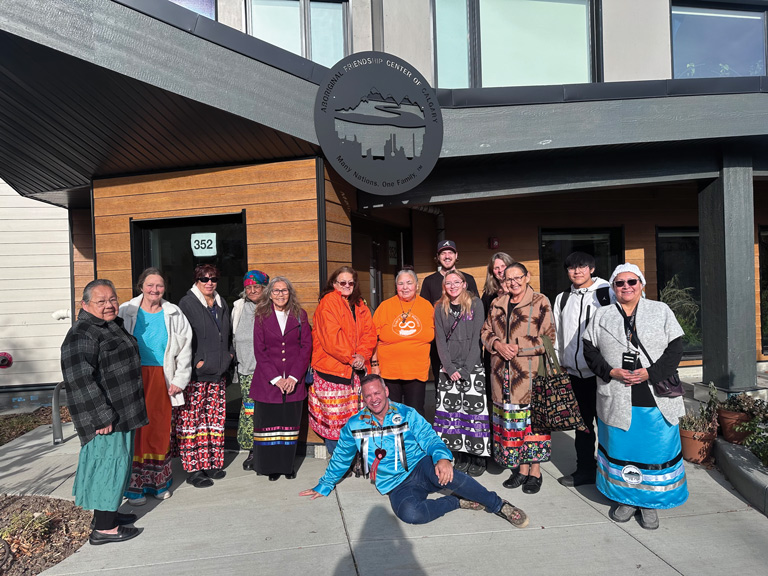
Even with all of this positive change, the business side of staying in operation can present challenges. “We’re walking in two worlds,” says Ward Burkitt. “It can be tough because, sometimes, our traditional or cultural values may not align with the institutions or the government we are working under and their systems.”
Amy Desjarlais, a former employee of the NCCT and a participant in its Anishinaabemowin classes, witnessed her centre shift from an approach based on community to a more corporate, survival-focused model — including the NCCT “pushing out” two beloved language teachers, without either acknowledgment or celebration of their time and dedication, she says. Desjarlais notes that ruptures like these can create distance between community members. “An Indigenous organization should be able to have difficult conversations and navigate the pressures from the community with the long-term vision of programs that benefit the greater community,” she says.
As the needs of the community change, so does the role of friendship centres. “Housing has become a big issue of what we’re dealing with,” explains Pam Glode, executive director of the Mi’kmaw Native Friendship Society, “as well as supplying mental health and addiction services.” Glode has also noticed an increased need for cultural resources and support, such as language classes and access to traditional teachings. “All of the people from our community, regardless of what stage of their lives, have access to the culture, the ceremony and the Elders.” This support is in addition to the centres’ acting as social service providers and cultural hubs.
But providing these services and working on the front line to serve the communities most vulnerable — such as those struggling with homelessness, addiction and mental health crises — presents its own financial challenges. “The actual need of all the friendship centres is around $62 million a year,” says NAFC CEO Jennifer Rankin. The NAFC, meanwhile, receives just $32 million a year in federal funding through the Urban Programming for Indigenous Peoples (UPIP).
Last year, when the federal budget didn’t include any allocated dollars toward friendship centres — and with UPIP set to run out of funding in 2026 — many were concerned about their ability to continue providing services and programs. Then, on March 27 of this year, the federal government announced an investment of $168 million into UPIP over the next five years. Although this doesn’t meet all of the centres’ needs, the agreement offers both relief and hope. “It allows us to actually take a step back and not have to worry about the core need,” says Glode. “Now, I get to really focus on those other important pieces that we need to work on.”
Those pieces include investing in their communities and strengthening their programs. “That’s what friendship centres are about,” says Ward Burkitt. “It’s about lifting up our people, then holding them up.”
Canada's History magazine was established in 1920 as The Beaver, a Journal of Progress. In its early years, the magazine focused on Canada's fur trade and life in Northern Canada. While Indigenous people were pictured in the magazine, they were rarely identified, and their stories were told by settlers. Today, Canada's History is raising the voices of First Nations, Métis and Inuit by sharing the stories of their past in their own words.
If you believe that stories of Canada’s Indigenous history should be more widely known, help us do more. Your donation of $10, $25, or whatever amount you like, will allow Canada’s History to share Indigenous stories with readers of all ages, ensuring the widest possible audience can access these stories for free.
Any amount helps, or better yet, start a monthly donation today. Your support makes all the difference. Thank you!
Advertisement