Your history. Your inbox.
7 uniquely curated newsletters to choose from.


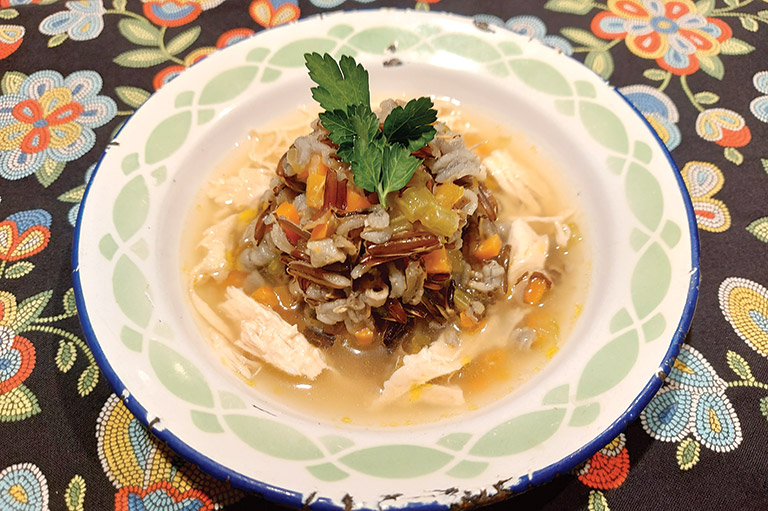
Known as manoomin in Anishinaabemowin, wild rice grows across several of our provinces. It’s technically not rice but a whole grain that’s part of a grass found in shallow waters. This ingredient varies in colour due to processing, but it’s usually deep brown, with a nutty flavour. Harvested in early fall, wild rice is a staple traditionally used by the Anishinaabek to get through winter. People boil it and mix it with wild game — or blueberries for a sweet treat. Each family and community enjoys it in their own way.
In the 1920s, the federal government approved a hydro-dam project (without consent) that led to flooding in my community of Lac Seul First Nation in northwestern Ontario, which impacted the land, homes, gardens and water levels. Ultimately, wild rice beds were damaged. Still, my family practised traditional harvesting methods in the 1970s on the shores of Lac Seul. Gathering required two people via canoe: one to manage navigation, and the other to knock the rice carefully into the boat using a wooden stick. Once it was harvested, the rice was parched over a wood fire.

With 7 uniquely curated newsletters to choose from, we have something for everyone.
My grandfather processed rice by putting on a brand-new pair of moccasins and stepping into a pan filled with parched rice, stomping off the husks — a technique known as “dancing on the rice.” The women of the community would also tie handfuls of parched rice in a dish towel, then bang the towel on a hard surface to loosen the kernels. Harvesting rice was labour-intensive!
For northern First Nations families, wild rice has always been a key source of nourishment, but it’s more than that. Harvesting is a means of socializing in community and it’s a way of teaching skills and passing down cultural values to the next seven generations.
This ingredient has made a comeback thanks to community-led revitalization initiatives run over the past two decades that support harvests, regeneration and preparation. Wild rice harvest gatherings are held annually across First Nations communities in Ontario and within the Great Lakes. Plus, several First Nation tourism enterprises offer workshops.
Indigenous chefs and culinary artists continue to create innovative wild rice dishes that honour the grain’s cultural significance. Wild rice, like the Anishinaabek, is resilient.
Recipe below...
Advertisement
Prep time: 10 minutes | Total time: 1 hour 5 minutes
Servings: 2
Canada's History magazine was established in 1920 as The Beaver, a Journal of Progress. In its early years, the magazine focused on Canada's fur trade and life in Northern Canada. While Indigenous people were pictured in the magazine, they were rarely identified, and their stories were told by settlers. Today, Canada's History is raising the voices of First Nations, Métis and Inuit by sharing the stories of their past in their own words.
If you believe that stories of Canada’s Indigenous history should be more widely known, help us do more. Your donation of $10, $25, or whatever amount you like, will allow Canada’s History to share Indigenous stories with readers of all ages, ensuring the widest possible audience can access these stories for free.
Any amount helps, or better yet, start a monthly donation today. Your support makes all the difference. Thank you!
Advertisement
Save as much as 40% off the cover price! 4 issues per year as low as $29.95. Available in print and digital. Tariff-exempt!