Your history. Your inbox.
7 uniquely curated newsletters to choose from.


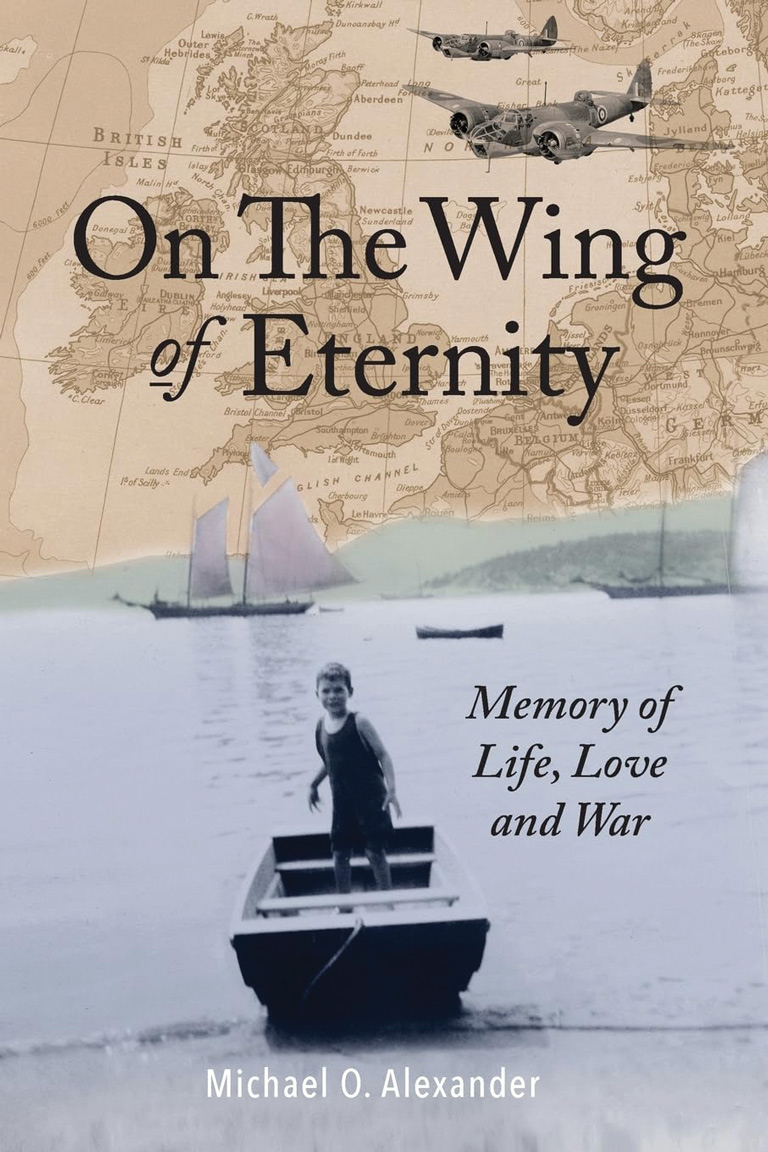
On the Wing of Eternity: Memory of Life, Love and War
by Michael O. Alexander
Casper Press,
236 pages, $27.99
James O. Alexander, a Canadian bomber pilot in Britain’s Royal Air Force (RAF), was killed on a bombing raid over Rotterdam in 1941 when he was 23 years old. The aim of this bombing run that targeted the Netherlands from only 15 metres was to destroy German ships supplying their war effort.
His son Michael — who was just one year old when his father was killed — has written a biography of the man he never knew and the family he did. It’s a compelling tale thanks to Michael’s abundant access to letters, diaries and photographs as well as having an excellent command of the English language.
James’ story is the story of a generation, one born as the First World War ended only to live through the ’20s and ’30s and encounter war again. The book is divided into two parts: the first explores life and love in Canada, while the second covers love and war in England. The story’s central theme is love, which trumps the perils of life and war in this account; there’s the dramatic love of James Alexander and Bar Hampson, who marry and have a child, but there’s also intergenerational family love. Indeed, James had much to be proud of; his ancestors had illustrious roots in both Quebec and England, and his father was a major-general, whereas his maternal grandfather was an Anglican Archbishop of Quebec.

With 7 uniquely curated newsletters to choose from, we have something for everyone.
Part 1 of On the Wing of Eternity takes us to Montreal and Kingston, Ont., where James attended the Royal Military College, and to Tadoussac — on the north shore of the St. Lawrence River, at the mouth of the Saguenay River — where Jacques Cartier arrived in 1535. Wealthy Quebecers holidayed at the luxurious Hotel Tadoussac, arriving by Canada Steamship Lines cruise ship because there were virtually no roads to Tadoussac at that time.
Part 2 details James’ wartime experience in England, Iceland and Ireland and over the Netherlands. He may have been the son of an infantry general, but James joined the air force — specifically the RAF. James chose bomber command, rather than the more glamorous fighter command, however, the former had a much higher mortality rate because of their high-risk latenight raids on German infrastructure.
The raid where James was killed occurred on Aug. 28, 1941. The next day, Winston Churchill paid tribute to the RAF crews: “The Charge of the Light Brigade at Balaclava is eclipsed in brightness by these daily deeds of fame.”
At Canada’s History, we highlight our nation’s past by telling stories that illuminate the people, places, and events that unite us as Canadians, while understanding that diverse past experiences can shape multiple perceptions of our history.
Canada’s History is a registered charity. Generous contributions from readers like you help us explore and celebrate Canada’s diverse stories and make them accessible to all through our free online content.
Please donate to Canada’s History today. Thank you!
Advertisement