Your history. Your inbox.
7 uniquely curated newsletters to choose from.


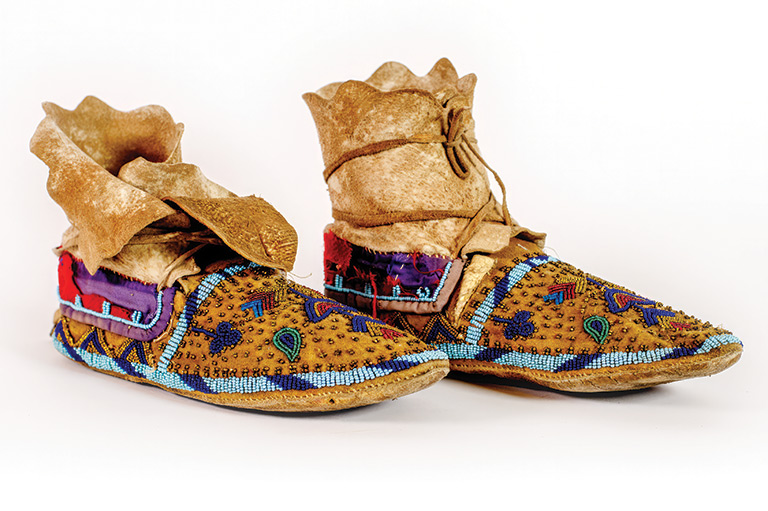
These moccasins are a mystery — one of thousands of Indigenous ancestral belongings without a known creator or origin. Connecting the puzzle pieces of this pair is bittersweet and often feels less like research and more like relational remembrance. At first glance, they’re stunning, but as your eyes linger, the intention and love put into every stitch become clear. The materials and designs tell us a lot about who made them, including giving us a general idea of her home and indicating when she lived. The use of rawhide soles, for example, is a predominant feature of Plains moccasins, to help comfortably navigate the prairie terrain. Sinew was used to sew them together, indicating they’re likely from the mid- to late 19th century. Moreover, the maker’s intention and creative freedom are seen in the initial design being replaced by spot-stitching of valuable metal beads. These attributes give the moccasins a resemblance to those of the Niitsítapi (Blackfoot). Ultimately, though, it’s the spirit that went into making them that stands out.
Advertisement
Canada's History magazine was established in 1920 as The Beaver, a Journal of Progress. In its early years, the magazine focused on Canada's fur trade and life in Northern Canada. While Indigenous people were pictured in the magazine, they were rarely identified, and their stories were told by settlers. Today, Canada's History is raising the voices of First Nations, Métis and Inuit by sharing the stories of their past in their own words.
If you believe that stories of Canada’s Indigenous history should be more widely known, help us do more. Your donation of $10, $25, or whatever amount you like, will allow Canada’s History to share Indigenous stories with readers of all ages, ensuring the widest possible audience can access these stories for free.
Any amount helps, or better yet, start a monthly donation today. Your support makes all the difference. Thank you!
Advertisement

With 7 uniquely curated newsletters to choose from, we have something for everyone.