Your history. Your inbox.
7 uniquely curated newsletters to choose from.


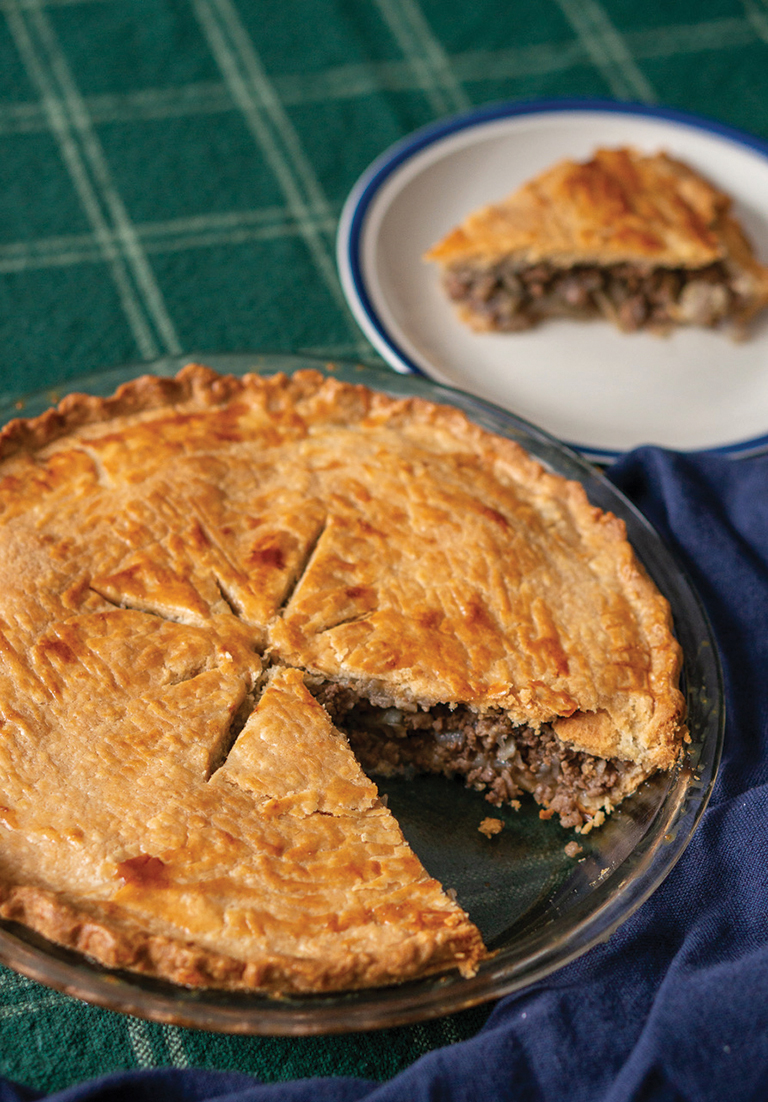
A fragrant spiced-meat filling held in a flaky double-crusted pie, tourtière is synonymous with holiday comfort food — and nowhere more than in Quebec, where the dish is entrenched in the province’s culinary heritage. It’s also deeply tied to Christmas, when it’s served as part of réveillon festivities. (Réveillon is the feast enjoyed by many Catholics in la belle province on Christmas Eve after midnight mass.)
The tourtière tradition dates back to the 1600s in Quebec. Some food historians believe it’s the Québécois version of cipaille, a British dish called “sea pie,” while others think colonialists popularized the pie after trying it in Quebec City. Some say the name tourtière is inspired by its ingredients. In the 17th century, the dish would have been made using a game bird like the now-extinct tourte voyageuse (passenger pigeon) that numbered in the billions in 19th-century North America, especially along the St. Lawrence River. Others believe tourtière is named after the vessel it was baked in. The first official recipe for tourtière under its current name can be found in 1840’s La Cuisinière canadienne, known as the first French-language cookbook published in Canada. This inaugural version could be made with pork, mutton, veal or potatoes, among other options. But origins aside, for many families, their take on tourtière is a well-kept secret. Variations across Quebec are strongly connected to the province’s French roots and rich rural past. In the Lac-St-Jean region of Quebec, tourtière is filled with cubed meat and sometimes potatoes, while in Montreal, ground meats are typical. In some rural areas, game meats are swapped in. These days, you can pick up a meaty pie for réveillon at a local grocery store or farmers market, but many families still choose to make it at home, enjoying the particular taste and experience.

With 7 uniquely curated newsletters to choose from, we have something for everyone.
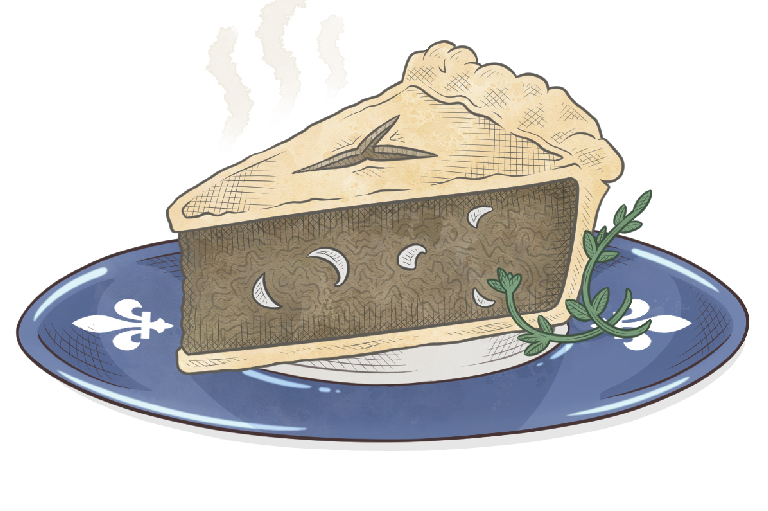
Prep time: 30 minutes
Total time: 2 ½ hours
Servings: 8 to 12 (makes two 9-inch pies)
In large sauté pan or skillet, heat oil over medium-high heat until shimmering. Add onion and garlic; cook, stirring, until softened and onion is translucent, about 5 minutes. Add beef, pork, bay leaf, savory, cloves and nutmeg; cook until meat is browned. Season with salt and pepper.
Add broth; bring to simmer. Reduce heat to medium-low; stir in potato. Pork — which is commonly included in tourtière recipes — is big business in Canada. Farm cash receipts for hog sales hit $7.2 billion in 2025, says Statistics Canada Cook until liquid is almost absorbed, about 15 minutes; discard bay leaf. Season with salt and pepper, if desired. Remove pan from heat; let meat mixture cool completely.
Preheat oven to 375°F. On lightly floured surface, roll out 1 portion pastry to scant ¼-inch thickness; fit into 9-inch pie plate. Fill with half of the cooled meat mixture, spreading evenly. Roll out 1 portion pastry to scant ¼-inch thickness; place on top of filling. Trim to leave ½-inch overhang; pinch edges of crust together to create flute edge. Cut 2-inch steam vent in top. Repeat with remaining pastry and filling. Beat egg with 1 tbsp water; brush over top of pies.
Bake pies until pastry is rich golden- brown, about 45 minutes. Let cool for 15 minutes before slicing.
We hope you will help us continue to share fascinating stories about Canada’s past.
We highlight our nation’s diverse past by telling stories that illuminate the people, places, and events that unite us as Canadians, and by making those stories accessible to everyone through our free online content.
Canada’s History is a registered charity that depends on contributions from readers like you to share inspiring and informative stories with students and citizens of all ages — award-winning stories written by Canada’s top historians, authors, journalists, and history enthusiasts.
Any amount helps, or better yet, start a monthly donation today. Your support makes all the difference. Thank you!
Advertisement