Your history. Your inbox.
7 uniquely curated newsletters to choose from.


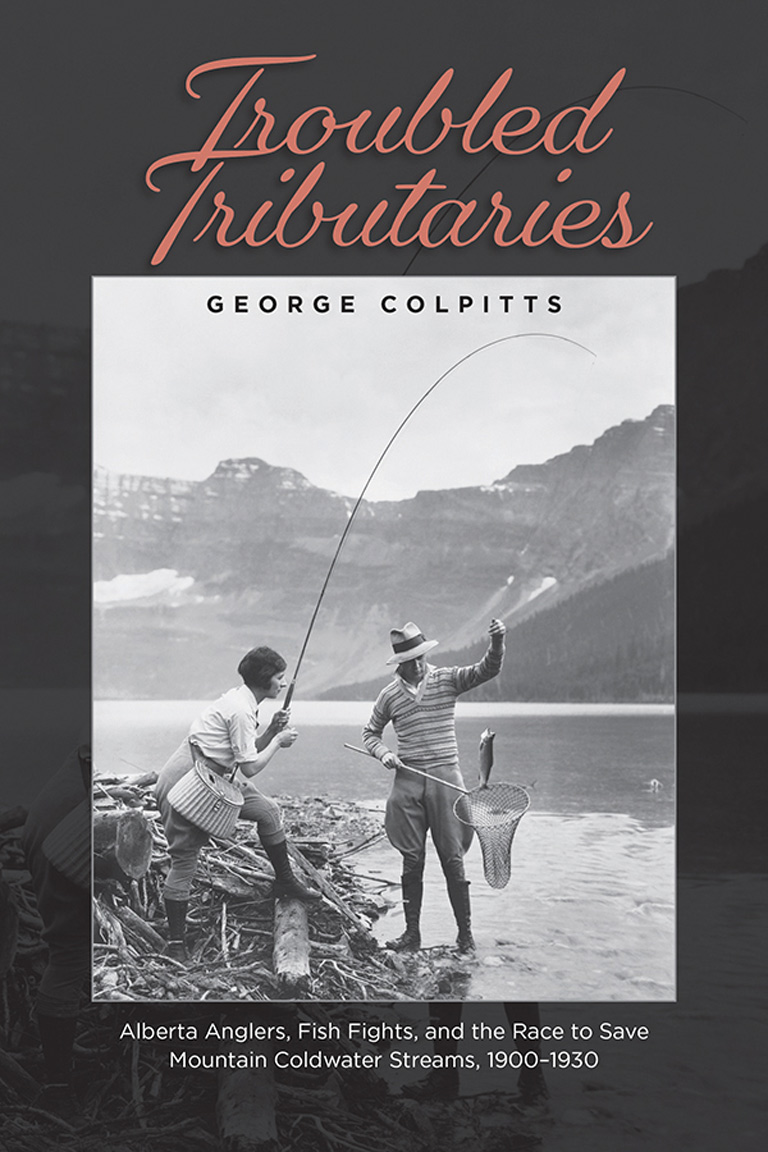
Troubled Tributaries: Alberta Anglers, Fish FIghts and the Race to Save Mountain Coldwater Streams, 1900-1930
by George Colpitts
University of Calgary Press,
258 pages, $34.99
There’s something cinematic about a courtroom drama over 31 trout — and Troubled Tributaries wisely opens on just such a scene. From there, the book’s author — historian George Colpitts — casts a wide and careful line across Alberta’s early 20th-century cold-water streams and rivers, tracing how fish, people and power became entangled in surprising ways.
The book explores how evolving ideas of environmental conservation shaped angling culture and fish protection in Alberta between 1900 and 1930. What emerges is a story rooted in use: conservation as management, often designed less for the well-being of fish than for sustaining human enjoyment of them. Anglers, local associations and federal officials competed to implement changes based on their definition of what “healthy” rivers should look like, whether through tributary closures, hatchery stocking or introducing non-native species. This was often done in ways that marginalized Indigenous Peoples by restricting their access to traditional territories and undermining established hunting and fishing rights and Indigenous ecological knowledge.

With 7 uniquely curated newsletters to choose from, we have something for everyone.
And while women weren’t consistently included in official records, archival photographs show women fishing and participating in recreational outings, suggesting a broader angling culture than the written documentation originally offered.
Colpitts is particularly strong in showing how industrialization and tourism transformed both landscapes and attitudes. Expanding railways, mining, agriculture and the rise of the automobile brought more people — and pressure — onto rivers as anglers themselves saw degradation and defended watersheds they cared so deeply about. Despite a dense cast, Colpitts writes clearly and chronologically, with visual sources helping break up the narrative. Occasionally overwhelming, the detail rewards readers with a timely history that resonates with contemporary debates in conservation and wildlife management. This thoughtful and engaging study will appeal most to readers of environmental and western Canadian history but also to anyone interested in the politics of wildlife management and the long entanglement of conservation and capitalism.
Beyond its arguments, Troubled Tributaries is a beautiful book to hold; it’s thoughtfully designed, with archival photographs that make it as gratifying to browse as it is to read.
In today’s environment of misinformation and disinformation, it can be hard to know who to believe. At Canada’s History, we tell the true stories of Canada’s diverse past, sharing voices that may have been excluded previously. We hope you will help us continue to share fascinating stories about Canada’s past, highlighting our nation’s diverse past by telling stories that illuminate the people, places, and events that unite us as Canadians, and by making those stories accessible to everyone through our free online content.
Canada’s History is a registered charity that depends on contributions from readers like you to share inspiring and informative stories with students and citizens of all ages – award-winning stories written by Canada’s top historians, authors, journalists, and history enthusiasts. Any amount helps, or better yet, start a monthly donation today. Your support makes all the difference. Thank you!
Advertisement