Your history. Your inbox.
7 uniquely curated newsletters to choose from.


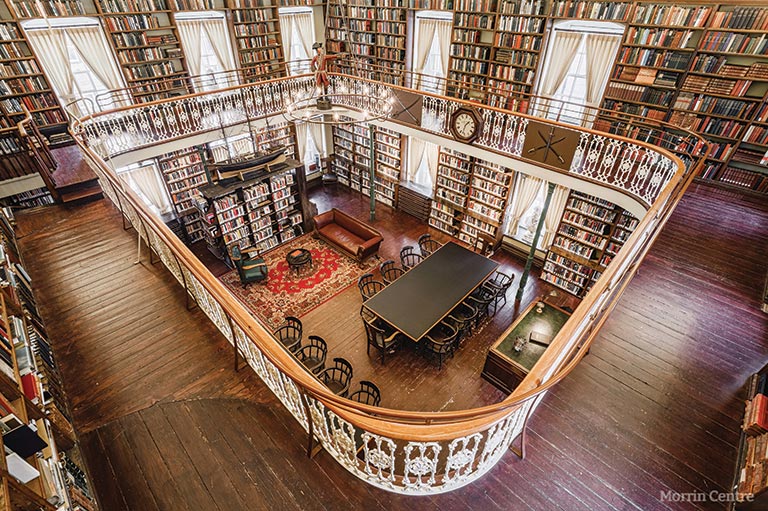
In the aftermath of the mass shooting in Tumbler Ridge, B.C., back in February, when many businesses closed their doors, Paula Coutts, the head librarian of the Tumbler Ridge Public Library, kept the library open.
“We’re very much treated as a community hub,” Coutts told CBC Radio’s As It Happens. “We have a lot of people who are alone, and we’re often their adult social contact.”
In the days following the tragedy, residents came to watch the Olympics on a projector, colour mandalas, build with Lego bricks or simply sit quietly. One high school student in particular stayed for hours. “She appreciated that we were non-judgmental,” Coutts told the program. “It was quiet. No pressure.”
That sense of community lies at the heart of Canada’s public library system — a tradition whose roots stretch back to before Confederation. Built over generations through public policy, private generosity and community demand, Canada’s public libraries have become more than repositories of books — they’re evolving civic spaces where access, identity and intellectual freedom are continually negotiated.

With 7 uniquely curated newsletters to choose from, we have something for everyone.
Some of the first library collections in Canada have their roots in religious communities; volumes from the Jesuit Mission (1632) and the Jesuit College in Quebec City (founded in 1635) still survive today. Many libraries relied on member subscription fees rather than government funding, which meant access was often limited to those who could afford to pay. Some of the earliest examples include the Quebec Library, established by Gov. Frederick Haldimand in Quebec City (1779), the Montreal Library (1796) and the Niagara Library (1800).
Through the 18th and 19th centuries, libraries spread through a range of settings. These included military installations, such as Halifax’s garrison library, established by Lord Dalhousie in 1817, and trading outposts, such as York Factory on Hudson Bay, southeast of Churchill, Man. The latter was once one of the Hudson’s Bay Company’s most important northern depots and, by the mid-1800s, counted a small library among its many buildings. Specialized libraries connected to universities or professions all played an important role in expanding access to books and knowledge.
In 1828, the first Mechanics’ Institute library in Canada was established in Montreal, having originated in Britain as a way to offer the working class affordable access to books and newspapers. The institutes soon spread to such communities as Charlottetown, Saint John, N.B., Hamilton and Toronto.
As superintendent of education for Canada West from 1844 to 1876, educator and Methodist minister Egerton Ryerson believed learning should extend beyond the classroom into the wider communities. Through the Department of Education, he encouraged the creation of school and community libraries and supported government grants that allowed local collections to grow. Those early efforts helped lay the groundwork for the transition to tax-supported public libraries from subscription libraries and mechanics’ institutes. Ryerson’s legacy, however, isn’t without controversy — he also influenced the Canadian Indian residential school system, which is now recognized as deeply harmful to Indigenous communities.
In 1882, the Ontario legislature, at the urging of politicians and citizens who believed the move would foster lifelong learning and education, passed the Free Libraries Act, which allowed communities to establish free public libraries, funded through a small property-tax levy. The Toronto Public Library was the largest to adopt free status, demonstrating how widely accessible library services could benefit a growing city.
Over the next several decades, Ontario’s approach was adopted by other provinces, as well as the Northwest Territories in 1966.
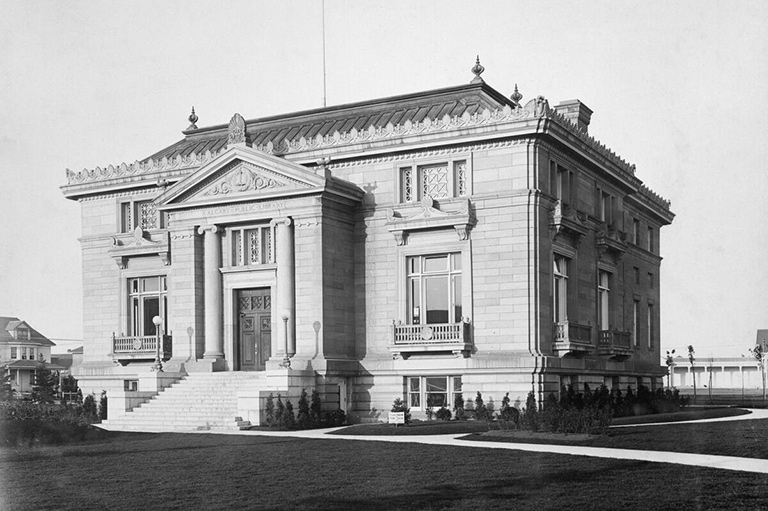
Despite public support, it was often difficult to raise adequate building funds, but assistance came from a source south of the border. Between 1900 and 1917, Scottish-American industrialist Andrew Carnegie — a fervent believer in free public libraries — funded library construction around the world. About $2.5 million landed in Canada, helping build 125 libraries, many of which still operate today.
To qualify for a grant, towns had to provide a site and 10 per cent of the grant amount annually for staff and maintenance. Calgary was an early adopter thanks to Annie Davidson, who founded the Calgary Women’s Literary Club in 1906. The following year, Davidson organized a petition requesting support from Carnegie. In 1908, Carnegie offered Calgary city council $50,000 to build a library and the city passed its public library bylaw. The efforts culminated in the opening of the Central Park Library — now Memorial Park Library — on Jan. 2, 1912. It was named a National Historic Site in 2018, and the Calgary Women’s Literary Club convenes to this day.
Not everyone welcomed the tycoon’s philanthropy, however. When a Carnegie grant request was proposed at a Saskatoon public meeting in 1910, the Saskatoon Phoenix reported one attendee stating: “I don’t think it is any harm to take the devil’s money and putting [sic] it to good use.” An application for $75,000 did go forward, but Carnegie offered just $30,000, believing that the provided population statistics were overstated. The city declined the grant on the grounds that it wasn’t enough. Saskatoon did open a library in 1913, but in rented quarters.
Advertisement
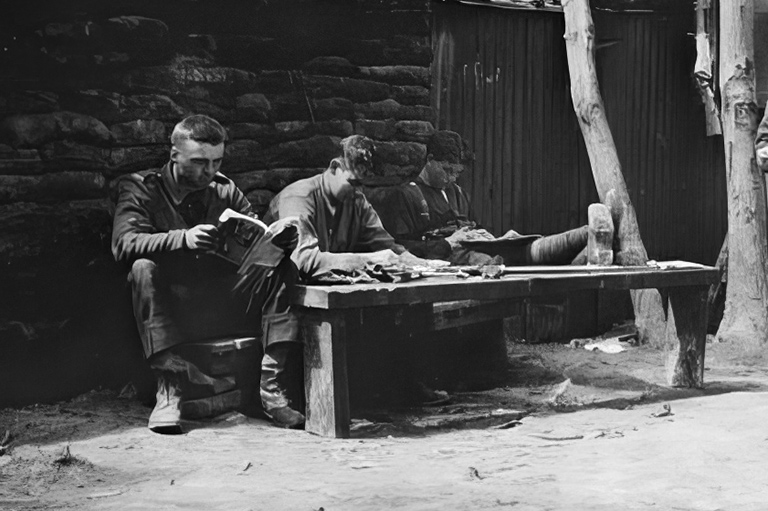
Despite the growth in bricks-and-mortar libraries, many believed these institutions should serve people wherever they were — not only within city buildings. During the First World War, George Herbert Locke, the chief librarian of the Toronto Public Library from 1908 to 1937, helped organize library services for Canadian soldiers in training camps and troops overseas. He also championed outreach to immigrant and rural communities, supporting travelling libraries and book shipments. Locke believed that libraries were instruments of citizenship and education, and his efforts helped ensure that soldiers and isolated communities alike could connect to learning and culture during a period of upheaval. His innovative approach helped propel him to the position of president of the American Library Association in 1926.
Elsewhere in the country, other creative solutions were found to expand library access. In 1941, with only two branches and little funding for expansion, Edmonton converted a decommissioned streetcar into a travelling library stocked with more than 2,000 books. Demand grew so strong that its hours were extended and its route expanded. Newsreels and magazines around the world reported on the unusual experiment.
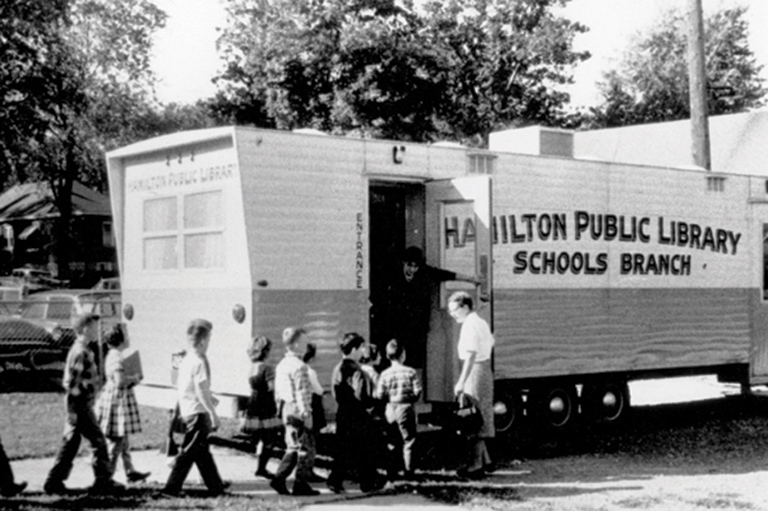
Perhaps inspired by Edmonton, Hamilton’s first — and soon-to-be popular — bookmobile took to the streets in 1956. A Jan. 5, 1957, story in the Hamilton Spectator cited the example of a boy who returned five times, bringing a new friend to sign up for a library card at each visit. By February 1957, the bookmobile’s circulation had surpassed that of the main library. Hamilton Public Library still operates two bookmobiles serving 12 neighbourhood stops and 25 senior residences.
Despite wide support throughout their evolution, Canadian libraries have also faced pressure from groups seeking to influence what appears on their shelves. Questions of censorship and intellectual freedom have surfaced repeatedly throughout the country’s library history.
Within months of opening its rented doors, the Saskatoon Public Library was engulfed in what Donald C. Kerr called “The 1913 Battle of Books” in his essay in Readings in Canadian Library History. The local Rationalist Press Association had offered a donation of 40 books on rationalist thought — which emphasizes reason and logic over faith — setting the stage for four months of back and forth where library board members debated whether the books should be accepted. Some critics argued the titles ran counter to Christian principles and therefore didn’t belong on their shelves. In the end, the board proposed a compromise: it would review the list and select only the titles it felt were appropriate. Before that could happen, however, the association withdrew the offer and donated the books instead to the nearby Presbyterian Theological College.
The episode marked just one moment in an enduring national struggle over censorship and access to ideas, much of which may seem prudish now. Some books, such as D.H. Lawrence’s Lady Chatterley’s Lover (1928) and James Joyce’s Ulysses (1922), were denied entry into the country altogether, let alone onto library shelves. The minister of national revenue — who oversaw customs enforcement — and his officials held broad authority to block the import of publications considered obscene or seditious. By the 1950s, more than 1,000 titles had been prohibited by customs censors.
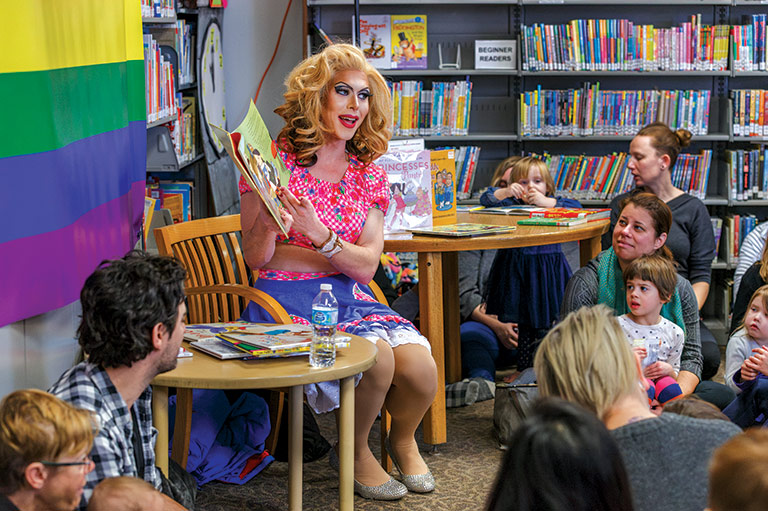
While Lady Chatterley’s Lover and Ulysses have been in libraries for decades now, the issue of content censorship itself hasn’t gone away. Recently, drag storytimes have sparked demonstrations at libraries across the country. In 2023, protestors at the Calgary Public Library argued that the performances were inappropriate for children, while supporters defended them as important expressions of inclusion. The Calgary storytimes continued, emphasizing the institution’s commitment to intellectual freedom and community access to diverse viewpoints.
Some books, such as D.H. Lawrence’s Lady Chatterley’s Lover, were denied entry into the country altogether, let alone onto library shelves
Save as much as 40% off the cover price! 4 issues per year as low as $29.95. Available in print and digital. Tariff-exempt!
Those principles have long been supported by the Canadian Federation of Library Associations and its intellectual-freedom guidelines. In his blog, Library History Today, retired librarian Lorne D. Bruce recounts how the country’s library community gradually embraced intellectual freedom. Prompted in 1951 by the Ontario Library Association, the Canadian Library Association (founded in 1946) considered creating a Canadian version of the American Library Association’s “Library Bill of Rights.” After a lull, the early 1960s saw renewed momentum with the formation of an intellectual-freedom committee. Reflecting changing legal standards and debates over controversial literature, the Canadian Library Association formally adopted its intellectual-freedom statement in 1966, a commitment that has continued to evolve, most recently with the creation of the Canadian Federation of Library Associations in 2016.
Sometimes, the issue hasn’t been what content was on offer, but what wasn’t. Tess Prendergast, a lecturer in librarianship at the University of British Columbia, cites the absence of authentic Indigenous stories. “The first Indigenous books weren’t actually Indigenous,” she says. “They were revised traditional stories appropriated from Indigenous nations by ethnographers who revised them to align with more European sensibilities, and they made money off them.”
Over the past 30 years, publishing has addressed this enormous gap. “There are so many amazing Indigenous-authored, -illustrated and -created published books to choose from,” says Prendergast. “These books are valuable, not just for Indigenous people to see their own cultures but also for non-Indigenous people to see these books in their libraries and to learn about Indigenous Peoples and their histories.”
As authentic Indigenous voices began to emerge in publishing, the challenge for libraries shifted from simply acquiring those works to actively showcasing them. The Truth and Reconciliation Commission report, released in 2015, provided a vital lens for this effort, guiding libraries to intentionally highlight Indigenous stories through thoughtful curation and consultation. At the Vancouver Public Library, where Prendergast was working at the time, Indigenous collections were expanded at every branch, developed in close partnership with Indigenous community members.
Despite occasional predictions of their decline, libraries remain essential in an increasingly complex information landscape, heightened by the digital age. “The more complicated the information world becomes,” says Prendergast, “the more you need people who understand how information is gathered, organized and shared.”
A library has always been more than a place to get a book; it’s a civic space where knowledge circulates, opportunity expands and community takes shape. Sometimes, it’s a place for discovery and debate. Sometimes, it’s a place for creativity and learning. And sometimes, it’s simply a place where someone can sit quietly and breathe.
We hope you’ll help us continue to share fascinating stories about Canada’s past by making a donation to Canada’s History Society today.
We highlight our nation’s diverse past by telling stories that illuminate the people, places, and events that unite us as Canadians, and by making those stories accessible to everyone through our free online content.
We are a registered charity that depends on contributions from readers like you to share inspiring and informative stories with students and citizens of all ages — award-winning stories written by Canada’s top historians, authors, journalists, and history enthusiasts.
Any amount helps, or better yet, start a monthly donation today. Your support makes all the difference. Thank you!
Advertisement