Your history. Your inbox.
7 uniquely curated newsletters to choose from.


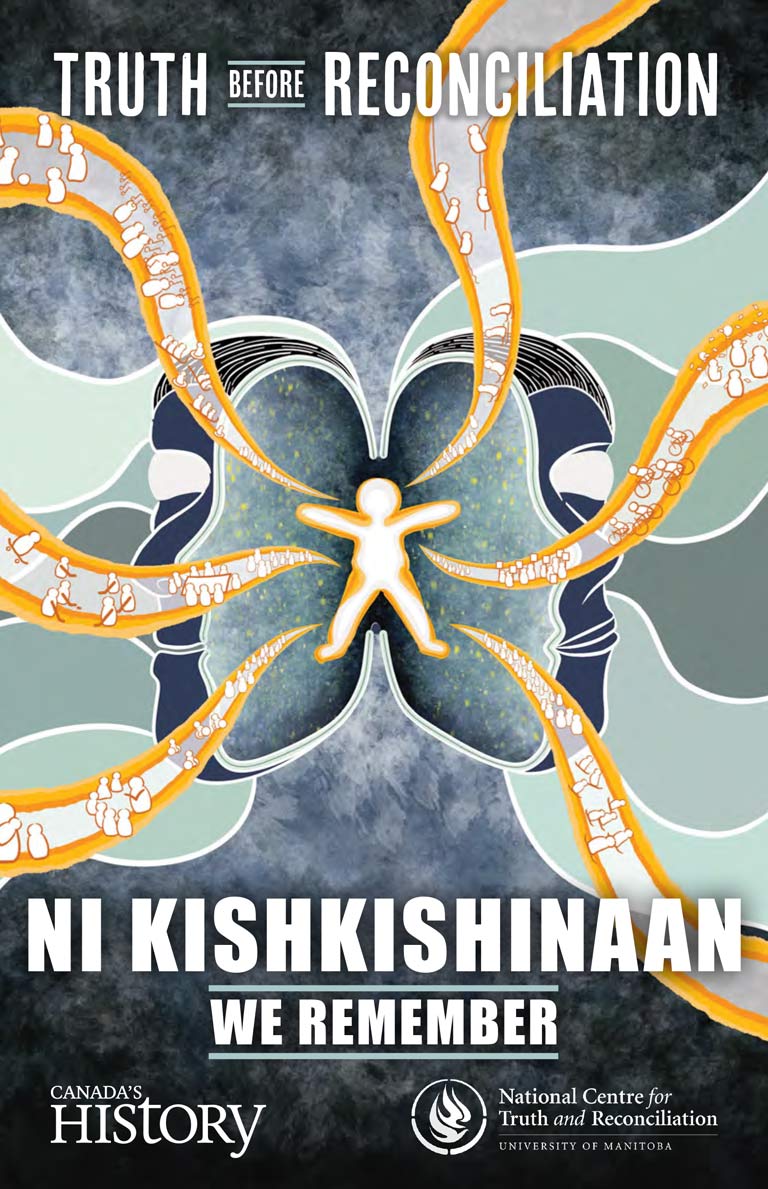
Truth Before Reconciliation: Ni Kishkishinaan (We Remember) Canada’s National History Society with the National Centre for Truth and Reconciliation |
In this activity, students will explore the power of memory and remembrance in connection with Truth and Reconciliation in Canada. Students will explore memory and how we remember as individuals and collectively as community members. This lesson connects with broader themes of Truth and Reconciliation, the impacts of colonialism, residential schools, decolonization, Indigenous rights, identity and histories. This lesson can be found in the Educator's Guide. |
Activity: Part 1 |
First, introduce the topic by starting a class discussion using the prompt highlighted in the article on page 6: “What is collective memory? What is a collective memory you can think of? Is it an event, an experience, or something else? Reflect on your own experiences of that memory. Are there things that were unique and special to you? How were those different from the experiences of others? How were they the same?” Next, ask students what they know and remember about maps (e.g., What are common features? What do they usually show?). Introduce students to the Coming Home Map (available for order or download) and how this map honours Indigenous place names in Canada. This map was researched and compiled by the University of Maine and cartographer Dr. Margaret Wickens Pearce. It seeks to restore Indigenous place names, while also asserting Indigenous sovereignty through places that have been disrupted by colonialism and colonial naming practices. Teacher note: another map you might consider using is the Stories from the Land Map. This map was researched and compiled by the Geographical Names Board of Canada. It reflects Indigenous place names adopted across Canada, honouring diverse Indigenous languages and cultures. Have students walk up to the map and explore it using the questions below. If possible, have the map displayed in multiple areas of the classroom for smaller groups discussions:
In their groups, have students sit and read the article together and summarize the ideas shared in the article. Have groups join another group and share their ideas to check their understandings. As a larger class, discuss what the article was about and what was learned through their reading. Ask students to consider in what ways the article connects with the Coming Home Map. What examples can they think of? |
Activity: Part 2 |
Have students return to the Coming Home Map and investigate the following questions in their groups. Teacher note: it may be helpful to have access to a current map of Canada to support students as they explore some of the following questions:
Bring the class back together to share their ideas and reflect on their learning with the following questions:
Have students reflect using the following prompt: “I Used to Think / Now I Think” to consider how their thinking has changed throughout the activity. |
Extension/Additional Reading |
Encourage students to present their findings to the broader school community in a method of their choice (awareness campaign, social media posts, PSA, Heritage Fair project, etc.) to share their learning. Consider broadening and deepening students’ learning by walking around the local community to investigate the place names in their surrounding area.
If possible, research using the resources located in local galleries, archives, libraries and museums (either in-person or online) as well as reliable sources on the Internet. If place names are connected to Indigenous Peoples, lands and/or histories, ensure that the source is from a local Indigenous community and/or Nation. For example, a place named using an Indigenous language should be translated by a language speaker and/or members of that community and cited as such) to ensure its authenticity and reliability. See the resources from the City of Edmonton, listed below, for examples on how a city renamed its municipal wards. After researching a place name in the community, encourage students to think how they might educate others about these place names so that the community’s memories of this place include Indigenous perspectives. Consider creating a QR code or a placard that can accompany the research the students did on their chosen place name to help preserve the memory within this place. Encourage students to connect their research to the Calls to Action for all Canadians. Connect with the Indigenous Lead in your school board (where possible) for additional support/guidance to help deepen students’ knowledge and understanding by connecting local Elders and Knowledge Keepers. Encourage students to deepen their understanding by researching the ways in which communities are restoring of Indigenous place names. For example, renaming streets that were named after problematic historical figures, local schools being named or renamed using Indigenous naming practices such as naming using the land as a reference vs. after particular people, etc. |
Additional Resources |
|
Advertisement